
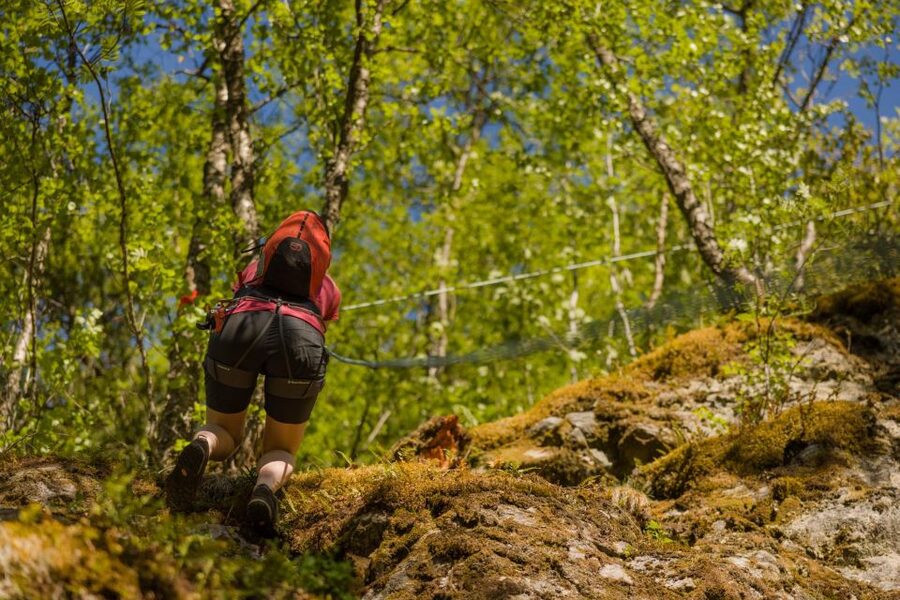
Reviewed · GEIRANGERFJORD TOURS
Geiranger: Rappelling tour with epic view
The best part of this Geiranger adventure is reaching the famous Flydalsjuvet view by a steep rope-assisted climb, then rappelling back toward town instead of simply taking a path to the viewpoint. You get the fjord scenery, a private photo stop, and a real physical challenge in one outing.
I like the small group limit of six, and I like that the route avoids the summer crowds at the main canyon viewpoint. Guides such as Phillip and Simona have shown patience with nervous climbers and older participants. The catch is simple: this is not a gentle sightseeing walk. You need arm strength, sturdy hiking boots, and comfort with exposed drops.
Key points to know
- Private groups of up to six: The small size allows close help on steep rope sections.
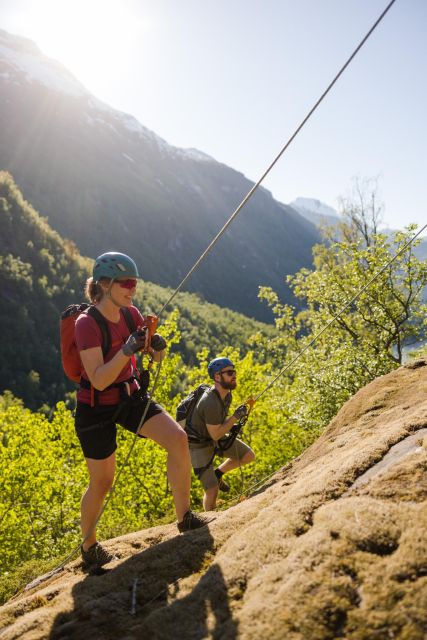
- A rope-assisted climb: You use clamps and a jumar to move up through the forest and canyon terrain.
- A quieter Flydalsjuvet view: The route reaches a photo spot away from the usual crowd.
- Two major rappels: The planned descents are about 50 meters each, with a reported route variation including three cliffs and a 60-meter drop.
- A demanding three-hour outing: Some accounts put the total time closer to three and a half or four hours.
- Come prepared: Gloves are required and available for about $5, while food and water are not provided at the start.
Climbing above Geiranger instead of joining the viewpoint crowd
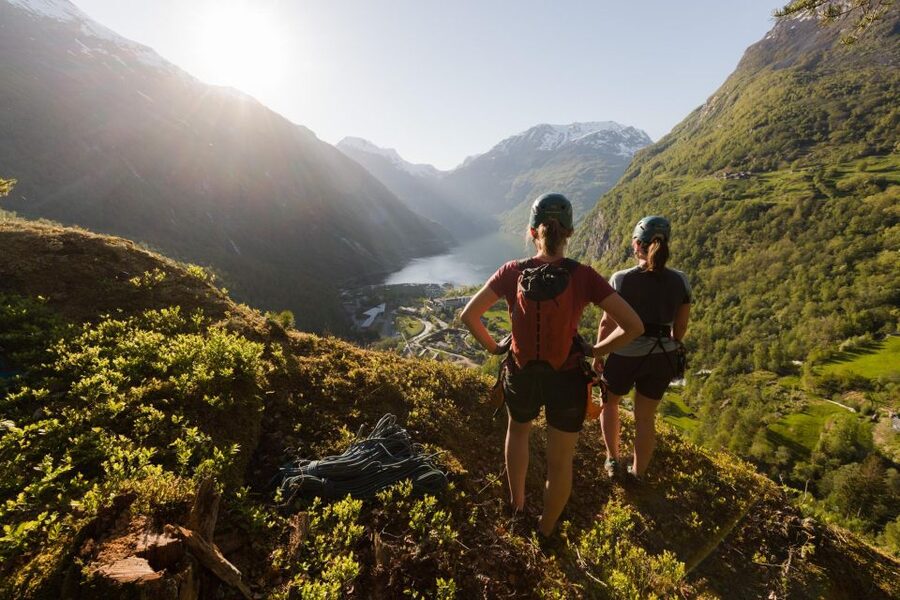
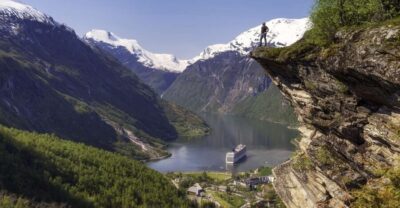
Flydalsjuvet is one of the classic views above Geiranger. In summer, thousands of people drive to the roadside viewpoint, take a photograph, and move on. This tour gives you a different way in, with a steep climb through the forest and ropes helping you reach the canyon.
The route begins at the Explore Geiranger guide office beside Dynamite Waterfall. From the harbor, allow about 15 minutes on foot. There is no transport from the harbor, and the road route to the office has no sidewalk, so the waterfall stairs are the more appealing walking option when available.
Before setting out, everyone takes part in a safety briefing and receives the climbing and rappelling equipment inside the office. The guide explains how to use the rope clamps and jumar before the route becomes serious. That early instruction matters, since you will be using your arms and legs together for much of the climb.
The advertised duration is three hours. Allow extra time if your group moves slowly or if conditions call for more instruction. One family completed the route in roughly three and a half hours, while another group described an outing of about four hours. That variation makes sense for a small adventure tour where the guide may stay beside a nervous or less experienced climber.
A few more Geirangerfjord days to weigh up
- Geiranger: Dalsnibba, Flydalsjuvet, Eagle Bend & Fjords Tour
★ 4.6 · 2,329 reviews - RIB Geiranger – Fjordsafari
★ 4.8 · 807 reviews - Geiranger: Guided Geirangerfjord Boat Tour
★ 4.7 · 728 reviews
The rope-assisted climb through the forest
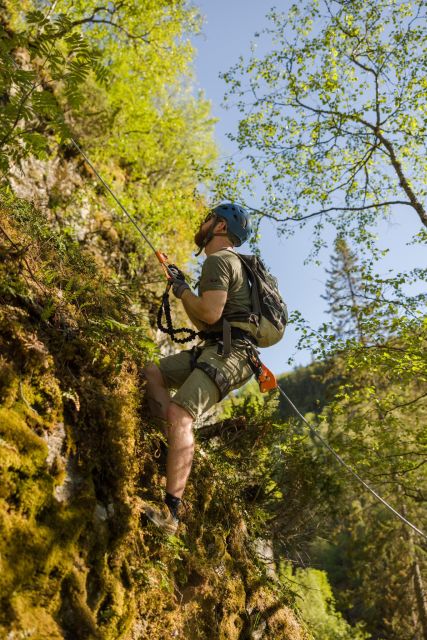
The first major section is a steep ascent through deciduous forest. Much of the route has rope security, and the clamps help you pull yourself up sections that would otherwise feel more like a scramble than a hike.
You are not simply walking behind a guide on a marked trail. You are learning where to place your feet, how to keep tension on the rope, and when to use your arms. One participant described a 65-year-old mother who found the climb beyond her expectations at first, but completed it with close help from the guide. That gives you a good sense of the tour: patience and guidance are part of the experience, but you still need to do the physical work.
The route is described as completely safe when you follow the equipment and instructions, yet safety does not make it easy. You will be attached or protected on many steep sections, but your muscles still have to lift and steady you. If you have weak arms, shoulder problems, or little experience with steep climbing, this may feel harder than the word hike suggests.
As you gain height, Geiranger and the fjord begin to open below you. The view improves as the effort increases, which gives the climb a clear reward. You are not waiting until the end for the scenery. The fjord keeps appearing through the trees as you move upward.
Flydalsjuvet without the usual traffic
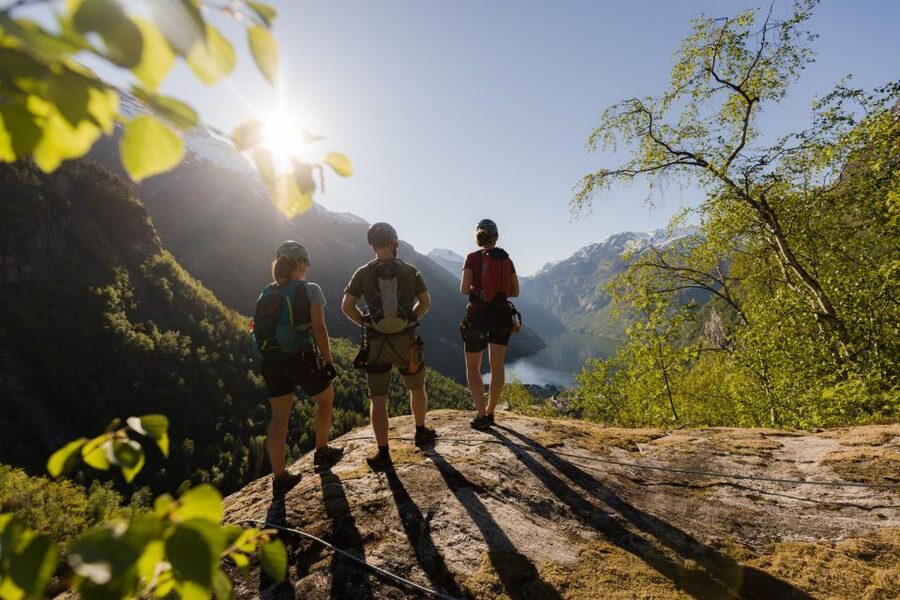
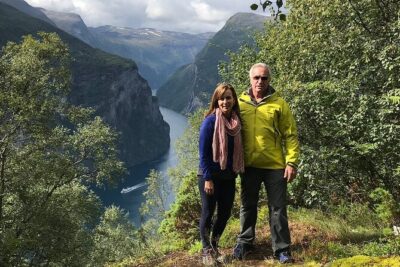
At the canyon viewpoint, the guide leads you along a less obvious path to a photo location near the cliff edge. This is one of the tour’s strongest features. You get the dramatic Flydalsjuvet setting without simply standing in the same roadside crowd as everyone else.
The photo stop is designed for a striking image of you at the edge, with Geiranger’s steep surroundings behind you. The guide controls the approach and helps you understand where to stand, which is important at an exposed site. You should still expect a real drop and follow every instruction carefully.
Take time here to rest. The climb is demanding, and rushing into the descent would spoil the best part of the outing. The view also gives you a useful pause before the route changes from upward movement to rappelling.
The guide then leads you past the Queen’s Chair toward the introduction wall. This short section connects the viewpoint to the technical part of the tour and gives you time to think about the descent ahead.
A practice wall before the big drop
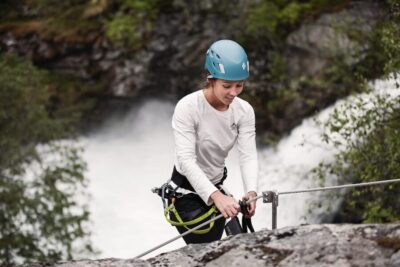
The introduction wall is a smart part of the route. Before asking you to rappel down the main vertical face, the guide lets you master the equipment on a smaller, softer introduction.
You learn how to control your descent, how to position your body, and how to trust the rope system. That practice can make a big difference if this is your first rappelling experience. A calm guide can also spot small problems early, such as poor foot placement or a tendency to lean too far back.
This is where the small group is especially useful. With no more than six people, the guide can watch each person rather than delivering a quick group speech and sending everyone off. Phillip was praised for clear instructions and steady encouragement with a mixed-age group from 16 to 50. Simona also worked patiently with children and older teenagers on a family outing.
The route is suitable for children aged 12 and older, but that age limit does not mean it is easy for every teenager. The hike requires strength, and the rappelling is exposed. A young person who is fit and willing to listen may do well. A child who dislikes heights or tiring climbs may not.
Same base, a completely different kind of day:
- Geiranger Shore Excursion: Mt. Dalsnibba and Eagle Road
★ 4.5 · 718 reviews - Geiranger: RIB Fjordsafari Geirangefjord
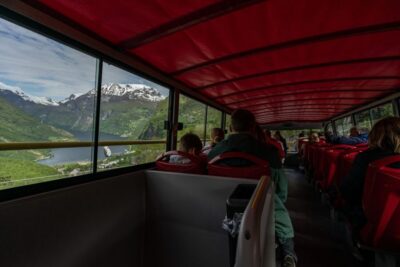
★ 4.5 · 651 reviews - Geiranger: City Sightseeing Hop-On Hop-Off Bus Tour
★ 3.7 · 546 reviews - Geiranger: Zipline Park Experience
★ 4.7 · 328 reviews
Two 50-meter rappels above the trees
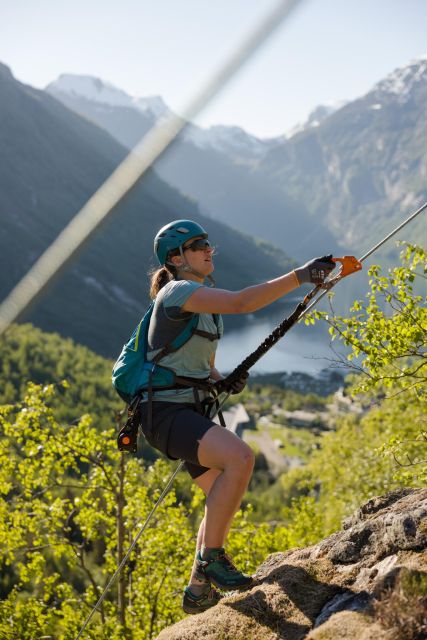
After the practice section, the main descent begins. The planned route includes two rappels of about 50 meters each, taking you down toward the forest roughly 100 altitude meters below the viewpoint. The setting is the star: you are looking out over Geiranger while lowering yourself down a vertical wall.
The experience is safe when the equipment is used correctly and you follow the guide’s directions. It is also exposed. Those two facts belong together. You should not book this expecting a mild zipline-style thrill. You control your movement on the rope, look down a long vertical face, and manage your nerves in open space.
The supplied accounts describe a possible route variation with three cliffs, including one rappel of about 60 meters. Since the official description lists two 50-meter rappels, ask Explore Geiranger to confirm the exact descent planned for your date. The number and height may depend on the route or conditions.
A pair of gloves is required. One account says gloves can be bought for about $5, so bring your own if you already have suitable ones or plan on paying for a pair at the office. Gloves protect your hands and make rope handling more comfortable.
The descent is also where the tour’s value becomes clear. A standard viewpoint visit gives you a memorable look at Geiranger, but this outing adds a skill, a physical test, and a strong sense of movement through the setting. At $146 per person, the price includes the guide and all climbing equipment, with one guide for a group of up to six. For someone who wants an active experience rather than another bus or car stop, that is a fair use of half a day.
Returning through the forest and along the waterfall
Once the rappels finish, the last part of the route follows a road back toward the guide office. One account also describes beautiful stairs alongside the waterfall after the adventure. The precise return may vary, but you should expect to finish near the same office where you started.
You may be ready for food and water by then. There is no food or water provided at the start, although you can refill bottles midway. Bring your own water and a snack for after the climb. Starting under-hydrated would make the steep ascent harder than it needs to be.
If you are planning another activity at the same meeting point, leave a generous gap. The office is also used for via ferrata and zipline activities, and the rappelling route can run longer than three hours. A back-to-back plan may work for a strong, organized group, but it leaves little room for delays or tired legs.
What the $146 price buys you
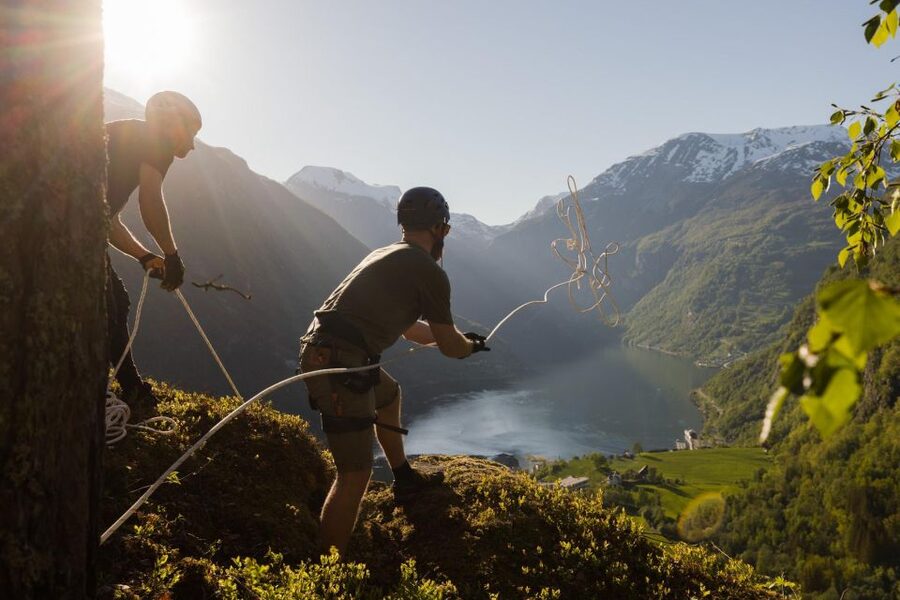
The $146 fee covers an English-speaking guide and the necessary equipment. The private group size is important: you are not sharing a large coach outing with dozens of people, and the guide can stay close during the hard sections.
The value is strongest if you would otherwise pay for several separate activities. In one trip, you get a steep rope climb, access to a quieter Flydalsjuvet photo point, instruction on rappelling, and two long descents. You also avoid the ordinary crowd at the main viewpoint.
The price is less attractive if you mainly want a quick scenic stop. The route demands time, energy, and attention, and you may spend the next part of your day recovering. Someone who dislikes exposed heights will not get much value from the most important part of the experience.
Free cancellation up to 24 hours before the start and the option to reserve now and pay later make planning easier, especially when your Geiranger schedule depends on a cruise or changing weather. Still, check the starting time and allow enough time to walk from the harbor.
Who should book this Geiranger adventure
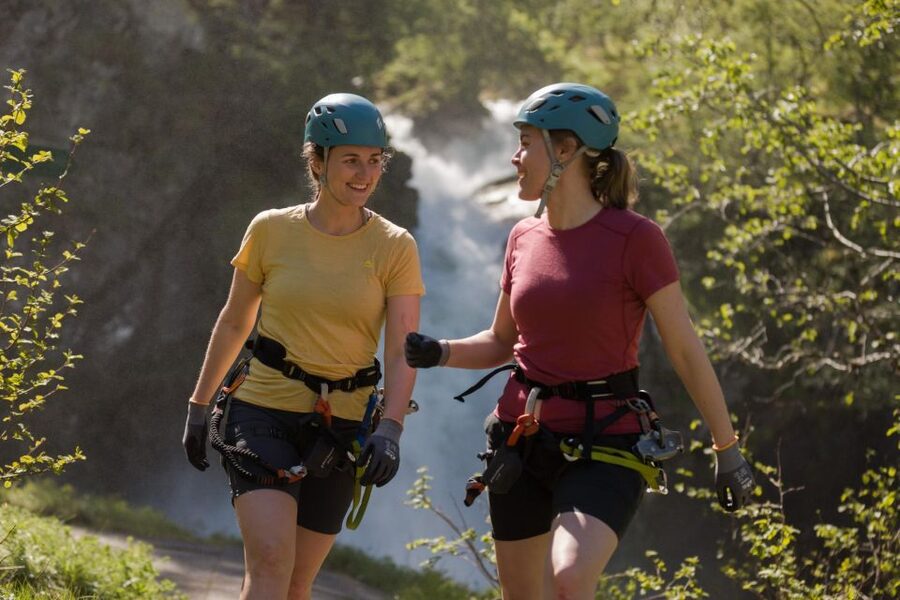
I would choose this tour if you enjoy active outings and want to earn your view. It suits fit adults, older teenagers, and adventurous families with children aged 12 or more who can manage steep climbing and exposed rappelling.
It can also work for a first-time climber, provided you are willing to listen and use the practice wall seriously. The experience with Phillip and Simona suggests that patient instruction is part of the tour, not an afterthought.
I would think twice if you have heart problems, are over 243 pounds or 110 kilograms, or dislike heights. The tour is not suitable for children under 12. You should also reconsider if you cannot comfortably use your arms to pull and steady yourself on rope sections.
Sturdy hiking boots are essential. Bring water, a snack, gloves if you have them, and clothing suited to a demanding outdoor activity. No special claim of experience is needed, but a positive attitude toward heights is a major help.
Should you book it?
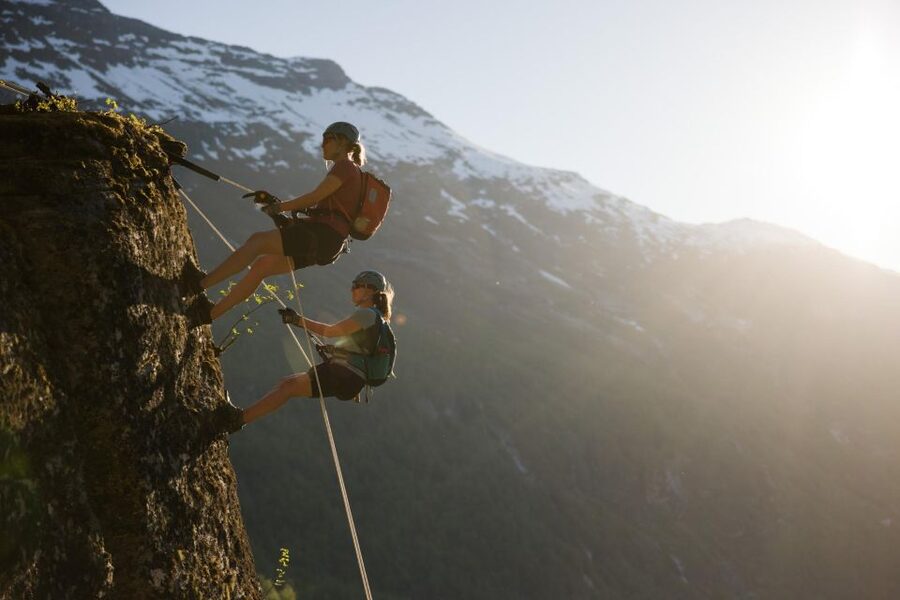
Book this if you want Geiranger from a more active angle and the thought of rappelling above the forest sounds exciting rather than alarming. The combination of a quiet Flydalsjuvet photo stop, close guide support, and long descents gives you much more than a standard viewpoint visit.
Skip it if you want an easy walk, have limited arm strength, or need a tightly timed shore excursion. The three-hour estimate can stretch, the climb is steep, and the rappels are genuinely exposed. For the right person, though, this is one of the more memorable ways to see Geiranger, with enough challenge to make the final view feel earned.
FAQ
Where does the tour begin?
The meeting point is the Explore Geiranger guide office at Geirangervegen 139 in Geiranger, next to Dynamite Waterfall.
How far is the office from the harbor?
The office is about a 15-minute walk from the harbor. Transport from the harbor is not provided.
How long does the activity last?
The stated duration is three hours. Some outings have taken about three and a half to four hours, so leave extra time in your schedule.
How large is the group?
The activity is a private group with a maximum of six people and one guide.
What language does the guide speak?
Instruction is provided in English.
How old must participants be?
Children under 12 cannot take part. Participants aged 12 and older must still be able to manage the strenuous climb and exposed rappelling.
What health and weight restrictions apply?
The activity is not suitable for people with heart problems or for anyone over 243 pounds, or 110 kilograms.
Are food, water, and gloves provided?
Food and water are not provided at the start. You can fill bottles midway, so bring water with you. Gloves are required and may be available for about $5.
Just added around Geirangerfjord
- Geiranger: Sky to Fjord Downhill Biking Adventure★ 4.5 · 23 reviews
- Geiranger by Royal route, 5 hours with visiting a high-mountain farm★ 5.0 · 3 reviews
- Private tour Geiranger and Glaciers 1 to 15 people★ 5.0 · 4 reviews
- Fjord Sightseeing Tour by Boat in Geiranger★ 4.0 · 69 reviews
- Geiranger: Excursions.no Mount Dalsnibba & Eagle’s Bend★ 4.5 · 101 reviews
- Geiranger: Excursions.no Geiranger Highlights★ 3.5 · 19 reviews
- Double Kayak Rental in Geiranger (Excursions.no)★ 4.5 · 4 reviews
- City Sightseeing Geiranger Hop-On Hop-Off Bus Tour★ 3.0 · 34 reviews
Geirangerfjord Tours, compared.
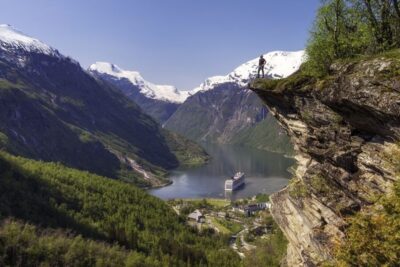
Dalsnibba, Flydalsjuvet, Eagle Bend & Fjords Tour
Read our review →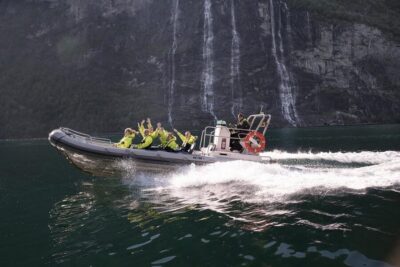
Geiranger Shore Excursion: Mt. Dalsnibba and Eagle Road
Read our review →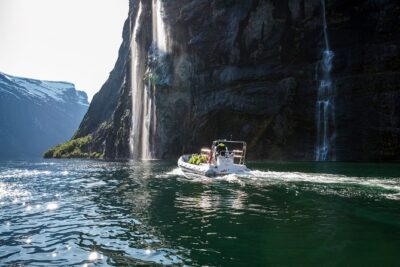
Browse the lists this tour appears in