
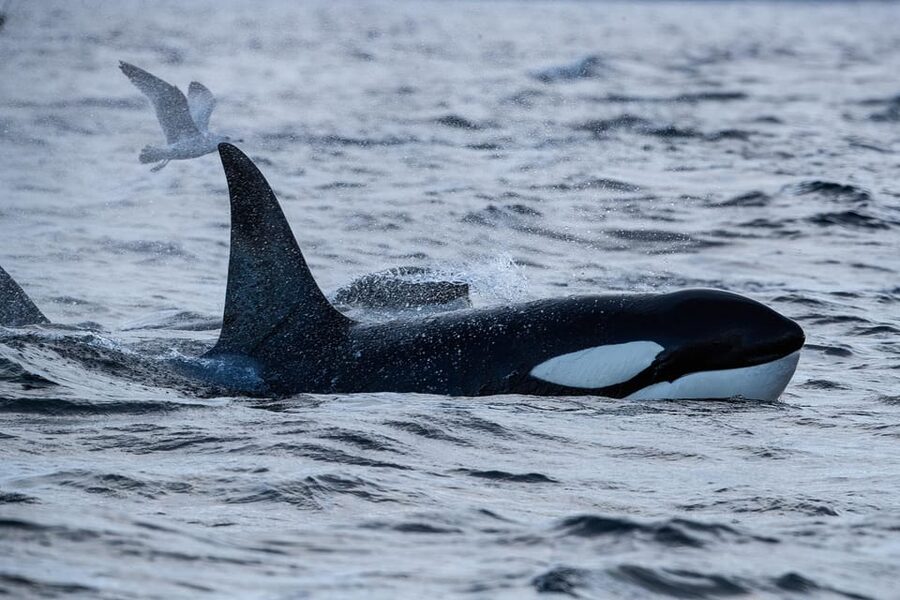
Reviewed · WHALE WATCHING
Skjervøy: Orca and Whale-Watching comfort heated Boat Trip
Skjervøy sits beside some of Norway’s best waters for seasonal whale watching, and this trip gives you a warm, steady base while you search for orcas and humpback whales. The boat has an outdoor terrace for photographs, plus a heated cabin where you can thaw your fingers between sightings.
I like two things here: the focus on wildlife photography, and the respectful approach described by Captain Jacob and guide Filippo. They reportedly shut off the engine near pods rather than chasing them, and one outing saw about four groups of orcas, with roughly 10 to 15 animals in each group. The catch is simple: wildlife is never guaranteed, and the $301 price makes this a serious splurge if the sea stays quiet.
Key points at a glance
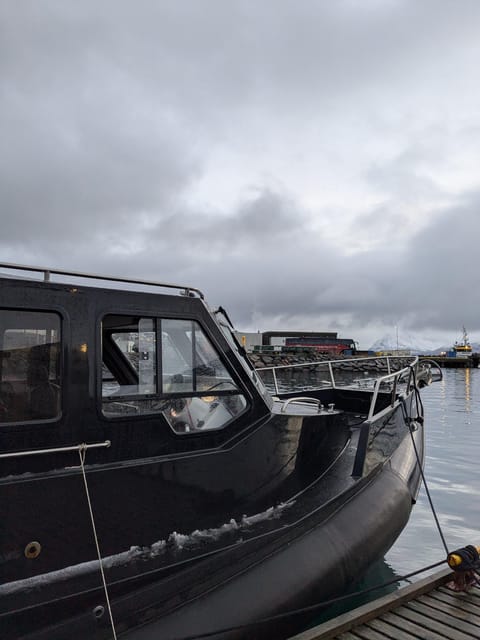
- A heated, covered boat: You can watch from the terrace, then step inside to warm up without needing a special flotation suit.
- Built for photographs: The vessel offers a large outdoor viewing area, and the guides provide practical advice on timing and camera settings.
- Hydrophone and night vision camera: You may hear underwater calls and use equipment designed to help observe marine life in changing light.
- Orcas and several whale species: Possible sightings include orcas, humpback whales, minke whales, and fin whales.
- A calm approach to wildlife: The engine may be switched off near animals so they can approach without being pursued.
- Small-age restrictions: The trip is not suitable for children under six or pregnant women.
Why this Skjervøy boat trip feels different
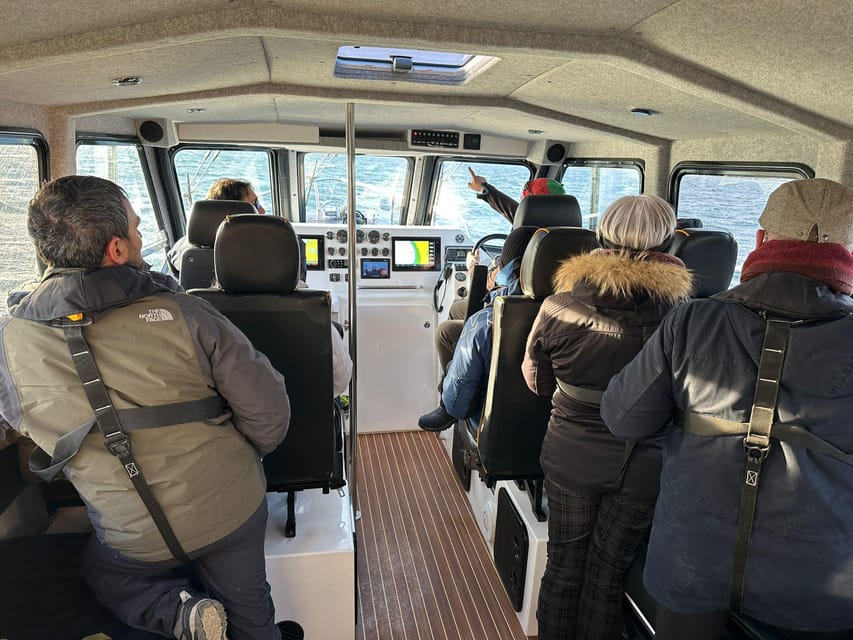
Many whale trips ask you to choose between comfort and a clear view. Here, you get both options. The cabin is covered and heated, while the outside terrace gives you an open view of the Arctic water and sky.
That matters in northern Norway. Even when the calendar says daytime, the wind can make an outdoor boat ride feel much colder than expected. You can remain outside when the action is good, then retreat indoors without ending the outing early.
The boat is also designed to be steadier than a traditional RIB. That should make a difference if you want to keep a long lens pointed at a moving whale. It does not remove all motion, though. This is still a sea trip, and anyone prone to seasickness should take suitable medicine in advance, usually about two hours before departure.
More Whale Watching Trips in Tromsø
- Tromsø: Whale Watching Tour by Hybrid-Electric Boat
★ 4.5 · 4,217 reviews - Tromsø Whale Safari with MS Gabriele
★ 4.3 · 1,937 reviews - From Tromsø: All-Inclusive Whale & Orca Safari
★ 4.5 · 1,221 reviews
Meeting the boat at the Skua Nature banner
The trip begins at the meeting point marked by the Skua Nature banner or flag. The supplied location is listed as 2XPM+98X, and the activity ends at the same spot after the boat returns.
Your first step is a short safety briefing and orientation. Pay attention here. The guide will explain how to move around the boat, where to stand, and how to follow instructions when whales appear nearby.
The outing lasts about three and a half hours, with starting times depending on availability. The itinerary also describes around four hours of whale watching at Skjervøy, so check the confirmed departure details when you book and allow enough time around the scheduled return.
A smoother ride through Arctic water
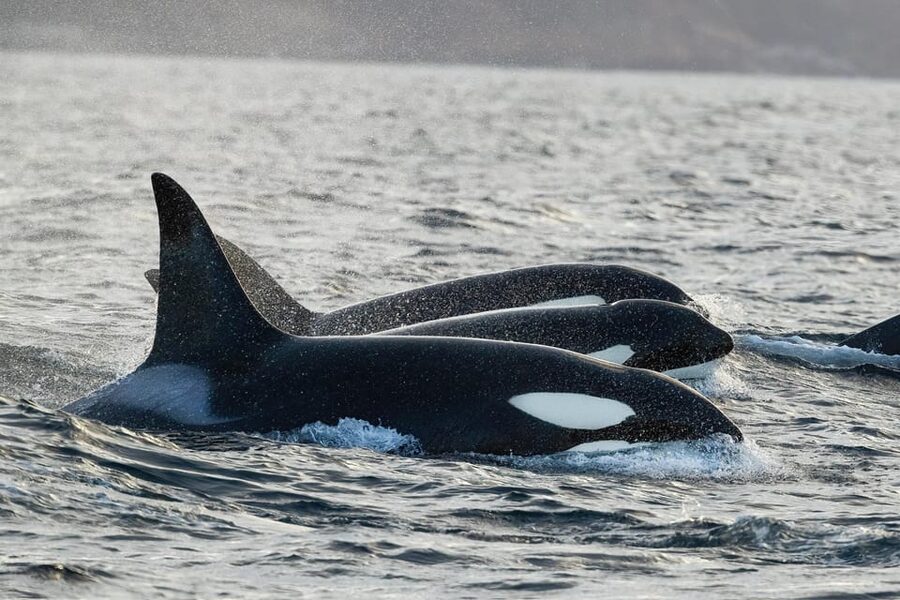
The boat’s main selling point is comfort. It is covered, heated, and built for speed and stability, with a toilet onboard. That combination is useful on a whale trip because sightings can be spread across a wide area. You may spend long stretches scanning the sea, and a warm cabin makes those quiet periods much easier.
You do not need to wear a special suit on this covered boat. Still, bring warm layers, gloves, and a hat if you plan to spend time on the terrace. The boat protects you better than an open RIB, but it does not turn the Arctic into a mild-weather destination.
Hot drinks are included. That sounds minor until you have been outside with a camera for several minutes, waiting for a dorsal fin or blow. A warm drink and a short break inside can help you stay alert for the next sighting.
Searching the water for orcas and whales
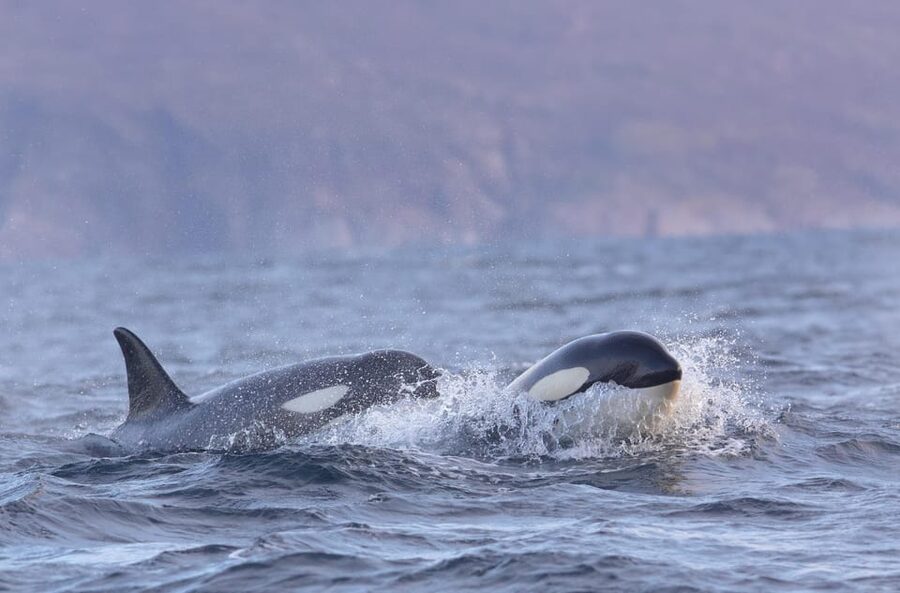
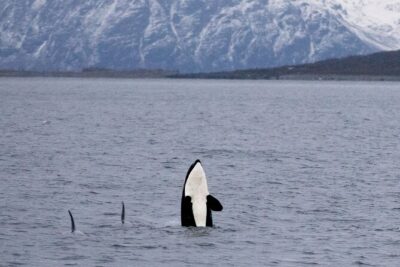
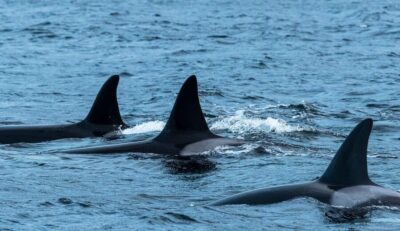
The heart of the trip is the search around Skjervøy. You will cruise through the Barents Sea looking for orcas, humpback whales, minke whales, and fin whales in their natural setting.
The word search matters. This is not a fixed show, and no animal is trained to appear at a set time. Your guide and captain read the water, watch for signs of marine life, and adjust the route as conditions change.
When animals are found, the boat’s approach is meant to limit disturbance. The strongest detail from the reported outings is that the engine was turned off near orca pods. Rather than continuing toward the animals, the crew allowed the whales to come closer on their own. That can produce a quieter and more natural encounter, although it also means patience is part of the deal.
One account described four orca pods, each with around 10 to 15 animals, along with numerous humpbacks. Another outing began in poor weather, then improved when the sky cleared and the first pod appeared. These are encouraging signs, but they should not be treated as a promise for your departure.
Same base, a completely different kind of day:
- Tromsø: Reindeer Sledding & Feeding with a Sami Guide
★ 4.8 · 6,417 reviews - From Tromsø: Aurora Borealis Tour
★ 4.8 · 4,206 reviews - Tromsø’s Top-Rated Fjord & Fishing Cruise – All-Inclusive
★ 4.7 · 4,017 reviews - Tromsø: Fjords and Sommarøy Islands Tour with Salmon Picnic
★ 4.7 · 3,922 reviews
What the outdoor terrace means for photography
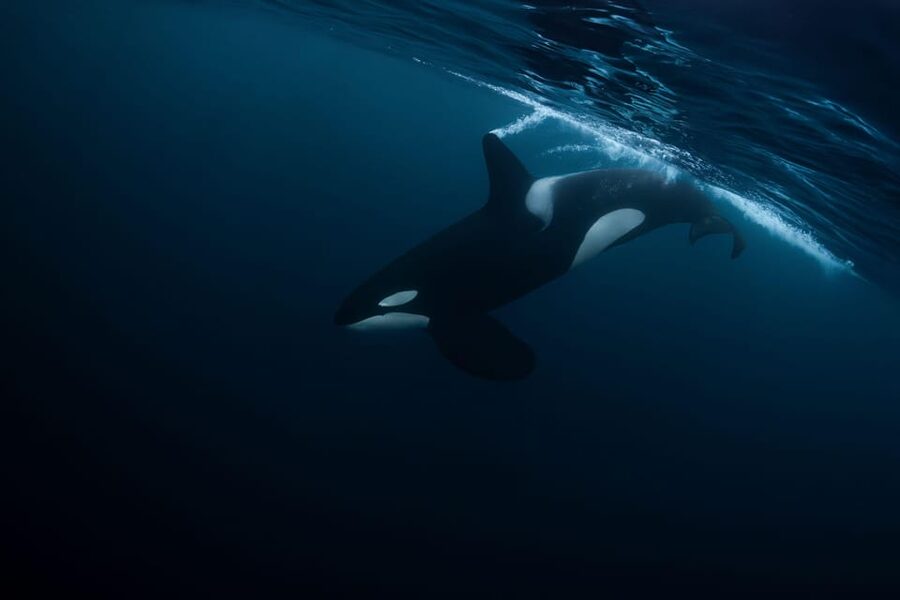
The terrace is the best place to work with a camera. You get open views, less glass between you and the water, and more room to follow a whale as it surfaces.
Bring a camera if you have one, and bring a telephoto lens if possible. A long lens helps you frame animals that remain at a respectful distance. It also reduces the need to move around the boat, which is helpful when the sea is shifting beneath you.
The guide offers photography tips and insights. Expect help with finding good angles and preparing for quick moments, rather than a formal classroom lesson. Orcas can surface, turn, and disappear in seconds. A camera set up before the action begins is far more useful than one still buried in your bag.
A practical approach is to keep one eye on the water and one on the guide. If you stare only through the viewfinder, you may miss the wider movement of a pod. The best photographs are not always the closest ones. A group of orcas moving together, with the Arctic surroundings visible, can tell a better story than a tight crop of a single fin.
Listening with the hydrophone
This boat carries a hydrophone, which lets you listen to underwater sounds. Orca calls and other marine noises add something that photographs cannot provide.
The hydrophone will not guarantee a dramatic soundscape. Sea conditions, the location of the animals, and the timing of the equipment all matter. But it gives the trip another layer, especially during a quiet spell when the boat is waiting with its engine off.
A night vision camera is also onboard. That equipment is useful when light conditions are low, though the exact use during your departure will depend on the time and conditions. Together, the hydrophone and camera show that this outing is built around observation, not simply a fast ride to a photo stop.
Captain Jacob and guide Filippo
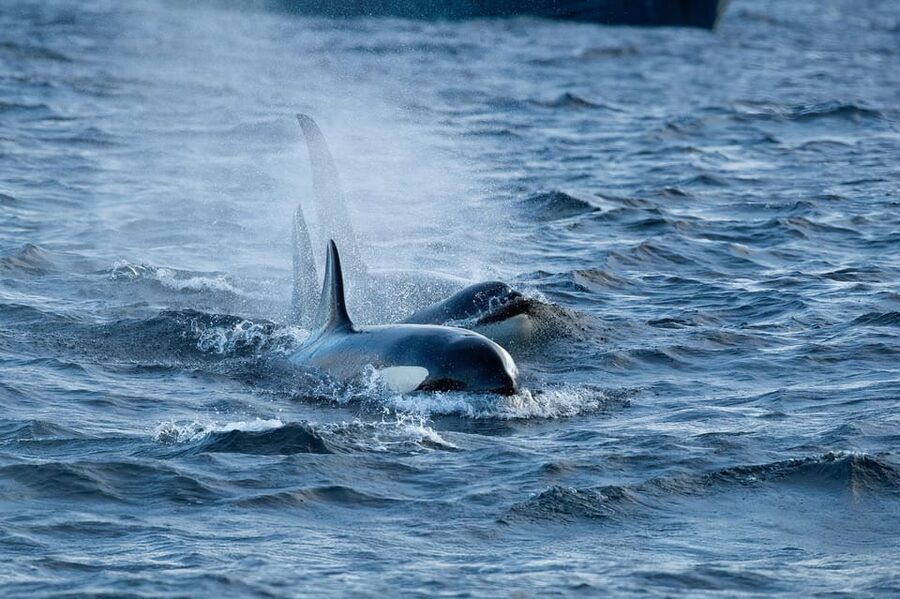
Captain Jacob and guide Filippo are named as the crew associated with the reported trips. Their roles work together in a useful way. The captain handles the boat and positioning, while the environmental guide helps locate animals and explains their behavior and habitat.
The most praised qualities are their enthusiasm, friendliness, and care around wildlife. That last point matters most. A good whale trip is not only about getting close. It is also about knowing when to stop, switch off the engine, and let the animals decide the distance.
English and Italian are available as tour languages. If you want detailed help with photography, tell the guide early in the trip what camera you are using and what you hope to photograph. That gives you a better chance of receiving useful advice before the first pod appears.
The price: is $301 worth it?
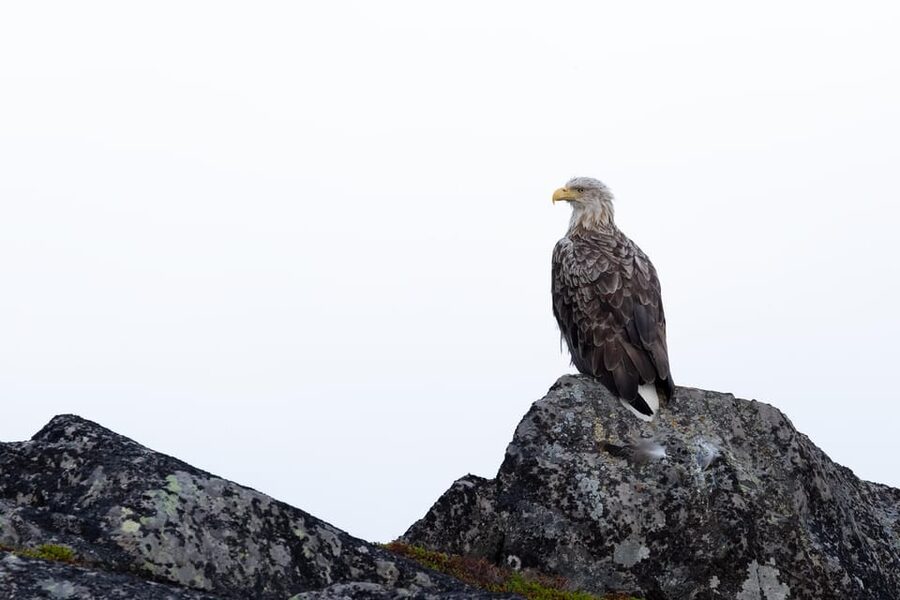
At $301 per person, this is not a casual add-on. You are paying for a specialized wildlife outing with a heated comfort boat, a captain, an environmental guide, photography help, onboard facilities, hot drinks, and equipment such as a hydrophone and night vision camera.
The price makes more sense if you care about comfort and photography. A traditional open boat may cost less in some destinations, but cold exposure can shorten your time outside and make camera work harder. Here, you can stay warm, return to the terrace when conditions improve, and use a steadier platform than a typical RIB.
The value is less certain if your only goal is a guaranteed whale sighting. No operator can promise that wild animals will appear, and bad weather may limit visibility. If seeing an orca is the one reason you came to northern Norway, build flexibility into your wider schedule so you are not depending on one departure.
The reserve-now, pay-later option also helps with planning. You can hold a place without paying immediately, and cancellation is free up to 24 hours before departure for a full refund. Check the exact terms at booking, especially if your plans may change.
Who should book this outing?
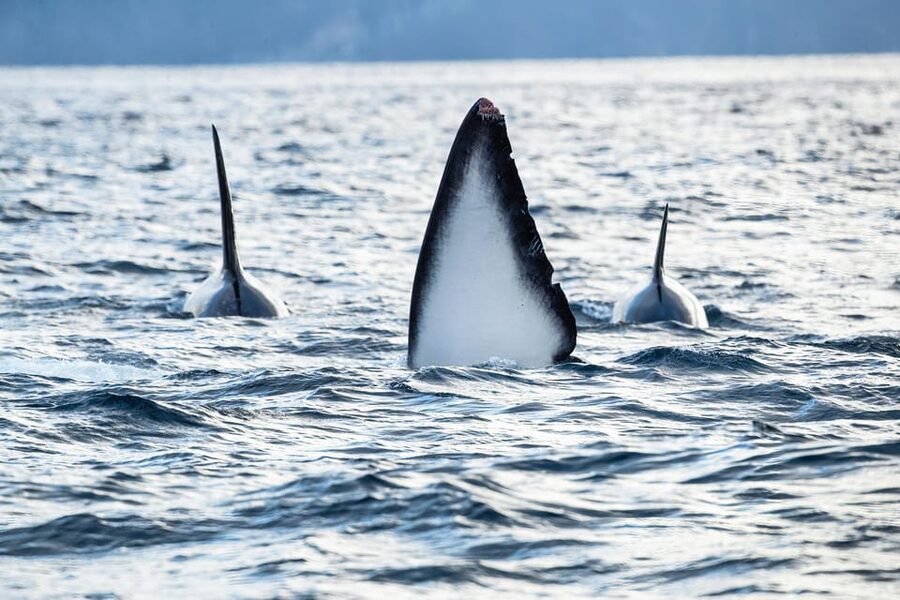
I would choose this for photographers, wildlife fans, and anyone who wants Arctic scenery without spending several hours on an exposed open boat. The heated cabin makes it easier to stay comfortable while the crew searches, and the terrace gives you the view you need when animals appear.
It is also a good fit for people who care about responsible wildlife watching. The practice of cutting the engine near pods, as described from the outings, is a strong sign that the crew values a quieter approach.
This is less suitable for very young children, since children under six cannot join. Pregnant women are also excluded. Anyone who gets seasick should prepare before boarding, because even a stable boat can move in open water.
You should also think carefully about your camera expectations. The guides can offer tips, but they cannot control the whales, the weather, or the light. You might return with excellent images, or you might return with a few distant fins and a memorable day at sea.
Small details that improve the day
Meet at the Skua Nature banner or flag and listen closely during the safety talk. Bring your camera, telephoto lens, warm layers, and any seasickness medication you need.
Use the terrace when visibility is good, but do not treat the heated cabin as a last resort. Short warm-up breaks can help you stay comfortable and ready. Hot drinks are included, so make use of them instead of trying to tough out the cold.
Keep your camera ready before the crew reaches a pod. A whale may surface only briefly, and the most natural encounters can happen after the engine goes quiet. Watch the animals first, then photograph them.
Should you book the Skjervøy whale safari?
Book it if you value a warm, stable boat, serious wildlife watching, and a better setup for photographs than an open RIB usually provides. The combination of the terrace, heated cabin, toilet, hydrophone, and photography guidance gives the $301 price a clear purpose.
Skip it if the cost feels too high for an outing with no guaranteed sightings, or if you need a fully predictable schedule. For everyone else, this is a well-equipped way to search for Arctic whales, with a crew approach that puts animal behavior ahead of a forced close encounter.
FAQ
Where does the whale-watching trip take place?
The experience takes place around Skjervøy in northern Norway, in the Barents Sea.
How long does the activity last?
The stated duration is about three and a half hours. Check availability for the departure time.
Where do I meet the boat?
Meet at the Skua Nature banner or flag at the supplied meeting point, listed as 2XPM+98X. The boat returns to the same meeting point.
Which animals might I see?
Possible sightings include orcas, humpback whales, minke whales, and fin whales.
Are whale sightings guaranteed?
No. Wildlife sightings are not guaranteed.
Is the boat heated?
Yes. The boat is covered and heated, with an outdoor terrace for open-air viewing.
Do I need to wear a special suit?
No. The covered boat means you do not need a special suit, though warm clothing is still sensible for time on the terrace.
Are drinks included?
Yes. Hot drinks are included.
What languages are available?
The live guide service is available in English and Italian.
Can children and pregnant women join?
Children under six and pregnant women cannot join this activity.
Just added around Tromsø
- Tromsø: Horseback Riding Tour★ 4.8 · 23 reviews
- Tromsø:Northern light tour with mini bus i Tromsø★ 4.9 · 8 reviews
- Tromsø Sweet Temptations tour: afternoon tea & chocolates★ 4.8 · 5 reviews
- Tromsø: City Walk & Polar Museum (Private or Shared)★ 3.7 · 3 reviews
- Tromsø: Tasty King Crab Adventure★ 4.5 · 49 reviews
- Tromsø: Snowshoeing in Scenic Landscape★ 4.6 · 37 reviews
- Tromsø: Sommarøy Islands Midnight Sun Tour★ 5.0 · 9 reviews
- Tromsø: Snow Sledding, Mini Skiing, Lasso and Reindeer Hides★ 4.6 · 60 reviews
Whale Watching, compared.
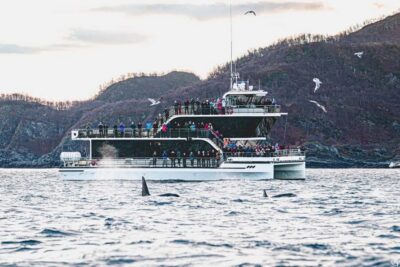
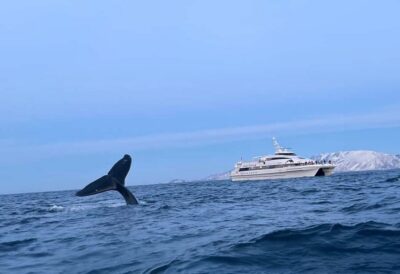
Silent Whale Watching by Hybrid-Electric Boat from Tromsø
Read our review →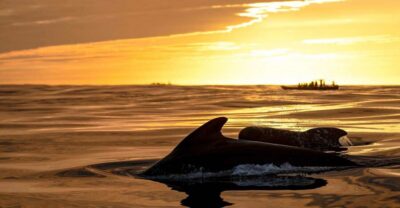
Bleik: Whale Watching by Speedboat with Puffins and Muffins
Read our review →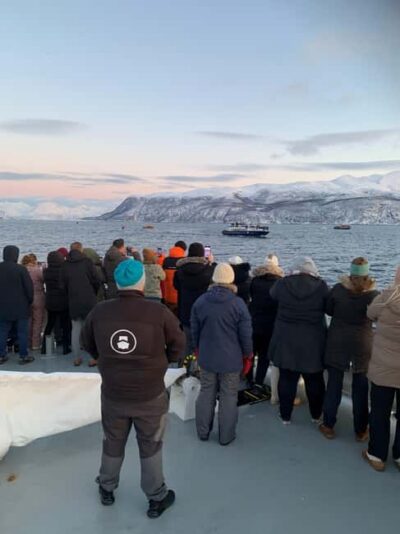
Browse the lists this tour appears in