
Reviewed · ESCAPE ROOM GAMES
Stavanger: Prison Island Adventure Game
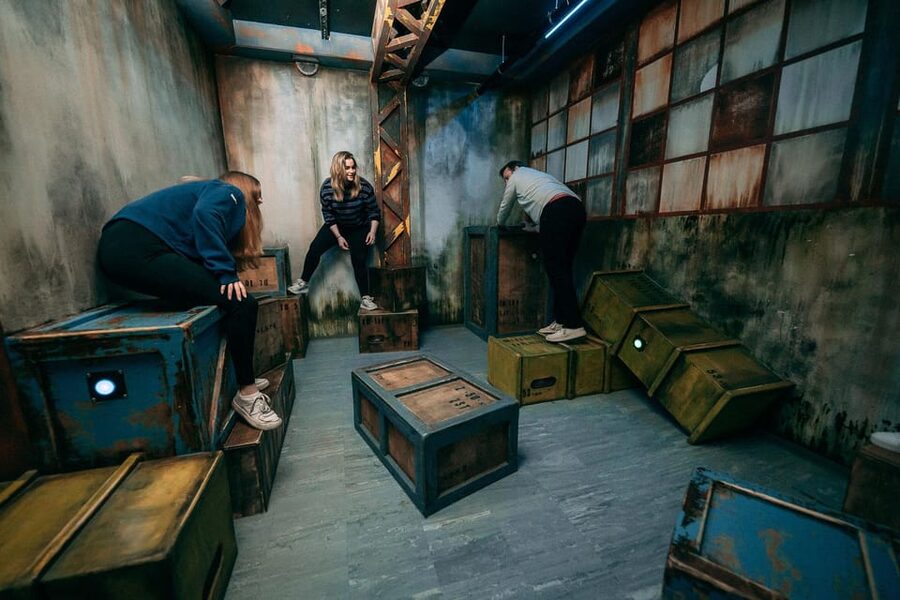
Stavanger’s Prison Island turns a group outing into a fast-moving contest of puzzles, physical tasks, and quick decisions. You move through a former-prison-style setup at Fangene på Fortet, trying to score points in challenge rooms rather than simply escaping one room.
I like the large choice of rooms, with 46 challenges offering different types of tests, and I like the freedom to retry a task and improve your score. The main consideration is that some rooms may be hard to understand at first, especially if English is not your strongest language, and one booking reported that a few tasks seemed not to work properly.
The format suits families, friends, school groups, and company teams. You do not need specialist skills, but you do need to communicate clearly, move comfortably, and accept that one person may solve the puzzle while another handles the physical part.
Key points to know before you play
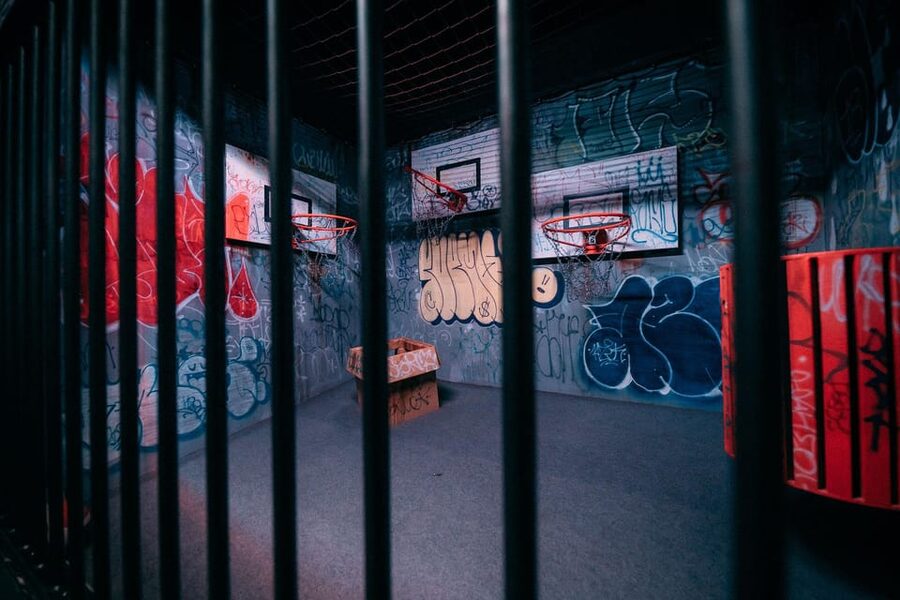
- 46 challenge rooms: You have plenty of tasks to choose from, with different levels of difficulty and styles.
- Teams of 2 to 5: Small groups must divide jobs quickly, so clear communication matters.
- English-language game: The game is played in English, with an English or Norwegian host or greeter.
- Flexible play time: Bookings last from 1 to 2.5 hours, and some players have stayed longer than their original one-hour booking.
- Retry option: You can try rooms again to improve your points, which adds a useful competitive edge.
- Active clothing required: Wear comfortable clothes and shoes suitable for physical activity, then arrive 15 minutes early for the briefing.
What happens inside Stavanger’s Prison Island
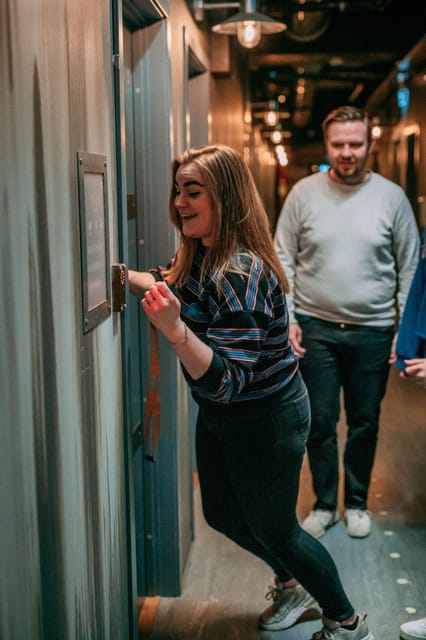
You begin at the welcome reception of Fangene på Fortet. Plan to arrive 15 minutes before your booking, since the group needs a briefing before starting. The host or greeter can speak English or Norwegian, but the game itself is played in English.
The basic idea is simple. Your team enters a series of challenge rooms and attempts to complete the task in each one. Success earns points, and the team scorecard lets you keep track of your progress. You are not following a fixed sightseeing route, and there is no personal guide leading you from room to room.
That matters because the pace belongs to your group. You may spend a few minutes on a puzzle, decide it is not going well, and move to another room. You may also return later and try again. This gives the activity a more relaxed feel than a traditional escape room, where one locked room and one fixed puzzle chain determine the whole result.
The rooms are built around a mixture of puzzles, obstacles, and timed tasks. Some will call for logic. Others will need coordination, speed, balance, memory, or simple persistence. The range is useful for mixed groups because nobody has to be good at every type of challenge.
More escape rooms in Stavanger:
- Molde: Serial Killer Escape Room Game
★ 5.0 · 6 reviews - Oslo: Perfect Escape – Fun and exciting Escape Rooms
★ 3.9 · 4 reviews - Molde: Project Heisenberg Escape Room Experience
★ 5.0 · 3 reviews
How the 46 rooms shape your visit
The strongest feature here is the number of challenges. With 46 rooms, you are not limited to one puzzle style, and a second visit should not feel exactly like repeating the first. You can choose tasks that match your group’s energy and confidence.
A group of friends might make a game of chasing the highest possible score. A family with teenagers can split up briefly, test different rooms, and compare results. A company group can focus less on competition and more on seeing how people communicate under a time limit.
The room format also reduces the pressure found in some escape games. If one puzzle defeats you, it does not have to spoil the whole booking. Try again, ask for help when available, or move on and collect points elsewhere. This is especially helpful for younger players and mixed-age groups.
The tradeoff is that the experience can feel less like one carefully connected story. If you prefer a single escape-room plot with a clear beginning, middle, and end, Prison Island may seem more scattered. Its strength is variety and choice, not a tight narrative.
The teamwork test is the real attraction
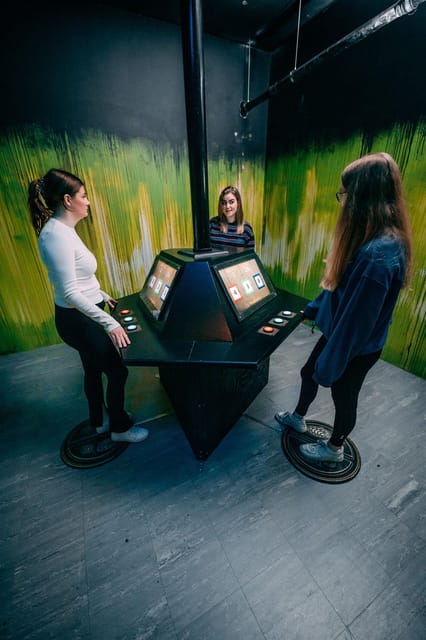
The puzzles are only part of the point. You are also testing how well your group shares information, listens, and chooses a plan. A team can lose time if everyone grabs the same job or if nobody explains what they have noticed.
I would suggest giving each person permission to take the lead in different rooms. The person who spots patterns may be best at a logic puzzle, while someone else may have better coordination for a physical task. A quieter member of the group may notice an important clue that the more vocal players miss.
This makes the activity useful for company teams and schools. You can see how a group handles pressure without turning the session into a formal lesson. It is also a good choice for friends who want something more active than sitting around a table.
The scoring system adds a little rivalry. You can aim for a personal best, compete with another group, or simply use the scorecard to give the session some shape. I like that the points give you a reason to retry a room, rather than treating a failed attempt as the end of the task.
Physical effort without a specialist skill requirement
The activity includes obstacles and physical tasks, so it is not a purely mental puzzle session. You should wear clothing and shoes that let you move comfortably. The supplied information describes the activity as suitable for all ages and skill levels, but it does not provide a detailed list of individual room requirements.
That means you should expect variety rather than assume every room is easy or strenuous. Some challenges may be solved mainly through communication and observation, while others may ask you to move, reach, coordinate, or act quickly.
This mix is one reason the activity works well for groups with different abilities. You can look for rooms that fit your group and focus on the tasks you can enjoy. The venue is listed as wheelchair accessible, though the general instruction to wear activity-friendly clothing is still worth following.
The physical element also changes the mood. You are not just discussing answers. You are reacting, moving, trying again, and often laughing when a simple idea proves harder than expected. That makes the hour pass quickly, which several bookings have confirmed in practical terms: a 90-minute session was described as flying by, and another group booked one hour but stayed for more than two.
A few more Stavanger days to weigh up
- Stavanger: Scenic Fjord Cruise to Lysefjord and Preikestolen
★ 4.6 · 5,791 reviews - Stavanger: Fjord Cruise to Lysefjord and Pulpit Rock
★ 4.8 · 1,357 reviews - From Stavanger: RIB Tour to Lysefjord
★ 4.9 · 1,288 reviews - From Stavanger: Lysefjord Sightseeing RIB Boat Tour
★ 4.9 · 821 reviews
How long should you book?
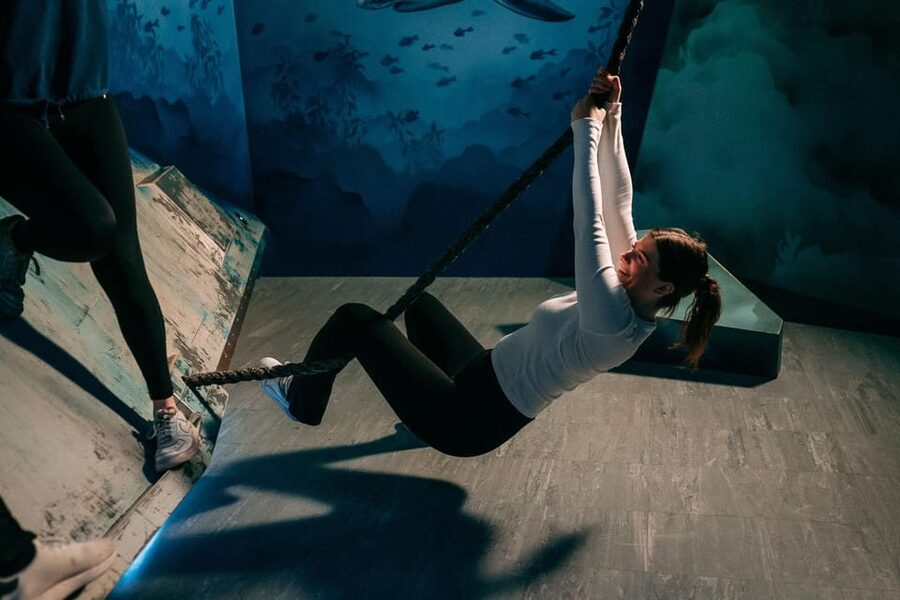
The stated duration is 1 to 2.5 hours, with starting times based on availability. A one-hour session gives you a brisk introduction and may suit a tight Stavanger schedule. You will need to make quick choices and avoid spending too long on one difficult room.
A 90-minute booking gives you more room to sample different challenges and retry a favorite. It is a sensible middle ground for most visitors, especially if you want variety without making the activity the main event of the day.
The full 2.5 hours works best for competitive groups, teenagers, company outings, or anyone who wants to work on scores. The large number of rooms means you can keep finding new tasks rather than finishing after one or two attempts.
Do not assume that the advertised duration includes time before the briefing. Arrive 15 minutes early, as requested, and treat that as part of your planning. If you have a reservation elsewhere, allow enough time for check-in and the session itself.
A closer look at the language and instructions
The host or greeter can communicate in English or Norwegian, but the game is played in English. For many international groups, that will be straightforward. If your English is limited, however, puzzle instructions may take longer to understand than the physical tasks.
This is the main practical language issue. The activity depends on reading or understanding the rules quickly, then making decisions under time pressure. If your group includes mixed language ability, pair a confident English speaker with anyone who may need help interpreting the task.
One booking found that several tasks were difficult to understand. That may have been a matter of wording, unfamiliar game design, or a technical problem in a room. Either way, do not judge your team too quickly if a challenge makes little sense. Ask the staff for clarification when needed, and try another room rather than letting one confusing task consume the whole session.
The staff are described as friendly and helpful in the supplied feedback, but there is no personal guide assigned to your team. You are expected to work independently after the briefing.
Who will get the most from this activity?
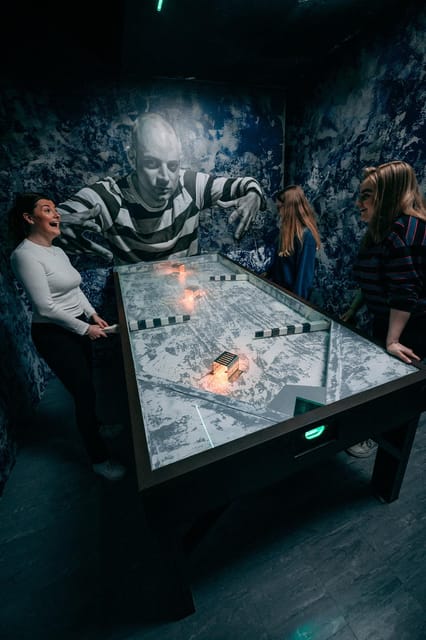
I would choose Prison Island for people who enjoy making decisions together rather than watching a performance. It is particularly well suited to:
- Families with children or teenagers who enjoy competition
- Friends looking for an active indoor outing
- Company teams that want a light team-building session
- School groups needing a structured group activity
- Visitors who like escape rooms but want more than one type of puzzle
- Groups with mixed interests, since the rooms use different skills
Teenagers may get especially good value from the format. One family booking described the experience as the best part of the holiday for two 15-year-olds. The combination of points, physical tasks, and the chance to retry rooms gives younger players a clear reason to stay engaged.
It is less suitable if you want quiet sightseeing, a guided cultural explanation, or a single polished story. This is an indoor activity built around doing, not listening. You should also think twice if nobody in your group enjoys competition or physical movement, even though the rooms are designed for different skill levels.
Price and value at $30 per person
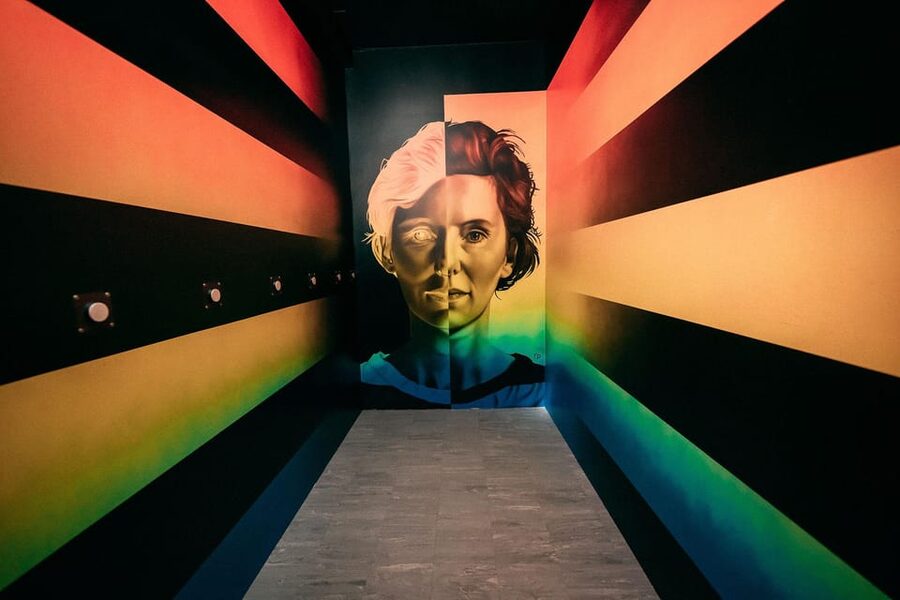
At $30 per person, the value depends on how long you play and how actively you use the rooms. For a one-hour booking, the price is reasonable for a staffed indoor group activity, but the value improves if you book 90 minutes or more and make use of retries.
A German family of four paid about €103 for 1.5 hours, which gives a useful real-world comparison, though exchange rates and booking prices can change. The key point is that the fee covers entry to multiple challenge rooms and a team scorecard, not a private guide or transportation.
The large room count helps justify the price. You are paying for a choice of tasks rather than one short puzzle sequence. If your group moves quickly, you can sample several rooms. If you enjoy improving scores, a failed first attempt does not end the value of the booking.
For a company or school group, the price also buys a shared activity with a clear goal. It may be easier to organize than a custom team exercise, though you should remember that no personal guide is included.
What to bring and how to prepare
Keep your preparation simple:
- Wear comfortable clothing that allows movement.
- Choose shoes suitable for physical activity.
- Arrive at the reception 15 minutes before your start time.
- Expect the game to run in English.
- Form a team of 2 to 5 people.
- Decide in advance whether your group cares more about points, variety, or simply having fun.
If you are visiting with a competitive group, agree on a basic strategy before entering. Try not to let one person solve every room. Rotate roles, communicate short instructions, and move on if a task is not making sense.
If you are visiting with children or teenagers, set the tone early. A low score does not mean the session failed. The retry option makes it easy to turn mistakes into another attempt, and the broad choice of rooms lets you find tasks that suit different ages.
Booking flexibility and access
The activity allows free cancellation up to 24 hours before the booking for a full refund. You can also reserve now and pay later, which is useful if your Stavanger plans are still changing.
Transport to and from Fangene på Fortet is not included, so you need to make your own way to the venue. The meeting point is the welcome reception. The venue is listed as wheelchair accessible, though the available information does not describe the access arrangements for every individual room.
Starting times depend on availability. Since the session can last from one to 2.5 hours, check the exact time and duration before booking, especially if you are fitting this around a cruise departure, restaurant reservation, or another activity.
Should you book Prison Island Stavanger?
Book it if your group likes shared challenges, quick teamwork, and variety. The 46 rooms, retry option, and flexible duration give you more to do than a single escape-room puzzle, while the $30 price is fair when you use a longer session.
I would choose a 90-minute or longer booking for most groups. One hour works if your schedule is tight, but the activity’s main strength is the range of rooms, and you will have more fun if you are not rushing from the start.
Skip it if you are looking for a guided Stavanger attraction, a scenic experience, or a calm indoor stop. Also think carefully about the English-language instructions if your group is not comfortable reading and listening in English.
For families, friends, corporate teams, and schools, this is a practical choice. It gives everyone a job, rewards communication, and lets you try again when the first attempt goes wrong. That is a good recipe for an active hour or two in Stavanger.
FAQ
Where does the Prison Island activity take place?
It takes place at Fangene på Fortet in Stavanger, Rogaland, with the meeting point at the welcome reception.
How much does the activity cost?
The listed price is $30 per person.
How long does the experience last?
The duration is listed as 1 to 2.5 hours. Available starting times depend on the date and booking availability.
How many people can be on one team?
Teams can include 2 to 5 people.
What does the activity include?
Your booking includes entry to multiple challenge rooms and a team scorecard.
Is a personal guide included?
No. A personal guide is not included, though a host or greeter is available in English or Norwegian.
What language is the game played in?
The game is played in English. The host or greeter can speak English or Norwegian.
What should I wear?
Wear comfortable clothing and shoes suitable for physical activity.
How early should I arrive?
Arrive 15 minutes before your booking time for the briefing.
Is the venue wheelchair accessible?
Yes, the activity is listed as wheelchair accessible.
Can I cancel for a refund?
You can cancel up to 24 hours in advance for a full refund.
Can I reserve without paying immediately?
Yes. The reserve now and pay later option lets you book your spot without paying at the time of reservation.
Just added around Stavanger
- Preikestolen Sunrise Hike And Breakfast Buffet★ 5.0 · 27 reviews
- Preikestolen Hidden Trail Hike + Lunch and Canoe Trip★ 5.0 · 20 reviews
- Lysefjord Fjord Safari Boat Tour from Forsand (Near Stavanger)★ 5.0 · 11 reviews
- Lysefjord Kayak Safari★ 5.0 · 22 reviews
- Stavanger Kjerag Hike with Guide and Transportation★ 5.0 · 9 reviews
- Discover Sensational Stavanger: Self-Guided Audio Tour★ 3.5 · 7 reviews
- The Pulpit Rock Air★ 4.5 · 8 reviews
- Kjerag Low-Season Hike + Packed Lunch★ 5.0 · 3 reviews
Escape Room Games, compared.


Fangene på Fortet Bergen: Prison Island Adventure Escapegame
Read our review →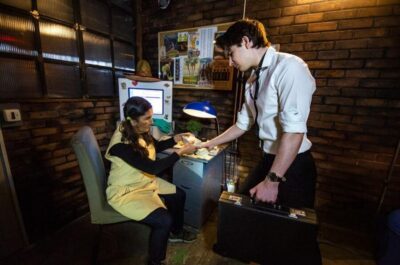
Browse the lists this tour appears in