
Reviewed · VIKING EXPERIENCES
Oslo Viking Quest: Exploration Game and Tour
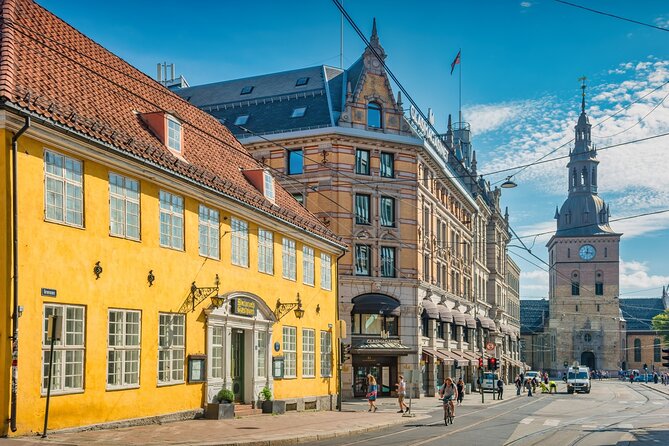
Oslo Viking Quest turns a central Oslo walk into a phone-based hunt for clues. You move from the Nobel Peace Center and City Hall toward the Royal Palace, parliament, Oslo Cathedral, and Akershus Fortress, solving puzzles that connect each stop with a piece of Norwegian history. It is part sightseeing walk, part outdoor game, and part city orientation.
I like the freedom to start and pause whenever you want, and I like that the route brings you to major sights without forcing you into a fixed schedule. At $7.20 per person, it is also an inexpensive way to add structure to a day in Oslo.
The main catch is that there is no physical guide. Some clues may take patience, and the outdoor format is less appealing in heavy rain or very cold weather. The advertised play time is about 1 hour 15 minutes, but side trips and stops can turn it into a much longer outing.
Key Things to Know Before You Play
- Eleven puzzles guide the route: Your phone provides the challenges and moves your group from one location to the next.
- The route covers major central sights: You visit the Nobel Peace Center, City Hall, the Royal Palace, the Storting, Oslo Cathedral, and Akershus Fortress.
- The Viking story gives the walk a theme: You learn about Oslo through a light adventure rather than a standard sightseeing script.
- You control the timing: The game can be started during the operating window, paused, and resumed later.
- It is private to your group: You do not share the activity with a larger tour party.
- Weather matters: The walk is best on a dry, reasonably comfortable day, since solving clues requires time outside.
Starting at Rådhusgata and Finding Your First Clue
The activity begins at Rådhusgata 30B, 0151 Oslo. You receive a mobile access code at booking, then use your phone to begin the game. Since there is no guide waiting at the meeting point, make sure the code is easy to find before you set off.
This setup works well for couples, families, or a small group of friends who prefer to move at their own speed. You can stop for coffee, take photographs, or spend extra time at a museum without holding up another party. The tradeoff is that you are responsible for reading the instructions and understanding each clue.
The route is offered in English and runs from 5:00 AM to 9:00 PM, Monday through Sunday, during the stated operating period. Those broad hours give you useful flexibility. An early start may suit a quiet city walk, while an afternoon start leaves room for other Oslo plans.
The listed finish is the Scandinavian Star Memorial at Akershusstranda, near Akershus Fortress. The route therefore works as a point-to-point walk rather than a loop back to the beginning. Keep that in mind when arranging your next stop.
More Self-Guided Tours in Oslo
- Oslo Self Guided Walking Tour with an APP
★ 4.3 · 12 reviews - Downtown Oslo: Self-Guided Highlights and History Audio Tour
★ 4.0 · 10 reviews - Vigeland Alien Threat in Oslo Exploration Game and Tour
★ 5.0 · 8 reviews
The Nobel Peace Center Starts the Story
The Nobel Peace Center is the first named stop. Its exhibitions focus on the Nobel Peace Prize and subjects such as war, peace, conflict resolution, public debate, and civic involvement. You are asked to look around for the answer to a challenge before moving on.
That approach gives the building more purpose than a quick photo stop. Instead of simply passing the center, you pay attention to its role in Oslo and to the ideas connected with the Peace Prize. The puzzle is intended to make the setting part of the game.
The key benefit is focus. A self-guided walk can easily become a string of buildings and names, but a clue gives you a reason to examine your surroundings. If you want a full visit to the center itself, check how much time you have, since the game is built around finding an answer and continuing along the route.
Oslo City Hall Adds Architecture and Civic Life
From the Nobel Peace Center, the game takes you to Oslo City Hall. The building houses the city council, city administration, and other municipal offices. Construction took place between 1931 and 1950, with work interrupted during the Second World War.
City Hall is a useful stop because it brings modern Oslo into the story. The quest is not limited to old castles and royal buildings. You also get a sense of how the capital governs itself today.
The challenge again asks you to inspect the location for a clue. This is simple, but it changes the way you walk through the city. You are not just following a line on a map. You are looking for details that might otherwise pass unnoticed.
Allow extra time if your group likes taking photographs or reading about the building. The planned game time is short, but the route can expand naturally when you stop at the sights.
June Seventh Square and the Work of Nils Sigurd Aas
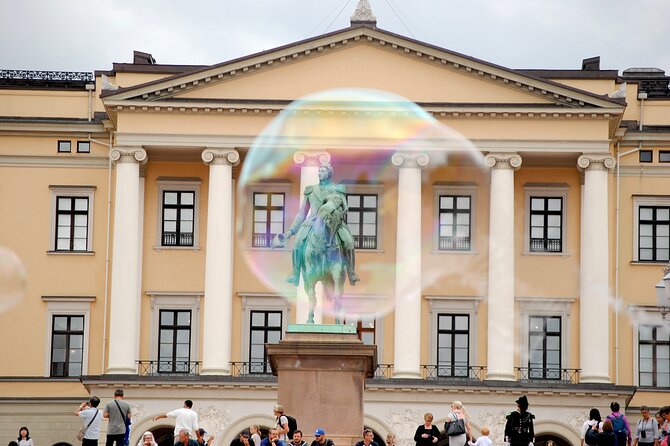
Another stop introduces Norwegian sculptor Nils Sigurd Aas. His work includes the statue of Haakon VII in June Seventh Square, and he also designed Norwegian coins, including the 10-krone and 20-krone pieces.
This is one of the more distinctive parts of the route because it connects a public artwork with an artist’s wider role in Norwegian culture. You are not only being sent to famous civic buildings. The game also points you toward an individual artist and a detail of everyday Norwegian life.
The puzzle format suits this stop. A sculpture is easy to glance at and walk past, but the challenge encourages you to look more closely. If you are interested in public art, this may be one of the most rewarding clues on the walk.
More Viking Experiences in Oslo:
- Oslo: Viking Planet Entry Ticket
★ 4.4 · 603 reviews - The Viking Planet Museum Ticket
★ 4.0 · 197 reviews - The Viking Planet Museum – Mini Group (4 adults)
★ 4.0 · 16 reviews - Tønsberg: Walk with a Viking – Guided Tour
★ 5.0 · 5 reviews
The Royal Palace and Norway’s Monarchy
The Royal Palace was built in the first half of the 19th century as the Norwegian residence of Charles III John, the French-born king who ruled Norway and Sweden. It is one of the route’s most recognizable sights and a natural place to pause.
The palace gives the quest a change of mood. After City Hall and the sculptural stop, you are now dealing with monarchy, royal residence, and the political history of Norway and Sweden. The game asks you to look around for another answer, so the palace grounds become part of the challenge rather than just a backdrop.
Do not expect a palace tour to be included. The activity provides a mobile game and outdoor route, not a ticketed interior visit or a palace guide. Treat this stop as a chance to see the building and work on the clue, then decide how long you want to linger.
The University of Oslo Brings in Academic Oslo
The University of Oslo, once called the Royal Frederick University until 1939, is Norway’s oldest university. Its place in the route adds an academic chapter to the city walk.
This stop helps broaden your sense of Oslo. The city is presented through peace work, government, monarchy, art, religion, war, and education. The game uses short challenges to connect these subjects, making the route feel like more than a basic checklist of landmarks.
As with the other locations, you need to study your surroundings and work out the answer. That is enjoyable for groups that like problem-solving, but it can slow things down if a clue is not immediately clear. Patience helps, especially if children are taking turns or several people are offering different answers.
The Storting and Norway’s Parliamentary Center
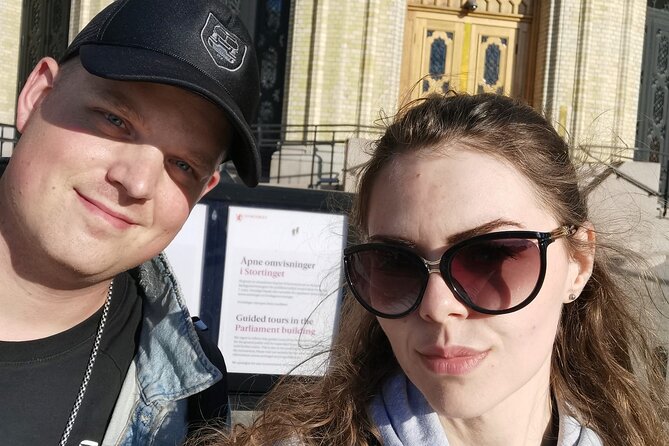
The Storting building at 22 Karl Johans gate houses Norway’s parliament. It opened in 1866 and was designed by Swedish architect Emil Victor Langlet.
This is a strong stop for understanding Norway as a constitutional and parliamentary country. The Royal Palace represents the monarchy, while the Storting represents elected government. Having both on the same route gives the game a useful political thread.
The location is also practical for a walking game because it sits in central Oslo. You can approach it as part of the route without needing a separate transport connection. The challenge asks you to observe the place and find the next answer, so take a moment before rushing onward.
Oslo Cathedral Offers a Quieter Pause
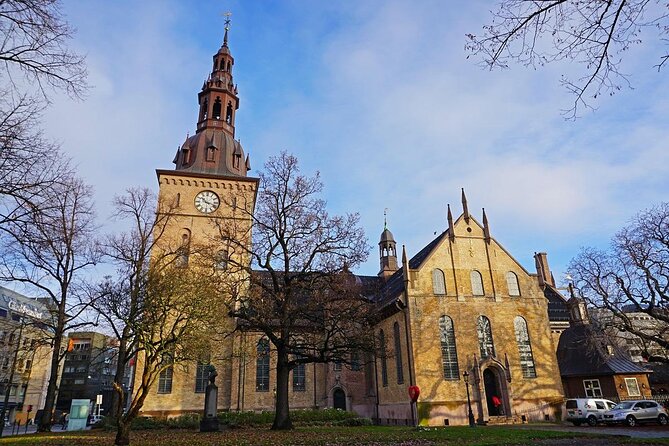
Oslo Cathedral, formerly Our Savior’s Church, is the main church for the Church of Norway Diocese of Oslo and the parish church for downtown Oslo. The present building dates from 1694 to 1697. The Norwegian Royal Family and Norwegian Government use it for public events.
This stop gives the walk a religious and ceremonial side. It also provides a change from civic buildings and outdoor monuments. The age of the present cathedral adds a sense of continuity to a route that otherwise moves through several periods of Oslo’s development.
The game does not include a guide or a stated interior tour, so check the setting and follow any local access rules if you want to go inside. The puzzle itself is based on looking around for an answer, which means you can still take part even if you keep your visit brief.
Akershus Fortress and Norway’s War Years
The route continues toward Akershus Fortress, a medieval castle built to protect Oslo and provide a royal residence. The fortress is one of the most important historical settings on the quest and gives the final section a stronger military and royal feel.
At the fortress, you also encounter the Norway’s Resistance Museum, also called the Norwegian Home Front Museum. Its collection covers the Norwegian resistance during the German occupation from 1940 to 1945, with equipment, photographs, and documents from the war years.
This part of the route can be especially meaningful if you want more than surface-level sightseeing. The fortress explains Oslo’s older defenses, while the museum focuses on a difficult period in modern Norwegian history. The game asks you to find answers at both the Resistance Museum and the fortress, so you have two related places to examine.
The activity does not include museum admission. If you want to visit the museum properly, allow additional time and check current entry arrangements separately. The route can still introduce you to the setting without turning the quest into a full museum visit.
The listed end point is at the Scandinavian Star Memorial on Akershusstranda. That gives the walk a definite finish near the waterfront and fortress area, rather than sending you back through the same streets.
How the Puzzles Affect the Pace
The activity includes 11 interactive puzzle challenges. The exact time needed depends on how quickly your group solves them and how often you stop along the way.
The official duration is about 1 hour 15 minutes. That is a useful planning figure for the game itself, but it should not be treated as a strict door-to-door sightseeing time. A group that pauses at City Hall, the palace, the cathedral, or Akershus Fortress can easily spend much longer in the area.
One helpful feature is the ability to pause and resume. You can split the route around lunch or another appointment, though you should make sure you can access the game again on your phone. This flexible design is more forgiving than a scheduled walking tour.
The main weakness is clue clarity. Some puzzles may require patience, and a hint that feels obvious to one person may not make sense to another. I would choose this activity for a group that enjoys working things out together, not for someone who wants a smooth stream of expert commentary.
What $7.20 Buys You in Oslo
At $7.20 per person, the price is low for an activity that links many central sights. You receive mobile access to the quest, 11 challenges, a Viking storyline, and history content. Since the activity is private to your group, the cost can be particularly appealing for families or friends who want a shared outing without paying for a private guide.
The value comes from structure rather than luxury. You are paying for a designed route and interactive content, not transportation, admission tickets, refreshments, or a person leading the walk. If you already plan to walk through central Oslo, the quest adds a reason to pay attention and a little competition.
Group discounts may improve the price further. Check the final booking total for your party, since the low listed rate may not tell you how discounts are applied.
Free cancellation is available when you cancel at least 24 hours before the local start time. Cancellations within 24 hours are not refunded, and late changes are not accepted. That policy matters less than with a high-cost tour, but it is still worth noting if the weather forecast looks poor.
Who Will Get the Most From This Quest?
I would recommend it to families with older children, couples who like puzzles, and friends who want a light challenge during a city break. It also suits independent visitors who prefer not to join a group led by a guide.
The route has educational value without requiring you to sit through a long lecture. You get short pieces of information at a series of real Oslo locations, then use your surroundings to solve the next step.
It is less suitable if you want detailed historical explanation at every stop. A physical guide can answer questions, adjust the route, and add context in real time. This game cannot do that. You also need to consider the weather, since the outdoor format is less pleasant when it is raining or very cold.
Most people can participate, and service animals are allowed. The route is near public transportation, which helps if you need to reach the start or continue elsewhere after the finish. The activity is offered in English.
Should You Book Oslo Viking Quest?
Book it if you want a low-cost, flexible way to see central Oslo while keeping your group involved. The route brings together peace, government, monarchy, art, education, religion, war, and medieval defense in a compact walk. That range is the strongest reason to choose it.
Skip it if you want a traditional guided tour with a local expert, or if your group has little patience for solving clues. For everyone else, the $7.20 price makes the experiment easy to justify, especially on a dry day when you can pause, explore side trips, and let the walk run longer than the stated 75 minutes.
FAQ
How long does Oslo Viking Quest take?
The approximate duration is 1 hour 15 minutes. You may spend longer if you take side trips, stop at the sights, or pause the game.
Where does the quest start?
It starts at Rådhusgata 30B, 0151 Oslo, Norway.
Where does the quest end?
The listed end point is the Scandinavian Star Memorial at Akershusstranda, 0150 Oslo, near Akershus Fortress.
Is a physical guide included?
No. The experience provides mobile access to the quest, but there is no physical tour guide.
How many puzzles are included?
The quest includes 11 interactive puzzle challenges.
Can I pause and resume the activity?
Yes. The experience is designed so you can pause and resume whenever needed.
What language is the quest offered in?
It is offered in English.
Can I cancel for a full refund?
Yes, if you cancel at least 24 hours before the local start time. Cancellations made within 24 hours are not refunded.
Just added around Oslo
- Oslo Winter Highlights Bike Tour★ 5.0 · 36 reviews
- 4 hours Best View of the Oslofjord Winter Edition★ 4.0 · 15 reviews
- The Viking Planet Museum – Mini Group (4 adults)★ 4.0 · 16 reviews
- Unknown war. Oslo and Norway during 1940-45★ 5.0 · 74 reviews
- The Ultimate Norwegian Skiing Experience★ 5.0 · 16 reviews
- The Ultimate Study of the Human Form at Vigeland’s Sculpture Park with a Local★ 4.0 · 14 reviews
- The Oslo Beer Adventure★ 4.5 · 11 reviews
- The Essential Oslo Private Walking Tour★ 5.0 · 79 reviews
Viking Experiences, compared.
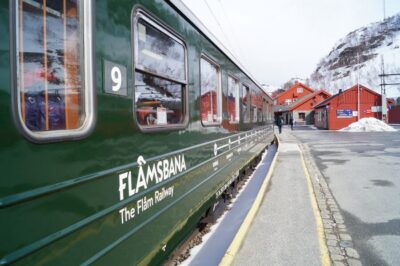
Viking Village, Nærøyfjord Cruise & Flåm Railway
Read our review →

Guided tour – Viking Village, Nærøyfjord Cruise and Flåm Railway
Read our review →
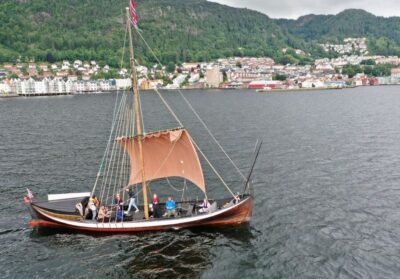
Viking Ship Sailing Experience and Sightseeing Trip
Read our review →
Viking Village, Nærøyfjorden Cruise and Flåm Railway
Read our review →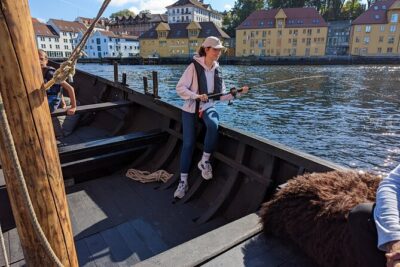
Bergen Fjord Experience Aboard Viking-style Ship
Read our review →
Guided E-Bike Tour in Haugesund: city, vikings, Rising Tides
Read our review →Browse the lists this tour appears in