
Reviewed · OSLO TOURS
Unknown war. Oslo and Norway during 1940-45
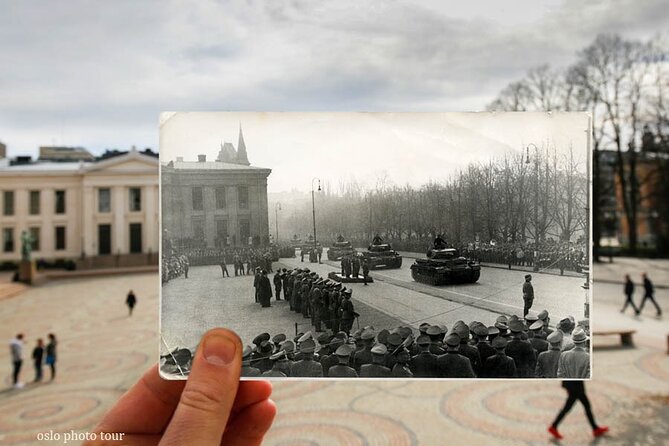
Oslo’s wartime story is easiest to grasp when you are standing where events happened. This private walking tour links familiar city sights with the German occupation of 1940 to 1945, using old photographs to show the same streets and buildings during the war.
I like two things especially. First, guide Rami brings a large store of period images, often holding up a photograph at the exact place where it was taken. Second, the tour connects military events with ordinary life, resistance work, Norwegian politics, and the choices people faced under occupation. The main consideration is simple: it is outdoors, so rain and cold can affect the experience.
Key points to know before booking
- Period photographs make the past visible: Rami uses images of Oslo during the occupation alongside the places you see today.
- The route covers central Oslo: You walk from the Karl Johan monument through the Royal Palace area, Parliament, University Square, Nationaltheatret, and Akershus Fortress.
- A private group means a flexible pace: The experience is priced at $307.50 for up to five people, not per person.
- The focus is Norway from 1940 to 1945: Expect occupation history, resistance stories, civilian life, and Norway’s place in World War II.
- The finish is well chosen: The walk ends at Akershus Fortress near the Norway’s Resistance Museum.
- Weather matters: The tour requires good weather, and an umbrella or warm layer is sensible for Oslo’s changeable conditions.
Why this Oslo war tour feels different
Many city walks use famous buildings as a backdrop. This one uses them as evidence. The Royal Palace, Parliament, University Square, and Nationaltheatret are not simply sightseeing stops. They become reference points for understanding how German control affected Oslo and how Norwegian resistance operated.
Rami’s photographs are central to the experience. You are not asked to picture the occupation from a long explanation alone. You can compare a present-day street or building with an image from the wartime period. That simple method gives the stories a firm sense of place.
I also like the balanced subject. The tour is designed to explain what happened, not turn every stop into a dramatic speech. That suits visitors who want clear facts and context, including people who already know a great deal about World War II but want to understand Norway’s particular experience.
The private format helps here. Your group can ask questions, spend longer on a subject, or keep moving if the weather turns sour. It also makes the tour a useful first look at Oslo, since the route introduces several central sights while giving them a specific historical purpose.
A few more Oslo days to weigh up
- Oslo: Scenic Fjord Cruise with Audio Guide Commentary
★ 4.5 · 5,375 reviews - Oslo Nature Walks: Island Hopping Tour
★ 4.8 · 2,713 reviews - Oslo: 100% Electric Oslofjord Sightseeing Cruise
★ 4.4 · 2,041 reviews
Starting at the Karl Johan monument
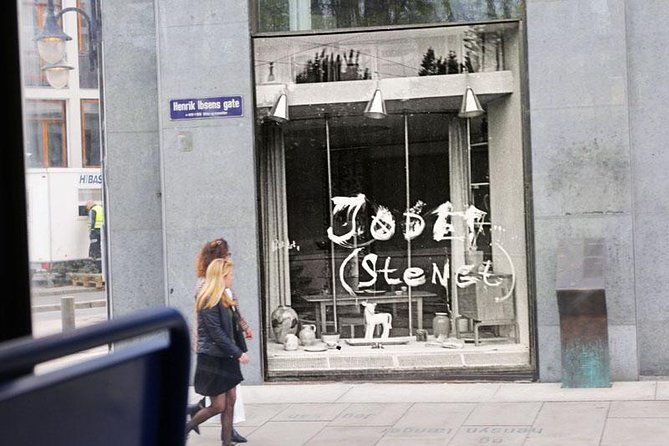
The meeting point is the Karl Johan monument in central Oslo. From here, the walk enters the city’s main historical zone. The opening section gives you a framework for the occupation before the route begins connecting individual places to wartime events.
That opening matters because Norway’s role in World War II is not always covered in the same detail as the larger stories of Britain, France, Germany, or the Soviet Union. Rami explains the Norwegian setting and the occupation itself, then builds toward resistance activity and the effect on daily life.
You should expect a walking lecture rather than a museum-style display. The photographs are shown as part of the conversation, so you will want to stay close enough to see them and hear the explanation. One family found that older members sometimes had trouble catching every word while walking, though Rami clarified points and answered questions. If someone in your group has hearing difficulties, ask for pauses when needed.
Royal Palace and Karl Johans Gate
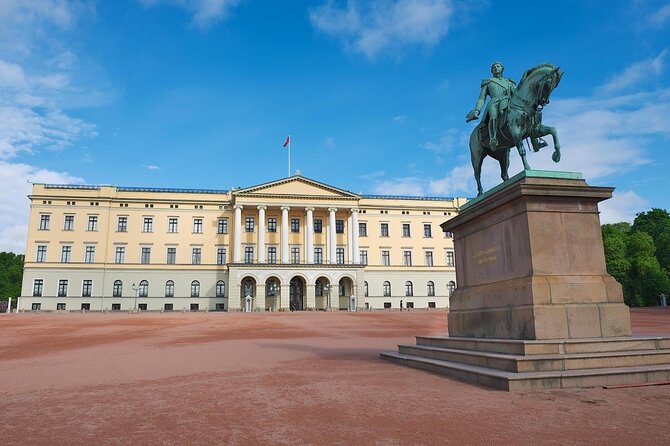
The Royal Palace is the first listed stop, with about ten minutes planned there. The palace area gives the tour an immediate connection to Norway’s monarchy and national government during a difficult period.
Karl Johans Gate follows, with several locations tied to World War II history. This is one of the most useful stretches for understanding that the occupation was not confined to a battlefield or a distant military site. The central avenue was part of the lived city, where public authority, movement, surveillance, and resistance all intersected.
The short time listed for each stop should not be read as a strict ten-minute lecture. The route is a continuous walk, and the private setup allows the guide to adjust the rhythm. Still, two and a half hours goes quickly. If your group wants every political and military detail, you may need to accept a brisk pace or choose one theme to emphasize.
Parliament and Stortorvet
The Norwegian Parliament is another ten-minute stop. Here, the tour can place the occupation in a political setting and help you understand how national institutions related to the German takeover.
Next comes Stortorvet, the market square. Its presence on the route is a useful reminder that wartime history is also social history. Squares and commercial areas are where ordinary routines continue, even under pressure. The tour’s strength is its effort to connect major events with what people in Oslo experienced day to day.
The market square stop is free, according to the supplied details. You are seeing the space as part of the walking route, not entering a separate attraction. That keeps the tour moving and avoids adding another admission cost.
Same base, a completely different kind of day:
- Oslo: Fjord Evening Cruise with Shrimp Buffet
★ 4.5 · 1,956 reviews - Oslo: 3-Hour Highlights Bike Tour
★ 4.8 · 1,609 reviews - Oslo: 24 or 48-Hour Hop-On Hop-Off Sightseeing Bus Ticket
★ 4.1 · 1,470 reviews - Oslo: Guided Sightseeing Fjord Cruise on Premium Silent Boat
★ 4.7 · 1,390 reviews
University Square and the Faculty of Law
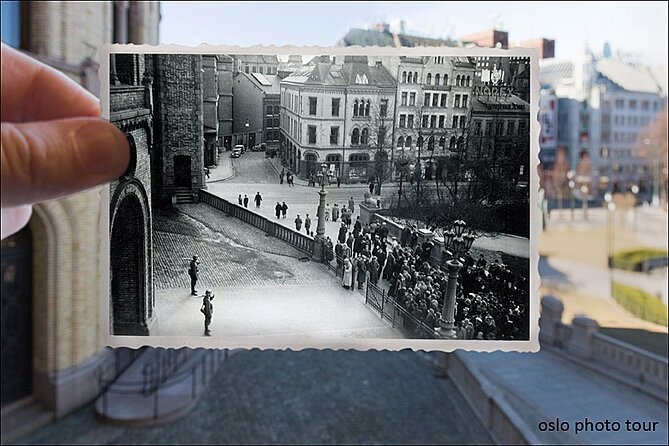
The University of Oslo’s Faculty of Law, at University Square, brings education and civic life into the story. A university setting can show how occupation reached beyond government offices and military facilities. It also provides another place where the old photographs can help you compare Oslo then and now.
This stop will suit you if you are interested in how institutions and citizens responded under occupation. The tour is not only about famous resistance figures. It also asks you to consider the wider social setting in which resistance, compliance, fear, and everyday survival existed together.
That wider view is one of the strongest reasons to book a private guide rather than rely only on a short museum visit. At a museum, you usually see objects and panels in a fixed order. Here, you can ask why a particular place mattered and how it fit into the city around it.
Nationaltheatret and Gunnar Sønsteby
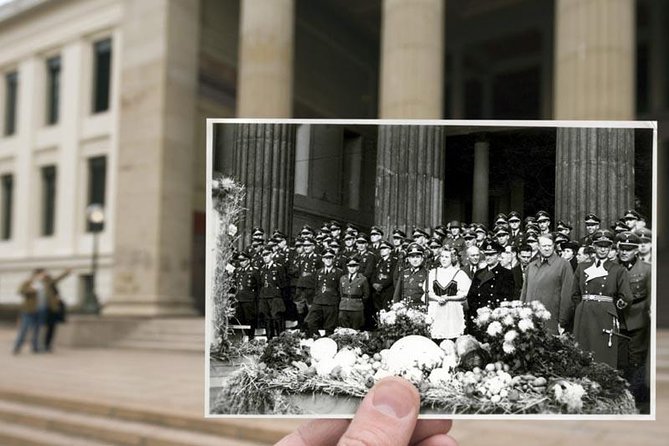
At Nationaltheatret, the route includes the Gunnar Sønsteby monument. Sønsteby is presented as an important resistance figure, and the monument gives the tour a clear human focus.
This is where the photographs can have their greatest impact. A monument tells you whom a country remembers. A period image can show the physical setting in which people lived and acted. Putting those two forms of memory together helps you understand resistance as something carried out in real streets, not only in textbook accounts.
The tour’s treatment of resistance appears to be one of its most praised qualities. Rami links individual stories to the larger conflict while keeping the explanation grounded in the places around you. His personal collection of photographs also gives the material a more direct feel than a standard list of dates.
If you have watched The King’s Choice or NR24 before arriving, the background may help you follow the Norwegian story. Those films are not required, and the tour is designed to explain the period itself, but advance viewing could give you useful context.
Akershus Fortress and the Norway’s Resistance Museum
The walk ends at Akershus Fortress, near the Norway’s Resistance Museum. This is a smart finish. The fortress is one of Oslo’s major historic sites, and the museum offers a chance to continue the subject with indoor exhibits after the walking portion ends.
Admission to the fortress is listed as not included, so check the cost before planning to enter. The tour itself ends near the museum rather than promising entry to it. That distinction matters if you are working with a fixed schedule or hoping to combine both activities.
One practical advantage is the route’s usefulness for a first visit. You see several central landmarks along the way, then finish in an area where you can continue exploring. A visitor arriving by cruise ship may find the private format especially helpful, since the guide can focus the available time on both Oslo sights and the wartime subject.
Do not expect the fortress stop to be a long guided tour of every part of the complex. The listed tour length is about two and a half hours, and most of that time is spent walking between city locations. Think of Akershus as the final historical anchor and a possible next stop.
Price, group size, and value
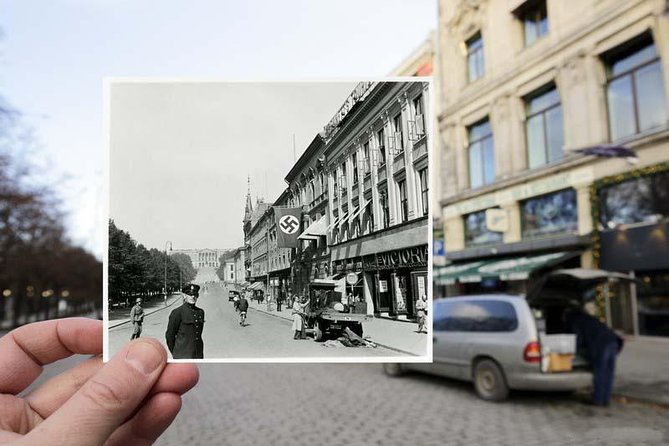
The price is $307.50 per group of up to five people. For one person, that is expensive. For five people, it works out to $61.50 each, which is more reasonable for a private two-and-a-half-hour experience.
The value depends on what you want from Oslo. If you only need a quick introduction to the city, a general walking tour may cost less and cover more landmarks. If World War II is a main reason for your visit, this tour gives you a focused route, a dedicated guide, and photographs that are difficult to reproduce with a guidebook.
The private arrangement also changes the value equation. You are paying for attention to your group, not joining a large departure with a fixed script. You can ask about Norwegian resistance, civilian life, political events, or a particular location. The supplied information says most people can participate, and service animals are allowed.
The tour is offered in English. Confirmation is sent within 48 hours of booking, subject to availability. The listed operating hours are Monday through Thursday, 9:00 a.m. to 4:00 p.m., so check that your preferred time fits those hours.
How to prepare for the walk
Wear shoes suitable for city walking and bring clothing for changing weather. The experience requires good weather, and rain has affected enjoyment for some groups. An umbrella is a sensible addition, particularly if the forecast is uncertain.
Keep the group together when Rami is showing photographs. The images are a major part of the tour, and you will get more from them if you can see them clearly while also hearing the explanation.
Give yourself some flexibility at the end. The walk finishes near the Norway’s Resistance Museum, but museum admission is not included. You may want to continue there, or you may prefer to move on to another part of Oslo. The route is also useful early in your stay because it introduces the city’s central sights and gives you a historical map of the area.
The tour is best for adults, families with older children, history enthusiasts, and anyone who wants a more serious look at Norway’s wartime experience. It can also work for a mixed group, since the route doubles as an orientation walk. People who dislike outdoor walking, long explanations, or a subject-heavy tour may find it less suitable.
Should you book the Unknown War tour?
Book it if you want to understand Oslo through the years 1940 to 1945 rather than simply photograph its main sights. Rami’s use of location-specific photographs, his focus on ordinary life as well as resistance, and the private format make this a strong choice for a small group with a genuine interest in the subject.
I would be more cautious if your time in Oslo is very limited, the weather looks poor, or your main goal is a broad overview of Norwegian culture. The route covers major sights, but the conversation remains firmly centered on the occupation and World War II.
For a group of up to five, the price is easiest to justify when everyone wants the same focused experience. Finish at Akershus Fortress, allow extra time for the Norway’s Resistance Museum if you want more context, and come prepared for rain. With those expectations, this is a thoughtful and practical way to see central Oslo through a period that many visitors know too little about.
FAQ
Where does the tour start?
It starts at the Karl Johan monument in Sentrum, Oslo, postal code 0010.
Where does the tour end?
It ends at Akershus Fortress, near the Norway’s Resistance Museum, postal code 0150.
How long does the tour last?
The walking experience lasts approximately two hours and 30 minutes.
What language is the tour offered in?
The tour is offered in English.
How much does the tour cost?
The listed price is $307.50 per group of up to five people.
Is this a private tour?
Yes. Only your group participates in the activity.
Which Oslo sights are included?
The route includes the Royal Palace, Karl Johans Gate, the Norwegian Parliament, Stortorvet, University Square and the Faculty of Law, Nationaltheatret, and Akershus Fortress.
Is admission to attractions included?
Admission tickets are not included for the Royal Palace, Parliament, Nationaltheatret, or Akershus Fortress. Stortorvet and University Square are listed as free stops.
Can I cancel for a full refund?
Yes, if you cancel at least 24 hours before the experience starts. Cancellations or changes made less than 24 hours before the start time are not accepted for a refund.
What happens if the tour is canceled because of weather or minimum group size?
If poor weather or an unmet minimum number of participants causes cancellation, you will be offered another date or experience, or a full refund.
Just added around Oslo
- Oslo Winter Highlights Bike Tour★ 5.0 · 36 reviews
- 4 hours Best View of the Oslofjord Winter Edition★ 4.0 · 15 reviews
- The Viking Planet Museum – Mini Group (4 adults)★ 4.0 · 16 reviews
- The Ultimate Norwegian Skiing Experience★ 5.0 · 16 reviews
- The Ultimate Study of the Human Form at Vigeland’s Sculpture Park with a Local★ 4.0 · 14 reviews
- The Oslo Beer Adventure★ 4.5 · 11 reviews
- The Essential Oslo Private Walking Tour★ 5.0 · 79 reviews
- Fjord Houseboat Cruise in Oslo. 100 % electric. BYO★ 5.0 · 3 reviews
Oslo Tours, compared.

Scenic Fjord Cruise with Audio Guide Commentary
Read our review →

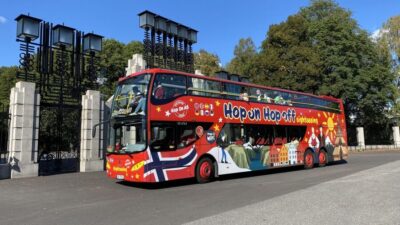
24 or 48-Hour Hop-On Hop-Off Sightseeing Bus Ticket
Read our review →
Guided Sightseeing Fjord Cruise on Premium Silent Boat
Read our review →
Browse the lists this tour appears in