
Reviewed · MUSEUMS
Maihaugen Museum/The Norwegian Olympic Museum, Lillehammer.
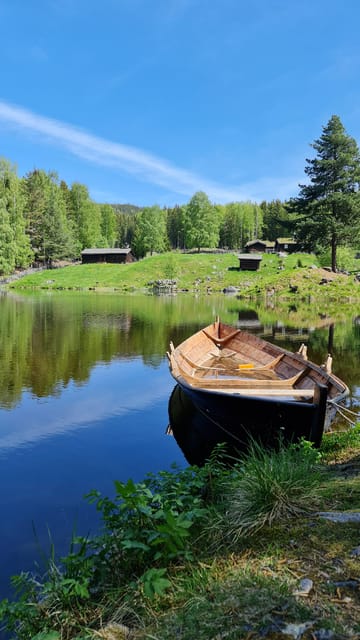
Maihaugen gives you an unusually broad look at Norway in one place: more than 200 buildings spread across eight centuries, from a medieval stave church to homes from the 1900s. Garmo stave church, built in the 1200s, is the star sight, while the old farms show how ordinary people lived and worked.
I like the way the museum connects buildings with daily life, not just dates and display cases. I also like the Norwegian Olympic Museum, which adds a modern, hands-on change of pace. The main catch is seasonal access: in winter, many outdoor houses may be closed, so the open-air section is far better suited to summer.
Key points at a glance
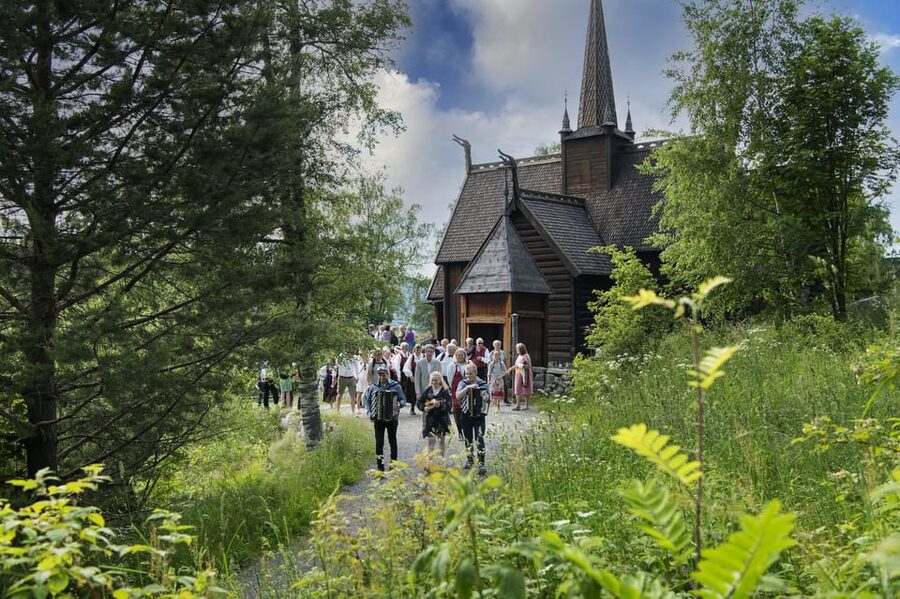
- Garmo stave church dates from the 1200s, giving you a close look at one of Norway’s most recognizable building traditions.
- More than 200 buildings cover eight centuries, including farms from the 1600s through 1800s and homes from the 20th century.
- The Norwegian Olympic Museum is included, with special attention to Oslo 1952 and Lillehammer 1994.
- Summer adds the Norwegian Postal Museum, including an old train with a postal carriage.
- The museum works best as a full-day visit, since the site combines outdoor buildings, indoor exhibits, food stops, and several distinct historical areas.
- Winter requires careful planning, because many historic houses are closed and English-language access may be limited.
What Maihaugen shows you in one day
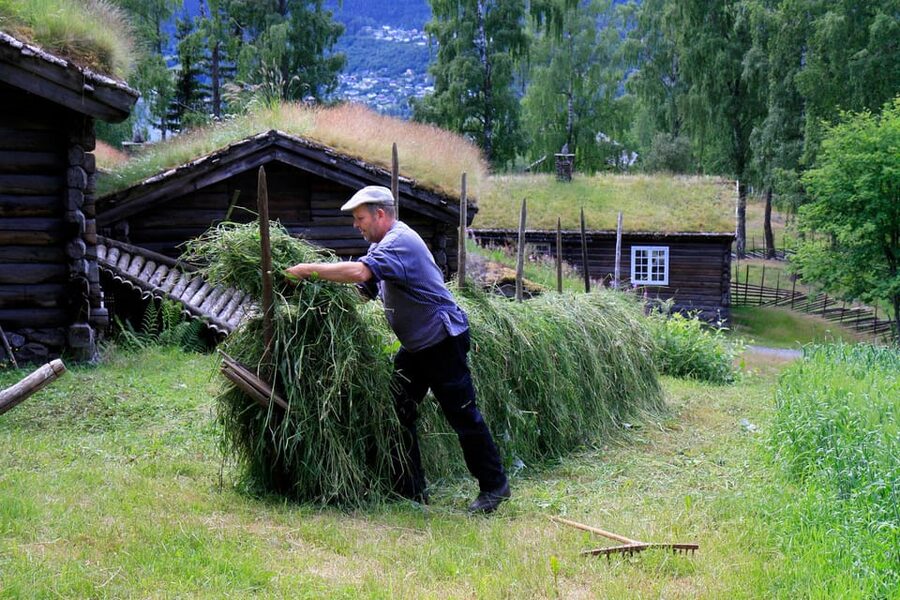
Maihaugen is not a single museum building. It is a large open-air collection in Lillehammer, with historic buildings arranged across an outdoor site and indoor exhibitions near the Visitor Center. You can move from a medieval church to old farm buildings, then into a 20th-century home or a modern Olympic display.
That range is the main reason to allow a full day. You are not simply checking off one landmark. You are comparing how Norwegian homes, work, religion, transport, and leisure changed over time.
Start at the Visitor Center, where the counter and hosts are located. This is the practical place to orient yourself before heading outside. Since the site includes more than 200 buildings, I would not rush straight to the first house you see. Take a moment to work out the general direction of the areas you most want to visit.
The outdoor portion changes with the season. Summer is the strongest time for the complete experience, since more houses are open, activities are added, and actors or hosts may be present in historic homes. You might see traditional crafts, learn how a farm functioned, and find animals grazing among the old sunburned buildings.
More Museum Visits in Norway:
- Kon-Tiki Museum Entrance Ticket
★ 4.5 · 1,096 reviews - Oslo: Paradox Museum Entry Ticket
★ 4.3 · 799 reviews - The Fram Museum Admission Ticket
★ 4.5 · 490 reviews
Garmo stave church and the oldest buildings
Garmo stave church is the museum’s essential stop. Dating from the 1200s, it gives you a direct link to Norway’s medieval past and the stave-building tradition that makes these churches so distinctive.
The church is especially useful as a starting point for understanding the museum. The later farms and homes are not isolated antiques. They show how Norwegian life developed after the medieval period, and the church gives that story an early anchor.
The old farms from the 1600s, 1700s, and 1800s are where Maihaugen becomes most personal. Look at the relationship between the main house, work buildings, storage areas, and surrounding ground. The point is not only how the structures look. It is how a household was organized around food, labor, family, and the seasons.
During summer, some of these buildings have hosts or actors who help explain their use. That can make a major difference. A locked building asks you to study the outside, but an open home lets you see the scale of rooms and the practical limits of earlier domestic life.
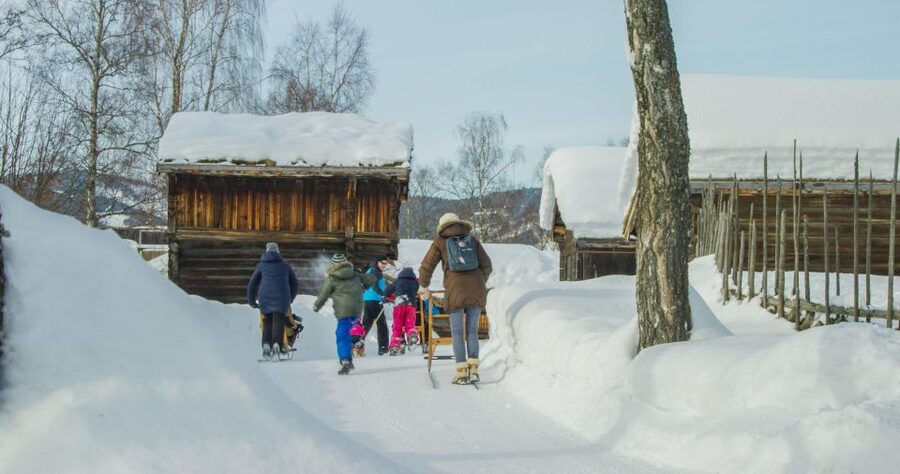
In winter, expect a much quieter outdoor visit. Only a small number of houses may be open, and you may have to look through windows or rely on written information. One January visit found only four houses open, with a German-speaking guide helping open them. That does not make the site worthless, but it changes the experience from an active historical visit to a walk around mostly closed buildings.
Farms, crafts, and everyday Norwegian life
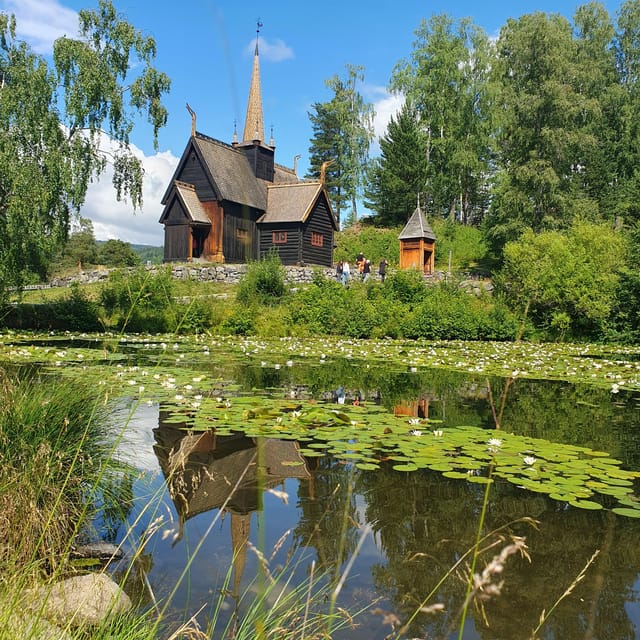
The farm section is valuable because it avoids presenting Norway as only churches, fjords, and grand scenery. You see the working side of the country. The buildings reflect a culture that depended on careful use of timber, storage, livestock, and seasonal work.
Summer is the time to see this part at its best. Traditional crafts may be demonstrated, and the historic houses can have a sense of use rather than looking like empty shells. You might see animals grazing near the buildings, which helps children connect the structures to the food and work that supported them.
Families should plan for a lot of walking. The museum is spread out, and the reward comes from moving between areas rather than staying inside one exhibition hall. Bring enough time to pause at buildings that interest you instead of trying to see every one at the same speed.
Not every building will appeal equally. Some houses can feel similar if you do not follow the displays or read the background information. One practical weakness is that the open-air area does not always provide a clear route through the entire site. If you lose track of where you have been, the visit can feel longer than necessary.
Houses from the 1900s
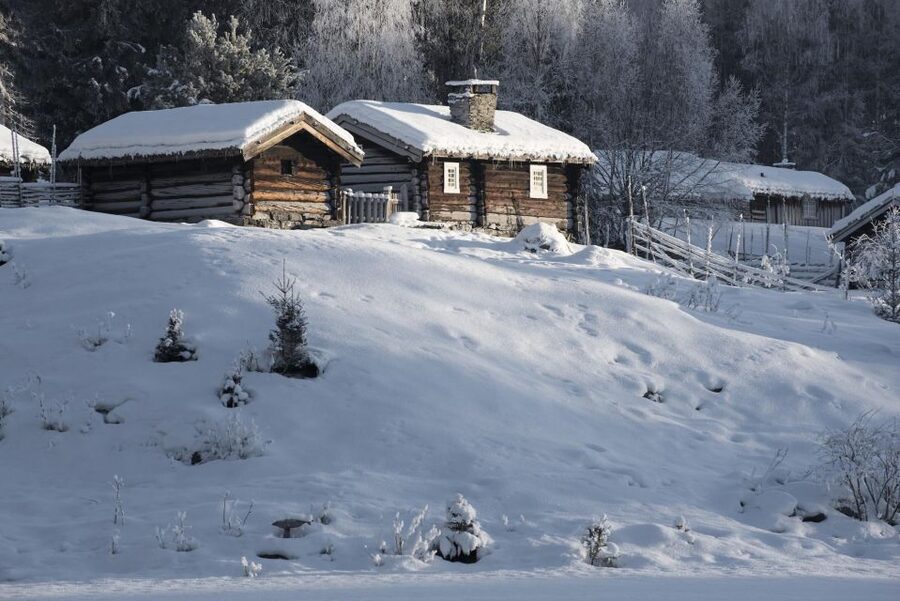
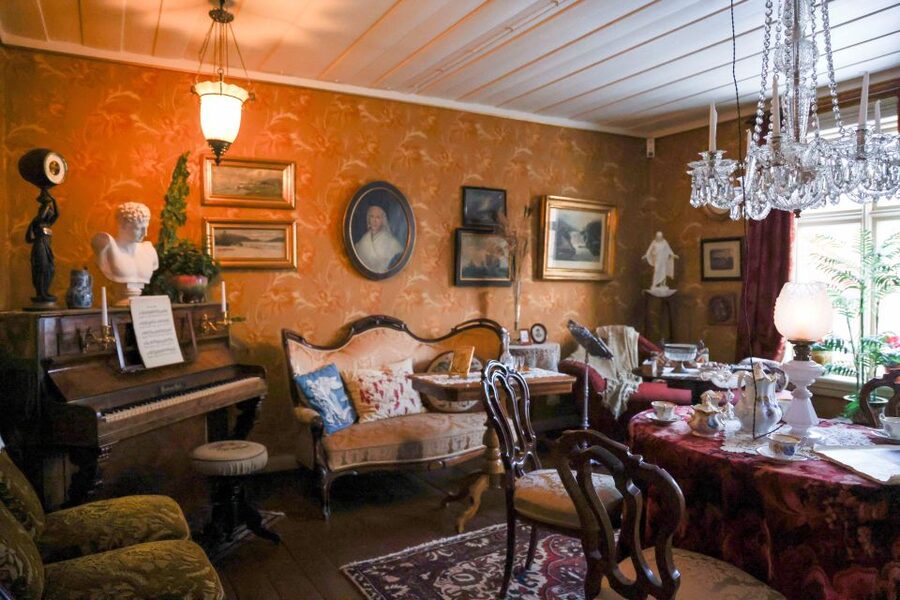
The 20th-century houses make Maihaugen more relatable. Instead of stopping with old farms, the museum follows Norwegian domestic life into the modern era, with homes from different decades of the 1900s.
This section lets you notice changes in taste, household technology, room use, and family life. The buildings are close enough in date to invite comparison. A house from one decade can feel familiar, while another shows how quickly daily life changed.
I would save this area for the middle or later part of your visit. After seeing the church and older farms, the 1900s homes help you measure the distance between rural traditions and modern Norway. They also make the museum easier to enjoy if medieval buildings are not your main interest.
The value here is less about one famous object and more about the sequence. You can see Norway move from older farm-based living toward the homes and habits of the modern century. If you like architecture, interiors, or social history, allow extra time for these houses.
Same base, a completely different kind of day:
- From Bergen: The Original Fjord Cruise to Mostraumen
★ 4.7 · 8,440 reviews - Tromsø: Reindeer Sledding & Feeding with a Sami Guide
★ 4.8 · 6,417 reviews - Stavanger: Scenic Fjord Cruise to Lysefjord and Preikestolen
★ 4.6 · 5,791 reviews - Oslo: Scenic Fjord Cruise with Audio Guide Commentary
★ 4.5 · 5,375 reviews
Indoor exhibitions: a useful break from the outdoor site
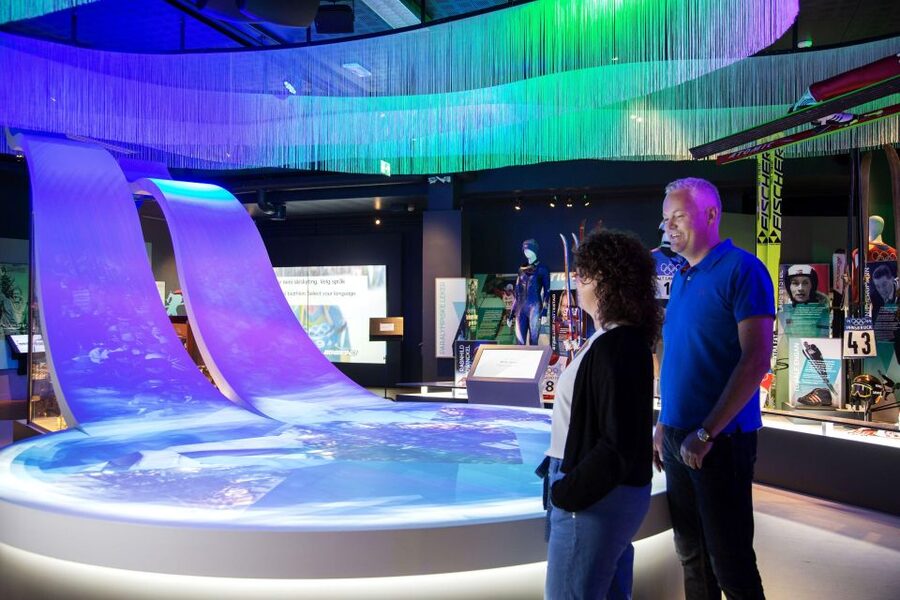
The indoor exhibitions provide structure when the open-air area feels broad or difficult to follow. They also help explain Norway’s cultural development in a way that individual buildings cannot always do.
The exhibitions Impulses and We won the land are part of the indoor program. Together with the other indoor displays, they give you a more organized setting for understanding the objects and ideas behind the museum’s buildings.
If you visit in winter, make the indoor museum your priority. A January visit found the covered museum far more informative than the outdoor section, since the houses were mostly closed. The indoor displays can carry the visit when weather and seasonal staffing limit access outside.
This is also a good approach for families. Children can move between large historic objects, visual displays, and the outdoor buildings instead of spending the entire day reading labels in one room. Adults get a clearer framework for what they are seeing outside.
The Norwegian Olympic Museum and Lillehammer 1994
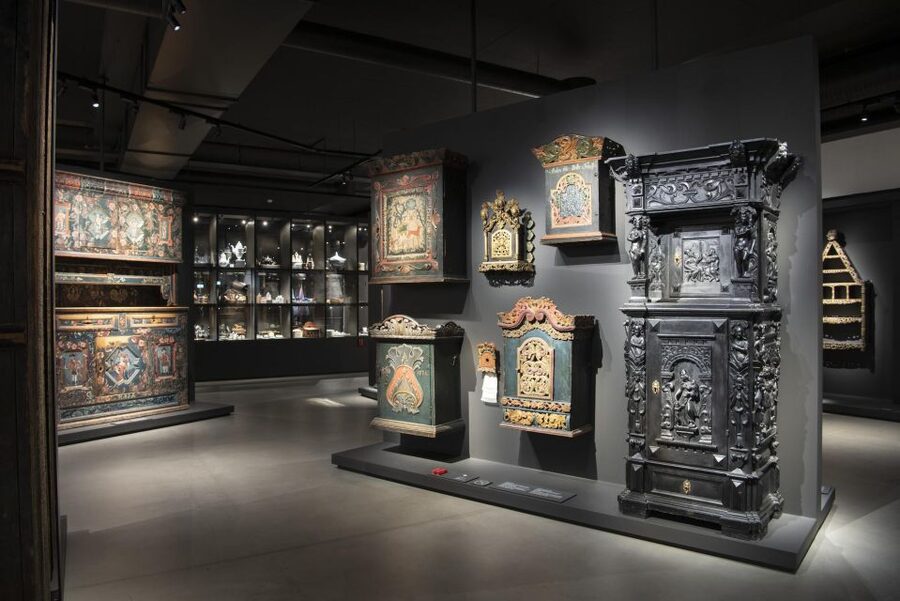
The Norwegian Olympic Museum sits on the same site and is included with your Maihaugen admission. It covers the Olympic Games from ancient times to the present, with particular attention to Oslo 1952 and Lillehammer 1994.
This is not just an extra room added to the museum. It gives you a different way to understand modern Norwegian identity. The exhibits use original objects, interactive installations, and films showing major Olympic moments.
Lillehammer 1994 is the natural focus for a visit here. You are seeing Olympic history in the city that hosted those Games, so the subject feels local rather than abstract. Oslo 1952 adds an earlier Norwegian chapter and helps place the two events in a longer story.
I would visit this museum after the older buildings. The change from medieval timber architecture to sports history is sharp, but that is part of the appeal. After several hours outdoors, the indoor Olympic exhibits offer warmth, movement, and a clear narrative.
The Olympic Museum is also one of the strongest reasons to visit if someone in your group is not interested in historic homes. You can divide your time without splitting the ticket, and the modern displays make the site more appealing to teenagers and sports fans.
The Norwegian Postal Museum in summer
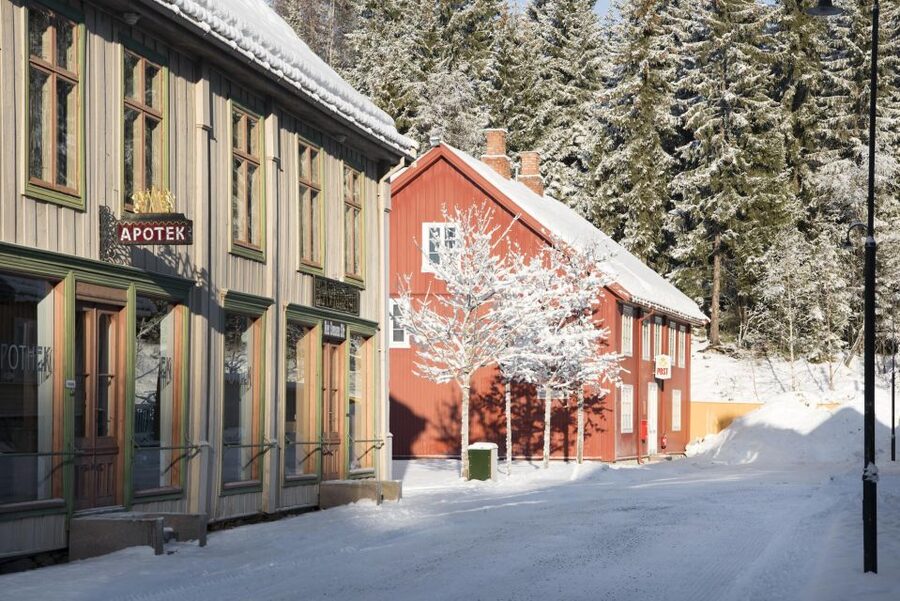
The Norwegian Postal Museum is open during the summer and is included in the summer ticket. It has preserved and presented Norwegian postal history since 1947.
Its most distinctive feature is an old train with a postal carriage. That gives the collection a physical sense of how mail moved, rather than treating postal history as a line of stamps in cases.
Do not count on this section outside its summer opening period. The main Maihaugen museum remains open all year, but individual outdoor and related exhibits vary by season. Check the current opening information if the Postal Museum is one of your main reasons for going.
Food, shopping, and the practical shape of the visit
The main building has a cafeteria open all year. In summer, additional places to eat operate around the open-air museum. Food and drinks are not included in the admission price, so plan for those costs separately.
A full day gives you time to eat without turning the visit into a race. You can use the cafeteria for a simple pause, then return outside for more buildings or head to the Olympic Museum.
The museum shop sells quality design products and offers a more useful selection than a typical souvenir counter. You may find Norwegian design items, handmade products, and gift ideas connected to local craft traditions.
The $19 admission price is fair if you use the whole site. The ticket includes the Maihaugen outdoor museum, indoor exhibitions, outdoor exhibitions available during the season, the Norwegian Olympic Museum, and the Norwegian Postal Museum in summer. It becomes less good value if you arrive in winter expecting every historic house to be open.
Allowing one day matters. You can technically see the main highlights in less time, but rushing through the farms, 20th-century homes, indoor exhibits, and Olympic displays would miss the point. I would make this a planned stop rather than something to squeeze between other Lillehammer sights.
Accessibility, language, and booking flexibility
The experience is wheelchair accessible, though the outdoor site has many buildings spread across open ground. The supplied information does not describe the surface of every path or access details for every historic building, so contact the museum directly if you need specific building-by-building information.
English is the stated language for the host or greeter. Do not assume that every outdoor house will have an English-speaking guide at all times, particularly outside the main summer period. Winter access can be limited, and one visit had to rely partly on another guide opening houses.
You meet at the Visitor Center, where the counter and hosts are located. Transportation to and from the museum is not included, so you arrange that separately.
The booking terms are useful for uncertain plans. You can cancel up to 24 hours ahead for a full refund, and you can reserve now and pay later. The ticket is valid for one day, with starting times subject to availability.
Who will enjoy Maihaugen most
I recommend Maihaugen to families who want history presented through real buildings rather than only text panels. Children can see farms, animals, homes, crafts, trains, and sports displays in one outing.
It also suits anyone interested in architecture, Norwegian rural life, historic interiors, or the development of modern homes. The Olympic Museum makes it a better choice for mixed groups than a purely traditional open-air museum.
If your main goal is an active outdoor experience with every house open, choose summer. If you are visiting Lillehammer in winter, treat Maihaugen as an indoor museum with a quieter outdoor walk, not as a fully operating historic village.
The museum can feel less satisfying if you need a tightly marked route or a guided explanation at every stop. The site is large, and some buildings may look alike without enough context. A little planning at the Visitor Center will help you get more from the day.
Should you book Maihaugen?
Book it if you want one place that covers medieval Norway, old farm life, 20th-century homes, Olympic history, and summer postal history. The $19 price is good value when the outdoor buildings and seasonal exhibits are open, and the Norwegian Olympic Museum adds a strong second subject.
Choose your season carefully. Summer gives you the fullest program, open historic houses, hosts, crafts, animals, extra food stops, and the Norwegian Postal Museum. Winter can still reward you with the indoor exhibitions, Garmo stave church, and a calm walk, but many houses may be closed.
For the best balance, arrive early, begin at the Visitor Center, see Garmo stave church and the older farms, continue through the 1900s homes, then use the indoor museums and Olympic displays as a second half of the day. That plan gives Maihaugen room to tell its long story without making you feel lost among 200 buildings.
FAQ
Where is Maihaugen located?
Maihaugen is in Lillehammer, in Innlandet County, Norway.
How long is the admission valid?
The admission is valid for one day.
What does the ticket include?
The ticket includes the Maihaugen open-air museum, indoor exhibitions, seasonal outdoor exhibitions, and the Norwegian Olympic Museum. The Norwegian Postal Museum is included during summer.
Is the Norwegian Olympic Museum included?
Yes. Admission to the Norwegian Olympic Museum is included with the Maihaugen ticket.
Is the Norwegian Postal Museum open all year?
No. The Norwegian Postal Museum is open during the summer.
What is the meeting point?
Go to the Visitor Center, where the counter and hosts are located.
Is the experience wheelchair accessible?
Yes, the activity is listed as wheelchair accessible.
Can I cancel my booking?
Yes. You can cancel up to 24 hours in advance for a full refund. You can also reserve now and pay later.
Just added around Norway
- Vossevangen: Nærøyfjord Full-Day Guided Kayaking Trip★ 4.8 · 4 reviews
- From Svolvær: Whale Watching Day Trip to Andenes★ 3.8 · 27 reviews
- Ulvik adventure: Exploring Hardangerfjord’s Osafjord by RIB★ 4.8 · 5 reviews
- Vik i Sogn: Authentic Farm Visit★ 5.0 · 3 reviews
- From Honningsvåg: VIP North Cape and Kingcrab Tour★ 4.4 · 93 reviews
- Trondheim: City Bus Tour★ 4.1 · 31 reviews
- Ulvik: Hardangerfjord Ultimate RIB Tour★ 4.7 · 39 reviews
- Tromsø: Horseback Riding Tour★ 4.8 · 23 reviews
Museums, compared.
Troll Museum Entry Ticket with AR Media Experience
Read our review →
Aksla-Alnes-Giske-Sunnmøre museum 100 % Highlights 4.5 H
Read our review →Browse the lists this tour appears in