
Reviewed · MUSEUMS
Kon-Tiki Museum Entrance Ticket
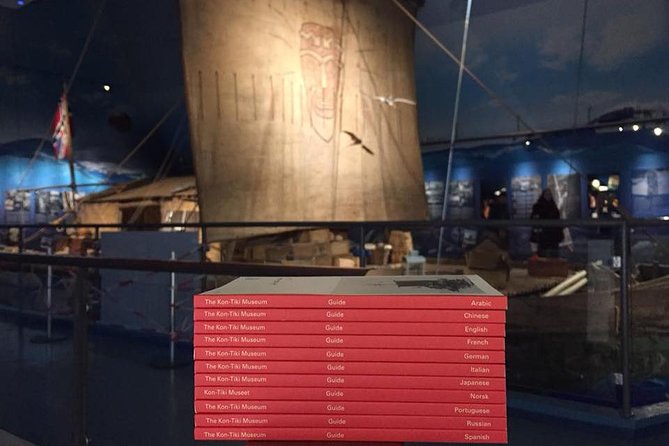
The centerpiece here is the original Kon-Tiki raft, the rough balsawood craft Thor Heyerdahl sailed across the Pacific in 1947. Seeing the small, open platform in person makes the voyage feel less like an old film plot and more like a wildly uncomfortable trip that somehow worked.
I like the Oscar-winning documentary, screened daily at noon, and the museum’s family appeal. Children can follow the adventure through boats, animals, maps, and dramatic stories, while adults can consider the science, risks, and bold assumptions behind Heyerdahl’s work.
The main drawback is that some displays may feel dated, and the museum can be a quick visit if you only look at the raft. Book it alongside the nearby Fram Museum or plan to watch the film and read the exhibits so the roughly one-hour visit feels worthwhile.
Key points to know before you go
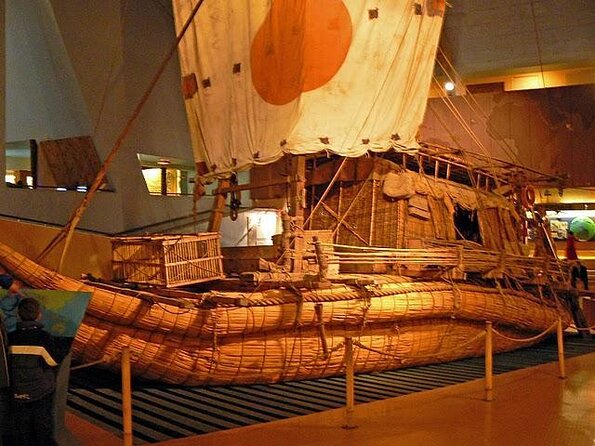
- The original Kon-Tiki raft is the star: See the actual balsawood vessel used in the 1947 Pacific crossing.
- The noon film adds real drama: The original documentary uses footage made by Heyerdahl and his crew.
- The museum covers more than one voyage: Exhibits include the reed boats Ra and Tigris, plus expeditions to Easter Island, Fatu-Hiva, Túcume, and the Galapagos.
- Children have plenty to explore: A 30-metre cave, an underwater display, and a 10-metre whale shark model break up the reading.
- Pair it with nearby museums: The Fram Museum is next door, and public transportation stops close to the entrance.
- The ticket is flexible but not all-inclusive: At about $19.42 per person, admission and local taxes are included, but transport, food, drinks, and souvenirs cost extra.
Why the Kon-Tiki raft still grabs your attention
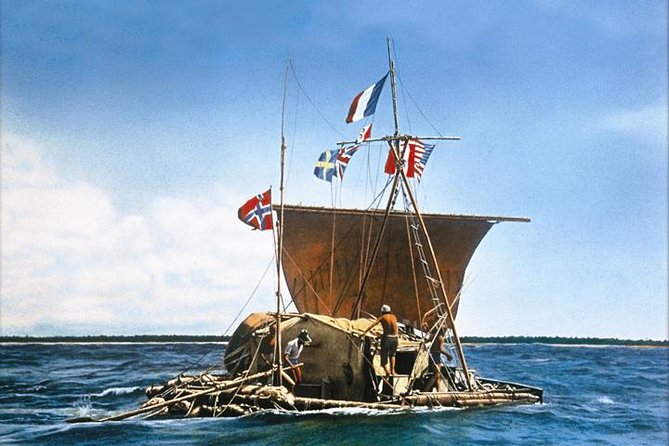
Thor Heyerdahl became famous by challenging a widely held idea about how Polynesia may have been settled. In 1947, he and five other men crossed the Pacific from Peru to Polynesia on a raft made from balsawood logs.
The museum lets you see the vessel itself. That is the key reason to come. Photographs and film can show the journey, but the raft’s limited size and simple construction give you a better sense of the physical gamble. This was not a modern expedition ship with private cabins, engines, and a stocked galley. It was a small platform exposed to weather and ocean conditions.
The Kon-Tiki story works well as a museum subject because it has a clear plot. There is a daring idea, an unusual boat, a difficult crossing, and a result that captured worldwide attention. You can follow the expedition through objects, images, background information, and film without needing a specialist interest in maritime history.
I also appreciate that the museum does not stop with Kon-Tiki. Heyerdahl later sailed the reed boats Ra and Tigris, and these vessels help show how his interests developed. The displays also connect his work with Easter Island, Fatu-Hiva, Túcume, and the Galapagos.
More Museum Visits in Oslo
- Oslo: Paradox Museum Entry Ticket
★ 4.3 · 799 reviews - The Fram Museum Admission Ticket
★ 4.5 · 490 reviews - Oslo: Oslo Discovery Tour with 2 Museums Included
★ 4.6 · 334 reviews
Inside the museum, from Kon-Tiki to Tigris
Your visit is self-guided, so you can set your own pace. There is no guide included, which keeps the ticket simple and lets you spend time where your interests lie. If you read carefully, the museum can occupy about two hours, although the basic visit takes roughly one hour.
Start with the Kon-Tiki raft. The original boat is the museum’s strongest object, and it deserves more than a quick photograph. Look at how little room the crew had and how exposed the entire structure was. The vessel makes the expedition easier to picture, especially when you compare it with the scale of the Pacific crossing.
The Ra and Tigris displays broaden the story. These reed boats look very different from Kon-Tiki, and their construction helps explain Heyerdahl’s interest in testing historical travel theories through actual voyages. You are not simply looking at one famous boat. You are tracing a career built around travel, experiment, and public debate.
The museum also has material connected with Heyerdahl himself. His library and a presentation about Heyerdahl in person add context beyond the headline expedition. One useful criticism is that some visitors may want more about his private life and personal background. The museum focuses most strongly on the voyages and their supporting evidence.
A section on Tiki pop culture adds a lighter note. It shows how the Pacific voyages moved beyond academic discussion and into popular imagination. That makes the museum more varied than a display of boats and expedition maps alone.
The daily noon film is worth planning around
The original Kon-Tiki documentary is screened every day at 12 noon in the museum cinema. If your schedule allows, I would plan around this screening rather than treat it as an optional extra.
The film includes actual footage from the expedition, made by the crew. That gives you something a display case cannot provide: the motion of the sea, the scale of the raft, and the men living through the crossing. It also provides a useful introduction if you do not already know the story.
The screening lasts about an hour, so it changes the shape of your visit. With the film, the main exhibits, and time for photographs, you may spend close to two hours inside. Without it, you can probably see the principal displays in about an hour.
The noon start is the important detail. Do not arrive late expecting to catch it at another time. If you are combining the museum with other Oslo sights, schedule the film first and explore the displays before or afterward.
Easter Island, Galapagos, and the smaller displays

The museum’s subject reaches beyond the Kon-Tiki voyage. Exhibits connected with Easter Island and the Galapagos show the wider range of Heyerdahl’s research and travel.
These sections matter because they keep the visit from becoming a single-object display. You see how the original Pacific crossing led to further questions about migration, seafaring, culture, and contact between distant places. The museum presents these subjects through artifacts and expedition material rather than through a formal guided lecture.
There are also exhibits on Fatu-Hiva and Túcume. Together, they show the range of Heyerdahl’s work and the different settings in which he studied people, objects, and old travel routes.
The 30-metre cave tour gives the museum a change of mood. It is a useful stop for children, who may not want to read long panels about ocean crossings. The underwater exhibit, with its 10-metre model of a whale shark, adds another visual break.
You should not expect every display to feel newly designed. One section has been described as dated, and the museum has acknowledged plans for a major transformation around the Kon-Tiki raft, with an immersive ocean and sky setting, interactive stations, and an underwater view beneath the raft. If your visit falls during a period of change, check the current presentation before booking if the exhibition design matters greatly to you.
Same base, a completely different kind of day:
- Oslo: Scenic Fjord Cruise with Audio Guide Commentary
★ 4.5 · 5,375 reviews - Oslo Nature Walks: Island Hopping Tour
★ 4.8 · 2,713 reviews - Oslo: 100% Electric Oslofjord Sightseeing Cruise
★ 4.4 · 2,041 reviews - Oslo: Fjord Evening Cruise with Shrimp Buffet
★ 4.5 · 1,956 reviews
A strong museum choice for families

The Kon-Tiki Museum works unusually well for mixed-age groups. Adults can follow the historical and scientific questions, while children have large boats, expedition stories, a cave, and a whale shark model to hold their attention.
An 11-year-old can find the adventure easy to follow, since the basic story has plenty of suspense. The raft also gives children a clear object to focus on instead of asking them to read every panel in order.
For younger children, you may want to keep the visit flexible. The ticket does not include a guide, and the museum is mainly self-directed. Let children move between the boats and visual displays while you fill in the story with a few simple facts.
The museum can also suit older children and teenagers who like exploration, survival stories, or unusual engineering. The cramped boats raise practical questions that history books often hide: Where did people sleep? How did they work? How much equipment could fit? What happened when the weather changed?
Combining it with the Fram Museum
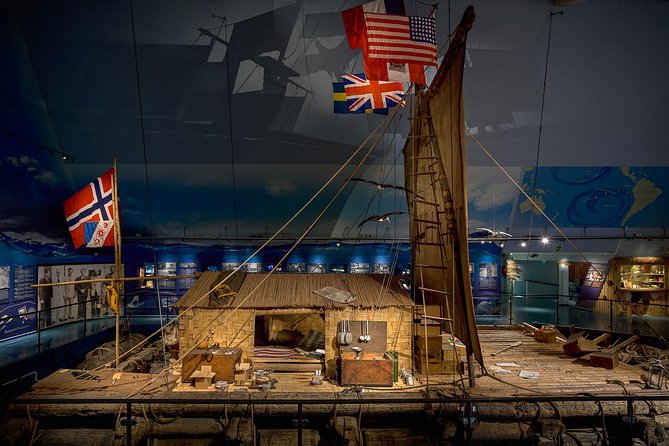
The Kon-Tiki Museum is next to the Fram Museum, making the two an obvious pairing. This helps solve the main weakness of the Kon-Tiki visit: its relatively short length.
The two museums present very different kinds of sea travel. Kon-Tiki is about a handmade raft and a Pacific crossing. Fram focuses on a purpose-built polar exploration ship. You get contrast without spending much time moving between sites.
This combination is especially useful for families with mixed interests. One person may prefer the famous raft and expedition film, while another may be more interested in a full-size polar vessel. The nearby marina and surrounding museum area also make it easier to build a half-day outing rather than make a special trip for only one hour indoors.
There is also a cafe just outside the museums, with reasonably priced food and wine according to the available information. Food is not included with your ticket, so this can be useful when planning a longer stop.
Getting there and planning your time
The museum is near public transportation, and a bus can drop you directly in front of the entrance. A hop-on hop-off bus also serves the area. The museum is described as not far from the cruise port, though you should still allow time for your chosen connection.
You do not need transportation as part of the admission ticket. The $19.42 price covers entry and local taxes only. Food, drinks, souvenirs, and any transport costs are separate.
I would book ahead if you prefer a quick, organized arrival, especially during a busy Oslo sightseeing day. Confirmation is issued at booking, and the voucher can be used for entry. The ticket has free cancellation up to 24 hours before the experience begins. After that point, a refund is not provided, and changes are not accepted.
Opening hours are 10 a.m. to 5 p.m. daily for the listed periods from September 1, 2025 through April 30, 2026, and from September 1, 2026 through April 30, 2027. The noon film is the main timing point to keep in mind.
Animals are not allowed. Most people can participate, but the provided information does not give a detailed accessibility description, so contact the museum directly if you need specific access arrangements.
Is the $19.42 ticket good value?
The value depends on how you use the visit. If you walk in, look at the raft for 20 minutes, and leave, the price may feel high for a small museum. If you watch the documentary, read the expedition displays, and combine the museum with Fram, the cost makes more sense.
The original vessel gives the admission a clear anchor. You are not seeing only replicas or photographs. You are standing near the actual raft connected with Heyerdahl’s most famous voyage. The film adds another substantial part of the visit at no extra charge.
The ticket also works well for a flexible Oslo itinerary. You can spend one hour if time is short, or extend the stop to two hours with the film and detailed exhibits. That range is useful on a museum day when different members of your group have different energy levels.
The main value limitation is presentation. Some parts may feel old-fashioned, and the museum does not include a guide to add interpretation. If you want a polished, highly interactive museum from beginning to end, you may prefer to wait until the planned updates are complete.
Who should book this experience?
I would recommend the Kon-Tiki Museum to anyone interested in exploration, unusual boats, Pacific cultures, or real expedition footage. It is also a smart pick for families because the central story is easy to grasp and the displays offer more than text panels.
You should book it if you want to see an original object tied to a famous voyage, not just learn about that voyage through photographs. You should also book it if you plan to visit Fram next door, since the two museums complement each other well.
I would be more cautious if you have little interest in Heyerdahl or only want a large museum with many hours of exhibits. The Kon-Tiki Museum is compact, and some areas may feel dated. For the best experience, arrive with enough time for the noon film and treat the museum as part of a Bygdøy-style museum outing rather than your only Oslo attraction.
FAQ
How long does a visit to the Kon-Tiki Museum take?
The listed duration is approximately one hour. You may spend about two hours if you read the exhibits carefully and watch the documentary film.
What is included in the admission ticket?
The ticket includes museum admission and local taxes. Transportation, food, drinks, souvenirs, and a guide are not included.
Can I see the original Kon-Tiki raft?
Yes. The museum displays the original Kon-Tiki raft used by Thor Heyerdahl during his 1947 Pacific expedition.
When is the Kon-Tiki documentary shown?
The original Oscar-winning Kon-Tiki documentary is screened daily at 12 noon in the museum cinema.
Is the museum suitable for children?
Yes. The museum is described as a family-friendly activity, with boats, expedition displays, a 30-metre cave tour, and a 10-metre whale shark model.
Can I cancel the ticket for a refund?
Yes, you can cancel up to 24 hours before the experience starts for a full refund. Cancellations or changes made less than 24 hours before the start time are not accepted for a refund.
Just added around Oslo
- Oslo Winter Highlights Bike Tour★ 5.0 · 36 reviews
- 4 hours Best View of the Oslofjord Winter Edition★ 4.0 · 15 reviews
- The Viking Planet Museum – Mini Group (4 adults)★ 4.0 · 16 reviews
- Unknown war. Oslo and Norway during 1940-45★ 5.0 · 74 reviews
- The Ultimate Norwegian Skiing Experience★ 5.0 · 16 reviews
- The Ultimate Study of the Human Form at Vigeland’s Sculpture Park with a Local★ 4.0 · 14 reviews
- The Oslo Beer Adventure★ 4.5 · 11 reviews
- The Essential Oslo Private Walking Tour★ 5.0 · 79 reviews
Museums, compared.
Troll Museum Entry Ticket with AR Media Experience
Read our review →

Aksla-Alnes-Giske-Sunnmøre museum 100 % Highlights 4.5 H
Read our review →
Browse the lists this tour appears in