
Reviewed · MUSEUMS
Oslo: Paradox Museum Entry Ticket
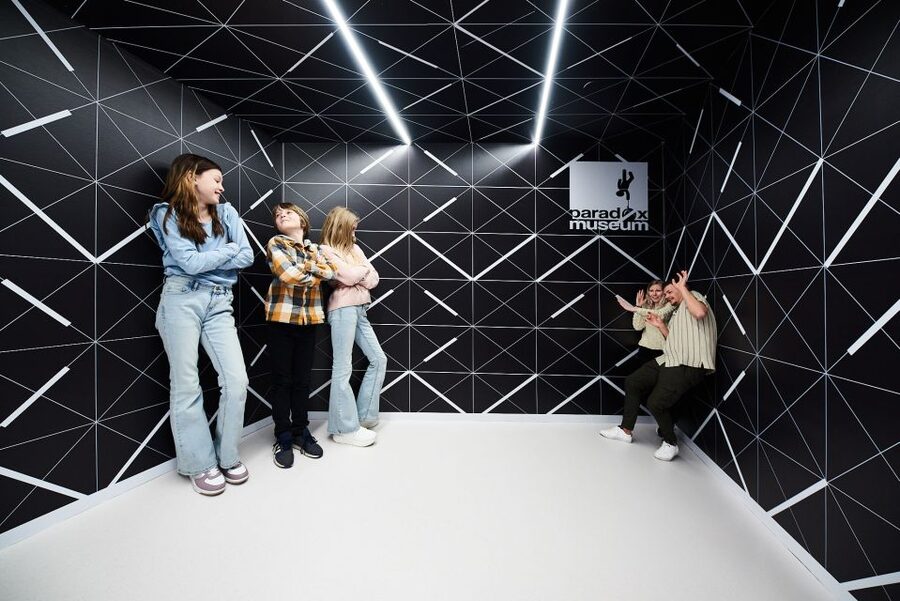
Paradox Museum Oslo turns optical tricks into a hands-on hour of fun. You will bend perspective, question what your eyes report, and take photos that look far stranger than the room itself. The exhibits explain the basic science with short descriptions and QR codes, so this is more than a collection of odd-looking rooms.
I especially like the clearly marked photo points, which save you from guessing where to stand, and the easy central location near Nationaltheatret and Stortinget. The main caution is value: at $29 per person, the museum can feel expensive if you move quickly or expect a large traditional museum.
Key points
- More than 70 interactive exhibits: Expect optical illusions, perspective tricks, and hands-on puzzles rather than paintings or historical displays.
- Built for photos: Marked spots show where to stand for the intended effect, making it easier to capture the illusion on your phone.
- A one-way route: Follow the signs from exhibit to exhibit, with no need to plan your own path.
- About one hour for most visits: You can finish faster alone, while families and couples may spend closer to two hours.
- Helpful but limited staff presence: Employees may explain an exhibit or take photos, but assistance is not guaranteed at every station.
- Easy public transport access: Nationaltheatret and Stortinget are both only a couple of minutes away.
What the Paradox Museum actually feels like
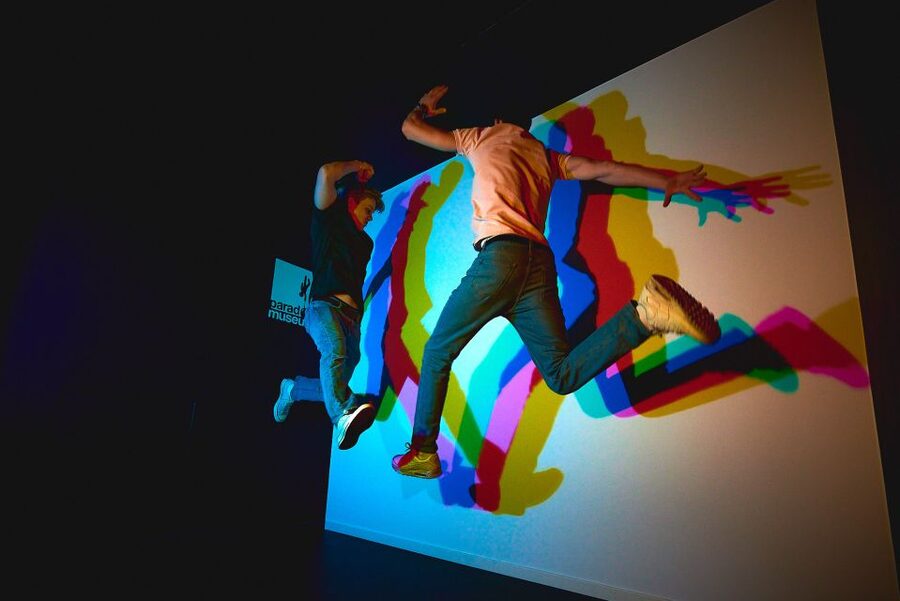
This is not a quiet museum where you stand behind a rope and read long labels. It is a playful series of rooms and installations designed to make you test your eyes, balance, and sense of space.
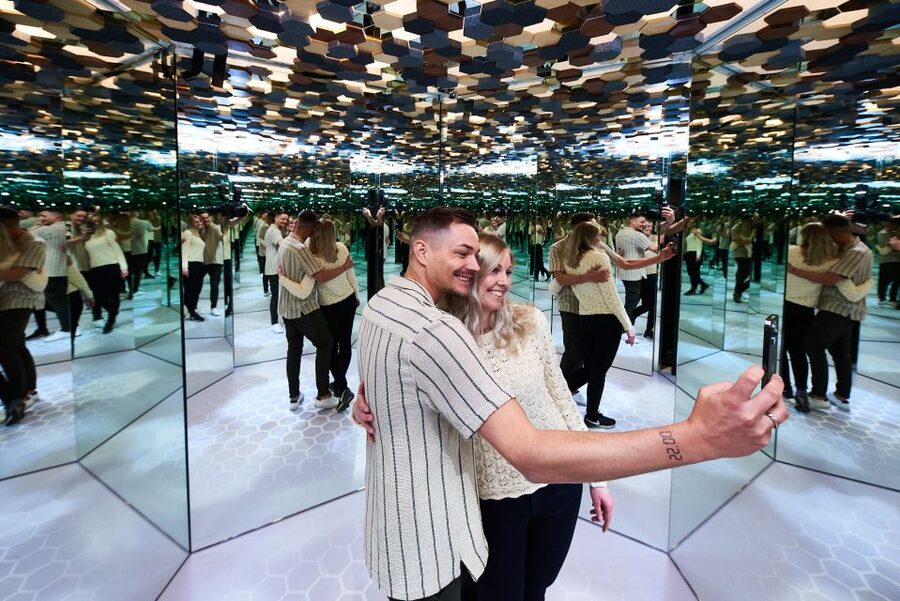
The route includes more than 70 exhibits. Some rely on classic visual trickery, while others ask you to take part physically or position yourself in a particular way. You may look at an object that seems to change size, stand in a room that alters perspective, or pose in a setup that makes the final photograph look impossible.
The fun comes from doing rather than watching. I would not rush from one display to the next. Give each one a moment, try the suggested position, then look at the result on your phone. The best effects often depend on where you stand.
Descriptions explain how the illusions work. QR codes add another way to learn, which is useful if you want more than a funny photograph. The explanations touch on perception, physics, and perspective without turning the visit into a classroom lesson.
More Museum Visits in Oslo
- Kon-Tiki Museum Entrance Ticket
★ 4.5 · 1,096 reviews - The Fram Museum Admission Ticket
★ 4.5 · 490 reviews - Oslo: Oslo Discovery Tour with 2 Museums Included
★ 4.6 · 334 reviews
Following the one-way route through 70 exhibits
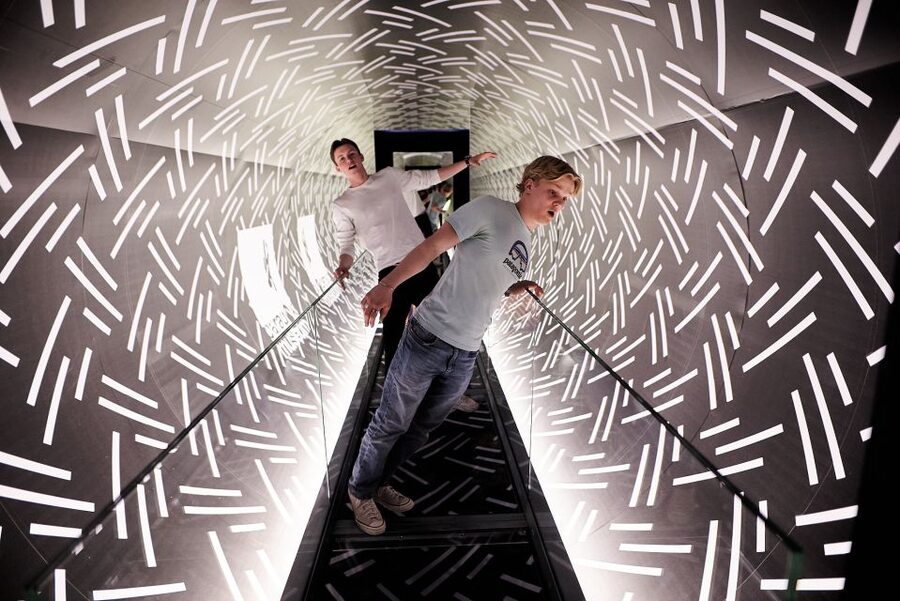
The museum uses a one-way flow. Signs guide you from one exhibit to the next, so the visit is simple to navigate and you do not need a map. That arrangement also gives the experience a clear rhythm: enter, try an illusion, take a photograph, read the explanation, and continue.
The first few exhibits may take a little adjustment. Some visitors have found the instructions less clear than they expected, especially at the start. Look for the marked standing positions and read the directions before asking someone in your group to take a picture.
As you move through the museum, the basic idea becomes easier to understand. You start to notice that many effects depend on angle, distance, or the way the room frames your body. This makes the museum more satisfying than a set of random photo backdrops.
Not every exhibit will feel equally original. Some optical tricks are familiar, and a few installations may seem average if you have visited similar illusion museums elsewhere. The stronger displays are the larger or more interactive ones, especially when you take time to set up the photograph properly.
Why the photo points matter
The marked photo points are one of the museum’s most practical touches. They tell you where to stand so that the intended illusion lines up in the camera frame. Without them, you could easily take a normal-looking picture from the wrong angle.
Bring a phone with enough space for photographs and be ready to help the people in your group. The experience is more enjoyable with a partner, children, or friends because someone can pose while another person takes the picture.
Staff sometimes help with photographs, and this can make a real difference. A helpful employee named Kseniia received particular praise for making the visit more enjoyable, while other staff members have also been described as friendly and professional. Still, you should not expect an employee stationed at every exhibit.
That point matters if you are visiting alone. One staff member may offer to take your picture, but assistance depends on who is working and how busy the museum is. Solo visitors can still enjoy the exhibits, though the photo side is easier with a companion.
The science behind the tricks
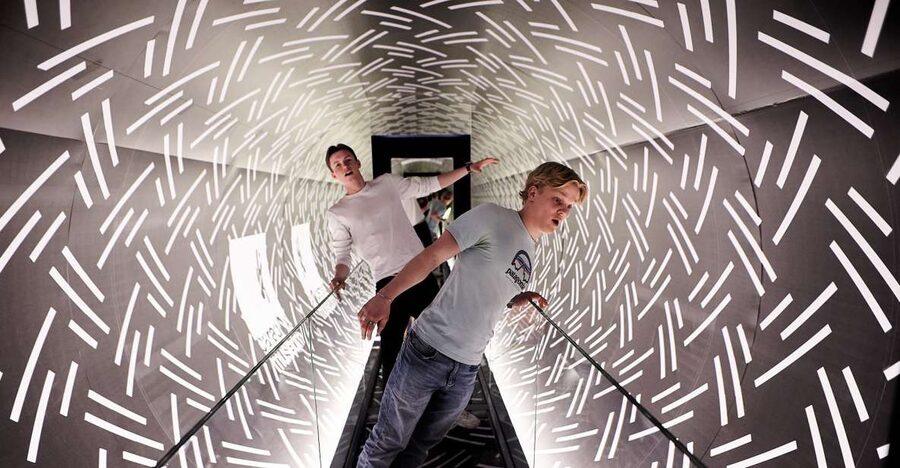
The museum works best when you pause to understand why an illusion happens. Short descriptions and QR codes explain the method behind each effect, giving you a simple introduction to how your brain interprets light, shape, depth, and position.
You do not need a science background. The explanations are there to satisfy curiosity after the joke of the photograph has landed. I like this balance because you can keep moving if you want a light entertainment stop, or spend longer at an exhibit if you enjoy working out the mechanism.
Some displays are easier to understand than others. A few can feel familiar or easy to search for online, and not every explanation will answer every question. If an exhibit confuses you, ask a staff member when one is nearby. The employees are described as welcoming and willing to show people how the museum works, though help is not constant throughout the route.
For families, this educational layer is useful. Children can laugh at the visual effect first, then learn that the trick comes from perspective or perception rather than magic. Curious adults get the same benefit without being asked to read dense panels.
Same base, a completely different kind of day:
- Oslo: Scenic Fjord Cruise with Audio Guide Commentary
★ 4.5 · 5,375 reviews - Oslo Nature Walks: Island Hopping Tour
★ 4.8 · 2,713 reviews - Oslo: 100% Electric Oslofjord Sightseeing Cruise
★ 4.4 · 2,041 reviews - Oslo: Fjord Evening Cruise with Shrimp Buffet
★ 4.5 · 1,956 reviews
How long should you plan for?
The stated duration is one hour, and that is a sensible planning figure. If you move quickly and visit alone, you might finish in less than an hour. If you stop for several photographs, read the explanations, and let children try each station, the visit can stretch to around two hours.
One solo visit was completed in under an hour because the person did not pause long at each installation. Another visit lasted two hours, with plenty of time to explore and work with the activities. Both timings make sense.
I would set aside about 60 to 90 minutes for most people. Add more time if you are with children or a group that likes repeated photo attempts. Keep less time if you simply need a compact indoor activity before a flight or another appointment.
The timed entry helps control the flow. You are asked to arrive and check in 10 minutes before your booked time. Even so, allow a little flexibility if you want to enjoy the museum rather than treat it as a quick photo stop.
Is $29 per person good value?
At $29, this is not a bargain attraction. Oslo is an expensive city, but the price still deserves a close look because the museum visit is usually around one hour.
The ticket includes admission to all exhibition areas and access to the Paradox Boutique. Food, drinks, and transportation are not included. You are paying for a compact, interactive experience rather than a full day at a large museum.
The value improves if you visit as a family or group and make use of the exhibits, explanations, and photographs. A child who wants to try every station may get much more from the ticket than an adult who walks through quickly. The value is also stronger if you have already seen Oslo’s major historic and art museums and want something lighter.
The price may feel high if you have visited several similar illusion museums. Much of the visual trickery is not new, and some displays may seem familiar. The collection is attractive and well arranged, but it does not reinvent the concept.
I would book it for the experience you want, not for the size of the museum. If you want a playful indoor break with shareable photos, $29 can be reasonable. If you expect hours of content or a major cultural institution, choose another Oslo activity.
A good stop for families, couples, and curious adults
Children generally have a lot to do here because the exhibits ask them to look, move, pose, and test an idea. The museum is suitable for children of different ages, though younger children may need help following directions and waiting for a clear photo angle.
Couples can turn the visit into a series of amusing photographs. Friends may enjoy competing to see who can make the strangest image. Students and curious adults can spend more time with the explanations and QR codes.
The museum is also useful for a short weather-proof plan. It sits in central Oslo, close to Nationaltheatret and Stortinget, so you can reach it by public transport and combine it with other central stops.
It is less suited to anyone seeking Norwegian culture, local history, or serious art. The attraction is about perception and play. That is its purpose, and it is best judged on those terms.
Staff help, language, and accessibility
The host or greeter service is available in English and Norwegian. The information supplied with the exhibits is also offered in those languages, making the route straightforward for most international visitors.
Staff are often friendly and helpful. They may explain how an installation works, help you understand the first few rooms, or take a photograph. The level of help can vary, so I would treat staff assistance as a welcome extra rather than part of the guaranteed experience at every exhibit.
The museum is wheelchair accessible. Food and drinks are not allowed inside, so plan to eat before or after your visit. The Paradox Boutique is available at the end for games, souvenirs, and small keepsakes.
The best way to plan your visit
Book a timed entry and arrive 10 minutes early to show your ticket at the entrance. This gives you time to check in without cutting into your museum hour.
Wear something that lets you move comfortably and pose easily. You do not need special equipment, but a phone is central to the experience because many exhibits are designed to be photographed.
Visit with at least one other person if photographs are important to you. If you are alone, ask staff politely when someone is available. You may receive help, but do not count on having a photographer beside you throughout the route.
Follow the signs rather than trying to backtrack. The one-way system is part of the setup, and the exhibits are arranged in a set sequence. Read the instructions before posing, then check your image before moving on. A second attempt is often worthwhile.
Should you book the Paradox Museum Oslo?
Book it if you want a fun, photo-friendly indoor activity in central Oslo, especially with children, a partner, or friends. The clearly marked photo points, hands-on exhibits, and simple science explanations give the visit more substance than a row of decorative backdrops.
Think twice if $29 feels high for an hour or if you have already visited several similar illusion museums. Some effects are familiar, and a few exhibits may not work perfectly or may offer less than the larger displays.
For most people, I would plan on an hour to 90 minutes and treat the museum as a lively break between Oslo’s bigger sights. It is not a must-see cultural landmark, but it is an easy, cheerful choice when you want to laugh, take unusual photos, and give your brain a few harmless problems to solve.
FAQ
Where is Paradox Museum Oslo located?
The museum is in Oslo Municipality, in the heart of Oslo. The closest public transport stops are Nationaltheatret and Stortinget, both a couple of minutes away.
How long does the museum visit last?
The stated duration is one hour. You might finish sooner if you move quickly, while families and groups taking many photographs may spend closer to two hours.
How many exhibits are there?
The museum has more than 70 interactive exhibits focused on optical illusions, perception, physics, and perspective.
Is the experience guided?
It is primarily a self-guided experience. Staff or greeters speak English and Norwegian and may help explain exhibits or take photographs, but assistance is not provided at every station.
Can I take photographs inside?
Yes. The exhibits are designed to be photographed, and clearly marked photo points show where to stand for the intended effect.
Is the museum suitable for children?
Yes. The hands-on format is suitable for families and children of different ages. Children may need help with instructions or photographs at some exhibits.
Is Paradox Museum Oslo wheelchair accessible?
Yes, the museum is wheelchair accessible.
Can I bring food or drinks inside?
No. Food and drinks are not allowed inside the museum.
Can I cancel my ticket?
You can cancel up to 24 hours before the booked time for a full refund. A reserve-now, pay-later option is also available.
Just added around Oslo
- 4 hours Best View of the Oslofjord Winter Edition★ 4.0 · 15 reviews
- Oslo Winter Highlights Bike Tour★ 5.0 · 36 reviews
- The Viking Planet Museum – Mini Group (4 adults)★ 4.0 · 16 reviews
- Unknown war. Oslo and Norway during 1940-45★ 5.0 · 74 reviews
- The Ultimate Norwegian Skiing Experience★ 5.0 · 16 reviews
- The Ultimate Study of the Human Form at Vigeland’s Sculpture Park with a Local★ 4.0 · 14 reviews
- The Oslo Beer Adventure★ 4.5 · 11 reviews
- The Essential Oslo Private Walking Tour★ 5.0 · 79 reviews
Museums, compared.
Troll Museum Entry Ticket with AR Media Experience
Read our review →


Aksla-Alnes-Giske-Sunnmøre museum 100 % Highlights 4.5 H
Read our review →
Browse the lists this tour appears in