
Reviewed · WALKING TOURS
Bergen: Past & Present Small Group Guided Walking Tour
Bergen’s past and present meet nicely on this two-hour walking tour, which moves from the fortress and Hanseatic wharf into quiet lanes and residential streets. I like the clear historical arc, from medieval Norway and Bergen’s trading years to occupation and modern city life. I also like the useful local advice, including cafés, restaurants, photo spots, and ways to spend the rest of your visit. The main drawback is the walking itself: expect uneven cobbles, uphill stretches, and weather that can turn wet or cold fast.
The guides include Janine, Jeff, Emma, Magda, Eirik, Anais, Serena, Neal, and Dane, depending on the departure. The tour is best taken near the start of your stay, when recommendations on food and sights can still shape your plans. Bring an umbrella and wear shoes that can handle slippery stone.
Key points at a glance
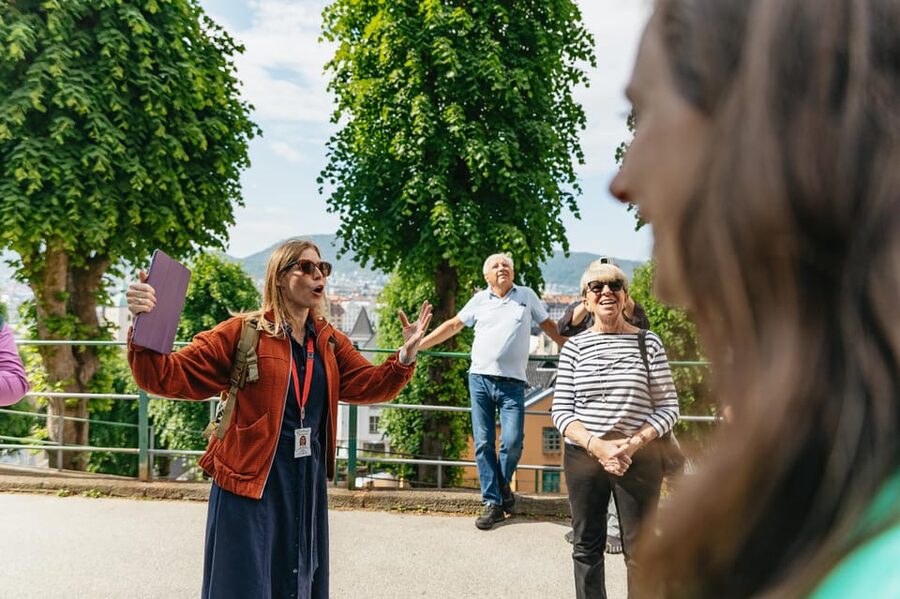
- A well-sequenced history lesson: Start at Bergenhus Fortress, follow Bergen’s growth as a trading port, and finish the historical portion at St. Mary’s Church.
- Bryggen beyond the postcard: Walk through the old wooden wharf district and its narrow alleys while learning about the Hanseatic League.
- A local view of modern Bergen: Leave the main tourist paths to discuss house prices, work, leisure, weather, and daily routines.
- Small groups with time for questions: The company limits group size because part of the walk enters a residential neighborhood.
- Practical tips for the rest of your stay: Guides point out cafés, restaurants, photo locations, and other places to explore independently.
- Good value at $26: Two hours with a licensed guide and no extra entrance fees makes this a useful first look at Bergen.
Why the past-and-present format works
Many city walks give you dates, buildings, and a quick photo stop, then send you on your way. This one tries to answer a more useful question: how did Bergen become the city you see today, and what is it like to live here now?
The first half gives you the framework. Bergenhus Fortress introduces Norway’s medieval rulers, Bergen’s brief time as the country’s capital, and the city’s links with wider Europe. Bryggen then shows how trade shaped the waterfront and the streets behind it.
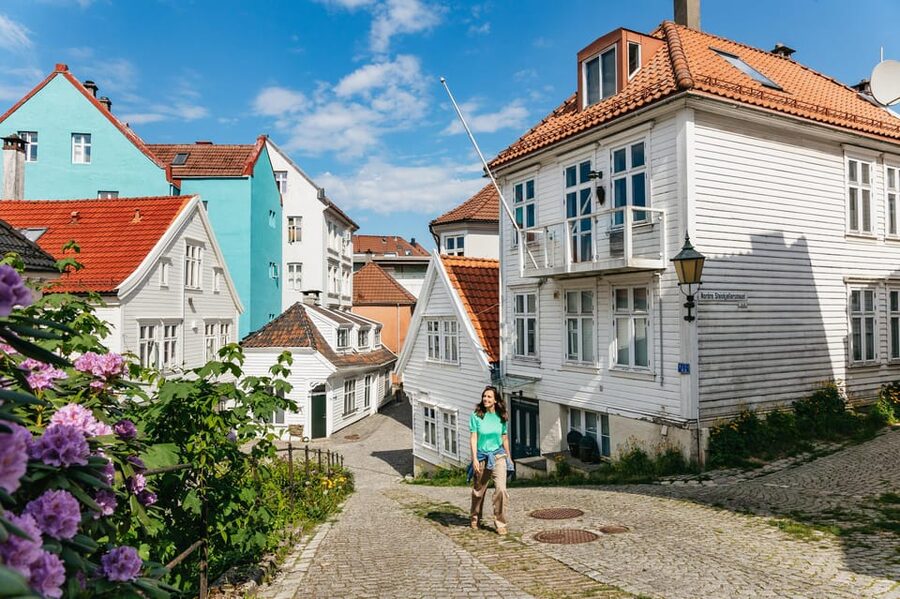
The second half changes tone. You leave the main sights and walk through the area around Bryggen, where the guide can talk about present-day Bergen rather than only its monuments. Topics include housing costs, work, leisure, rain, cafés, and the practical business of living in a city that attracts many visitors.
I like this split because it keeps the walk from becoming a string of disconnected facts. You first learn why Bergen matters, then get a feel for how the city functions now. It also gives you a chance to ask questions that do not fit neatly into a standard history talk.
The experience has earned a 4.9 rating from 1,609 reviews, and the strongest pattern is clear: people value the guides’ warmth, clear explanations, humor, and local suggestions. The individual personalities differ. Jeff is often praised for his depth and easy manner, Janine for her friendly delivery and practical advice, and Emma for mixing history with present-day life. Magda, Eirik, Anais, Serena, Neal, and Dane also receive strong praise for making the walk personal and easy to follow.
More Walking Tours in Bergen
- Walking Tour in Bergen of the Past and Present
★ 5.0 · 1,575 reviews - City Walking Tour – Bergen On Foot
★ 5.0 · 436 reviews - Bergen: Sightseeing Walking Tour with Ferry Ride
★ 4.9 · 296 reviews
Starting at Bergenhus Fortress
The tour begins at or near Bradbenken, with the exact meeting point depending on the option booked. From there, the route enters Bergenhus Fortress for roughly 30 minutes.
This is the right place to begin. The fortress gives you a physical introduction to Bergen’s political importance, not just its trading role. You learn about King Håkon Håkonsson, his coronation, and the period when Bergen served as Norway’s capital. The guide also explains how Håkon developed the fortress and strengthened Norway’s links with the wider European world.
The historical story continues through Norway’s later periods under Danish and Swedish rule, then the Nazi occupation. That is a lot to cover in half an hour, so expect a brisk overview rather than a specialist lecture. The value lies in the timeline. Once you understand who controlled Norway and how Bergen fit into those changes, the rest of the city becomes easier to read.
The fortress is not treated only as a medieval relic. You also hear about how it is used today. That connection between old stones and present-day life fits the tour’s main idea well.
Take care on the paths. The tour notes uneven surfaces and some uphill walking, and winter conditions can add ice or cold wind. One guide helped the group find shelter during a particularly cold stretch, but you should still dress for exposure and carry an umbrella.
Bryggen and 1,000 years of trade
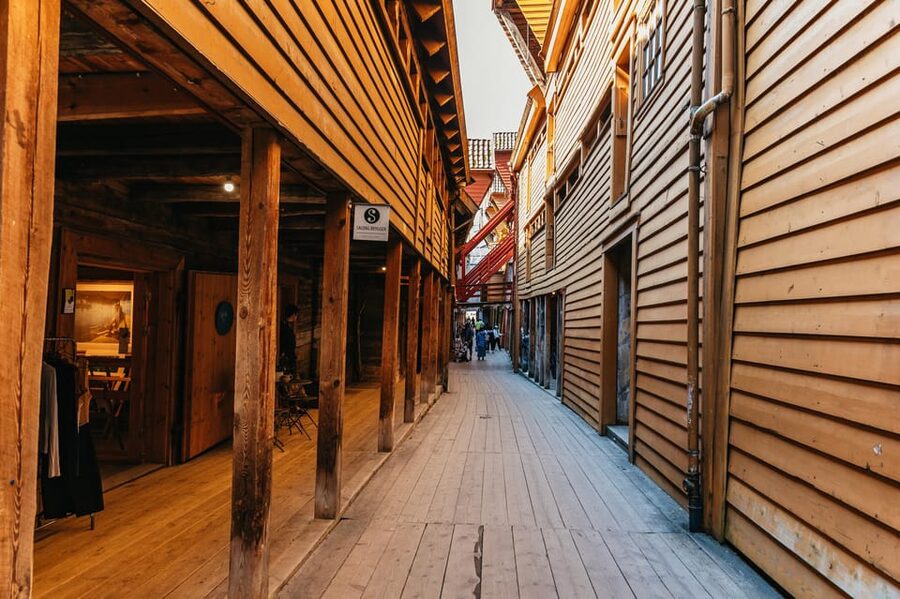
From the fortress, the walk continues to Bryggen, Bergen’s UNESCO World Heritage Site. Allow about 30 minutes here for a guided visit, sightseeing, and photographs.
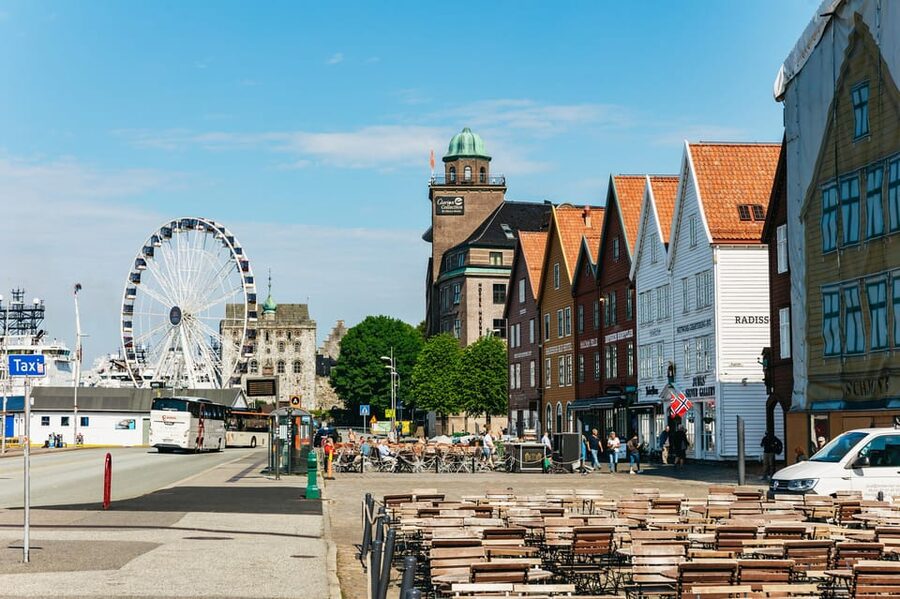
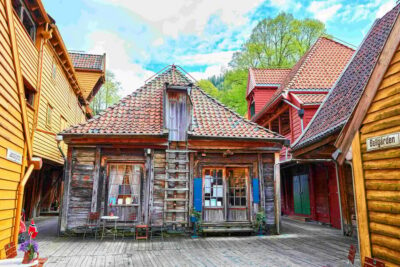
Bryggen is the part of Bergen most people recognize: a row of colorful wooden buildings beside the harbor. The useful part of a guide is not simply identifying the buildings. You learn why Bergen was founded and how trade made it grow.
The guide explains the Hanseatic League, the German trading organization that operated in Bergen for about 400 years. That history helps explain why the waterfront has such a distinct character and why Bergen became an important link between Norway and the rest of northern Europe.
You then move into the old passages and alleys behind the front row of buildings. These lanes are more revealing than a quick waterfront photograph. They show how the trading district worked as a network of storage, work, and movement rather than just a pretty line of façades.
Bryggen is one of the busiest parts of the tour route, so this is where a small group helps. You can hear the guide more easily and pause for photos without the walk becoming chaotic. Still, the area can be crowded, and the 30-minute stop will not cover every museum or interior. No museum admission is included because the tour does not require you to enter one.
St. Mary’s Church and the end of the historical story
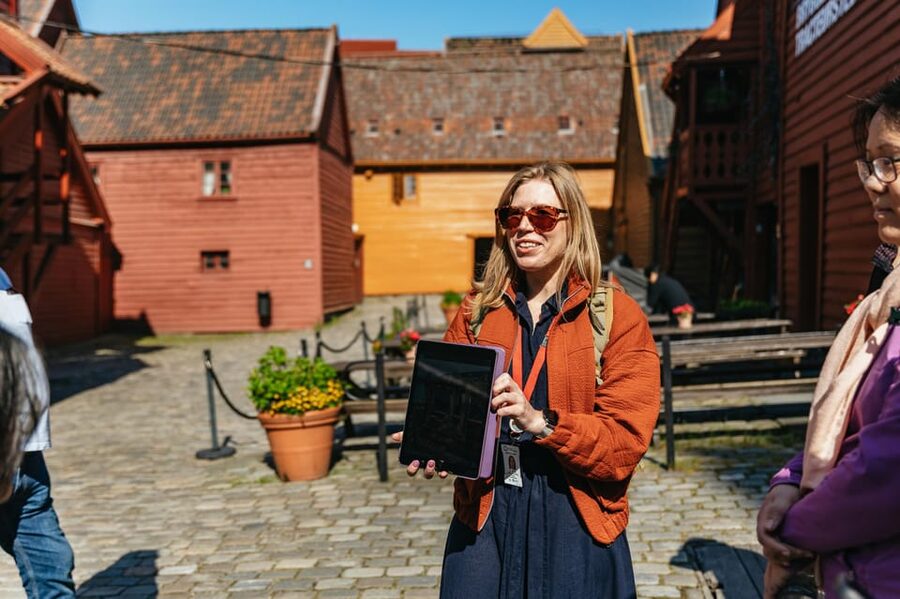
The historical section finishes at St. Mary’s Church, Bergen’s oldest building. The church provides a useful closing point for the first half because it connects the city’s religious, political, and trading past.
You do not need to pay for an entrance as part of this walk. The focus is on the exterior and the surrounding area, along with the story of Bergen’s development. If you have a strong interest in church interiors or medieval art, you may want to return independently, if access is available during your visit.
This is also a good moment to ask questions about the parts of Norwegian history that moved quickly earlier. The guides are encouraged to make time for questions, and that matters on a short walk with a lot of historical ground to cover.
Same base, a completely different kind of day:
- From Bergen: The Original Fjord Cruise to Mostraumen
★ 4.7 · 8,440 reviews - Bergen: Mostraumen Fjord & Waterfall Cruise
★ 4.6 · 2,990 reviews - Bergen: City Tour on Foot
★ 4.9 · 1,327 reviews - Bergen: Viking Village, Nærøyfjord Cruise & Flåm Railway
★ 4.8 · 1,047 reviews
Leaving the tourist center for local streets
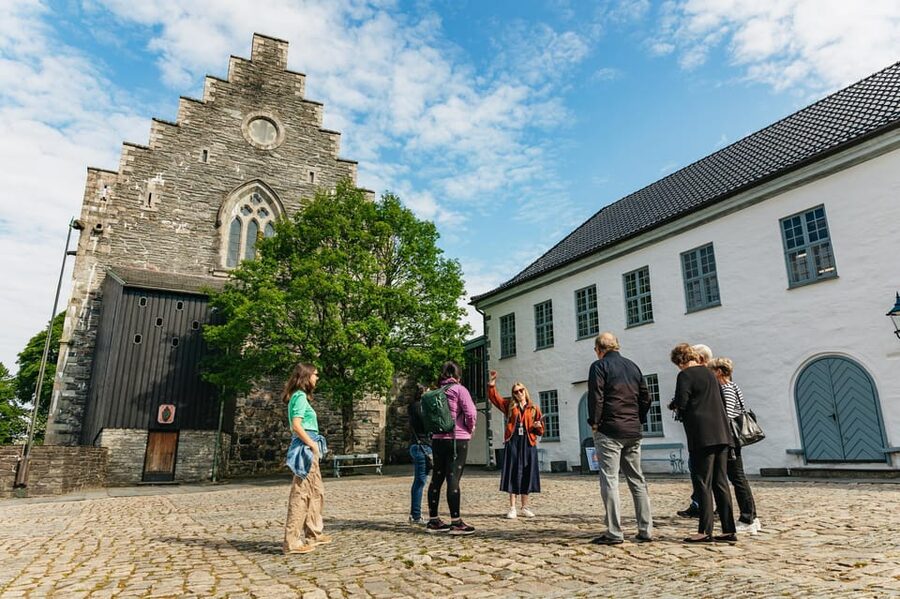
The second half leaves the most familiar sights behind. The route moves through the neighborhood around Bryggen, with stops or photo opportunities at Wesenbergsmauet 16 and Fjellgaten 2.
This section is less about fixed monuments and more about the texture of Bergen. You walk through older residential streets and quieter lanes, with the guide choosing the path according to local experience and interests. It is the part of the tour most likely to show you places you would miss by following only the main harbor route.
The guide talks about house prices, employment, leisure, and how residents manage Bergen’s frequent rain. Those subjects may sound ordinary, but they are exactly what turns a city from a museum setting into a real place. You can ask what people do for fun, where locals eat, and how daily routines differ from what you see as a visitor.
The route may pass cafés, restaurants, and local cats. The cats are a small detail, but they capture the relaxed character of this part of the walk. More important, the residential setting explains why the company keeps groups limited. A smaller group is more respectful on narrow streets and makes it easier to hear the guide without disturbing the neighborhood.
Views and streets near Fløibanen
The walk includes a stop near Fløibanen, Bergen’s funicular railway, with time for a photo and further explanation. The tour does not say that a funicular ride is included, so do not treat this as a substitute for booking the Fløibanen separately.
The stop is useful for orientation. Bergen can feel compact around the harbor, but its streets rise quickly toward the surrounding hills. The walk gives you a better sense of the city’s shape and provides another photo opportunity.
The uphill sections are worth taking seriously. This is not a flat promenade walk, and people with mobility impairments are advised not to book it. If you walk comfortably but dislike steep streets, keep a steady pace and use the photo stops to catch your breath.
Skostredet and useful food advice
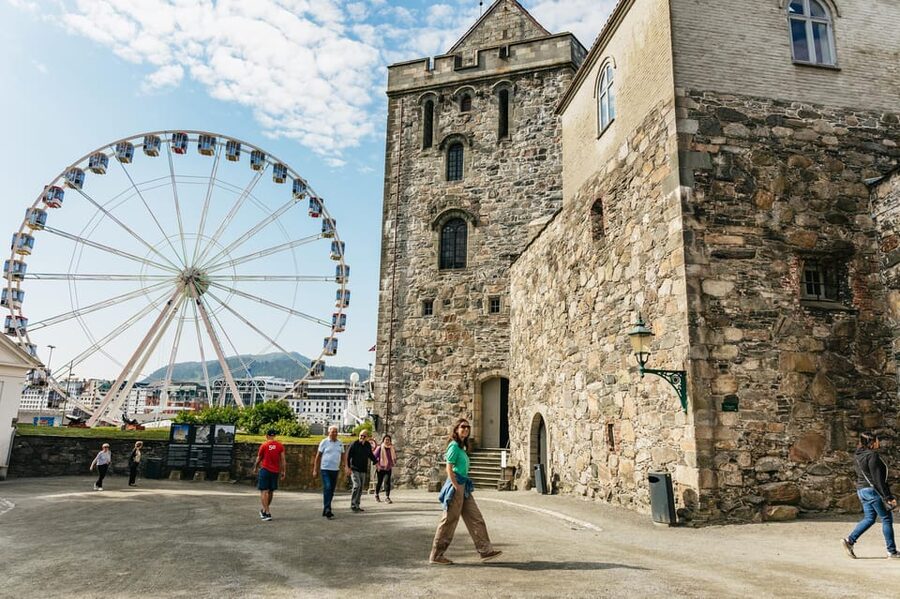
The route also reaches Skostredet, another place to see Bergen away from the main harbor sights. Here the emphasis is on atmosphere, local businesses, and suggestions for the rest of your time in town.
Food advice is one of the practical strengths of the experience. Guides have pointed people toward coffee shops, lunch spots, dinner places, and local food. Recommendations mentioned after the walks include Pingvinen, along with various cafés and restaurants. You should still ask your own questions about opening hours, price, and what suits your taste, but this is more useful than receiving a generic list.
If you take the tour early in your stay, you can act on the advice. A late tour still helps, but the recommendations have less time to shape your plans.
Ending near the Fish Market
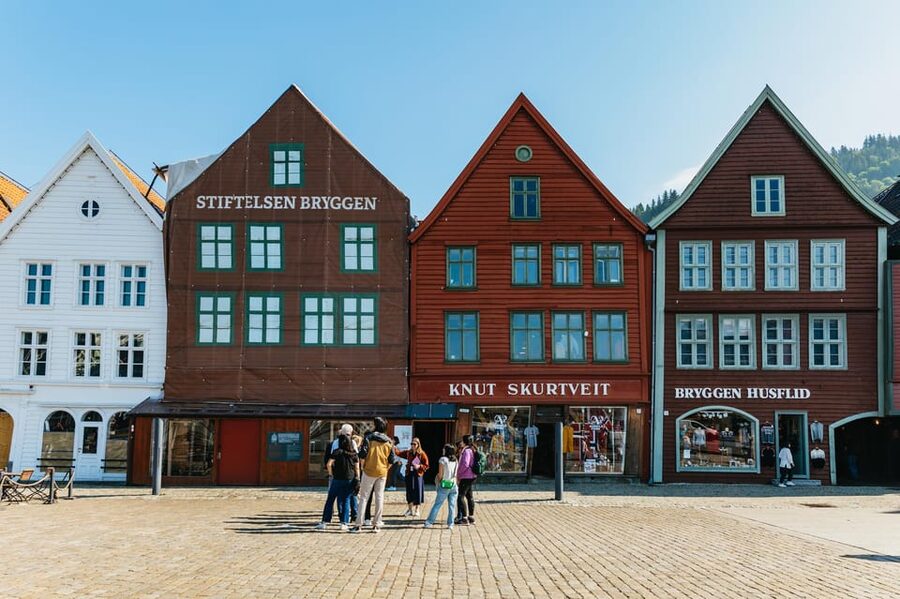
The walk ends near Strandkaien and Bergen’s Fish Market. This is a convenient finish because you are still close to the harbor, restaurants, and central sights.
The guide can suggest ways to continue exploring Bergen independently. You might use the remaining day for a museum, a meal, or a separate trip up the mountain, depending on your schedule. Since the tour covers the central historic area, you should finish with a clearer idea of what deserves more time.
The endpoint can vary slightly by booking option, so check the details before setting out. The meeting point may vary as well. That is a small logistical issue, but it matters if you are arriving from a cruise ship, railway station, or another timed activity.
How much value do you get for $26?
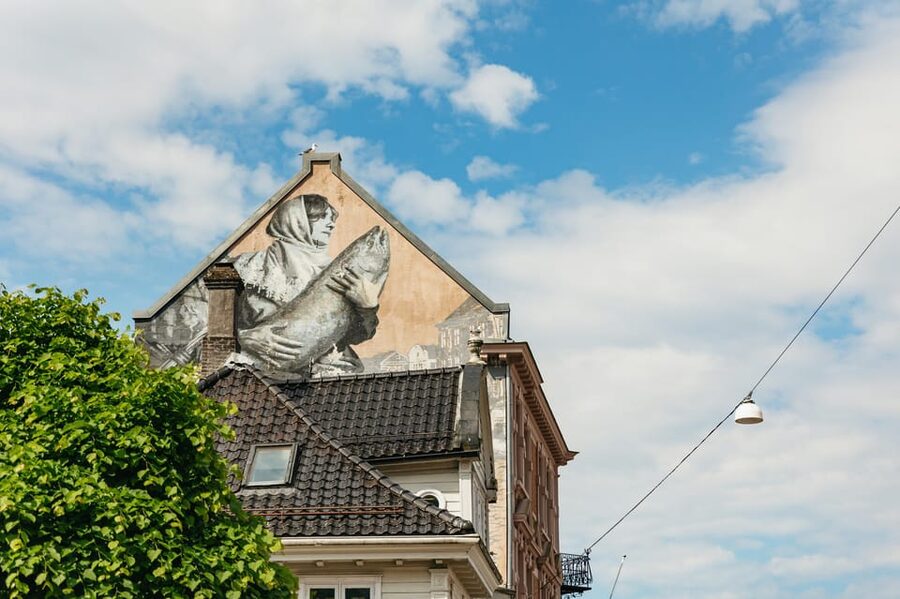
At $26 per person, this is a strong value if you want an introduction rather than an all-day specialist tour. The price includes the walking tour, a licensed and certified guide, and all fees. You do not need to budget for museum tickets because the route does not depend on entering museums or buildings.
The cost also buys something difficult to get from a guidebook: a sequence. You move from fortress to wharf, from trade history to residential life, then finish with practical advice. Walking those connections yourself is possible, but you would need to do the research in advance and know which lanes to seek out.
The tradeoff is depth. Two hours cannot cover every part of Bergen’s past, and the route is not designed for long interior visits. If you want a detailed study of Hanseatic architecture, the occupation, or medieval church art, choose a more focused experience or add independent visits.
For most first-time visitors, I see the price as reasonable because the tour helps you use the rest of your time better. It is especially good value for people who want context without spending half a day in a formal museum.
Weather, pace, and group size
Bergen’s weather is part of the experience, and the walk runs in all conditions. Bring an umbrella, wear a waterproof outer layer if you have one, and use shoes with a firm grip. Rain can make cobbles slippery, while winter can bring ice and cold wind.
The pace is generally designed to leave room for photographs and questions. A group of about 10 people was described as a comfortable size, and the company limits numbers because of the residential streets. Group size can differ, so do not assume every departure will be identical.
The walk is not suitable for people with mobility impairments. Even able walkers should expect uneven cobblestones, uphill stretches, and weather exposure. If you need frequent rest stops or level ground, this may not be the right choice.
The guide language is English or German. Recent departures have included guides such as Janine, Jeff, Emma, Magda, Eirik, Anais, Serena, Neal, and Dane. The exact guide is not guaranteed, but the repeated praise for different guides suggests a consistent focus on personal delivery and local knowledge rather than a single star performer.
Who should book this Bergen walk?
I would choose this tour if you are visiting Bergen for the first time, especially if you have only a day or two. It gives you the main historic sights, then adds streets and local subjects that a standard harbor stroll often skips.
It also suits cruise passengers and people arriving without much advance research. You get a fast orientation, restaurant ideas, photo locations, and a clearer sense of which attractions deserve another visit.
History fans will enjoy the fortress and Hanseatic material, but you should not expect an academic course. The guide’s strength is connecting major events to the streets under your feet.
Families with older children may like the movement and stories, though the hills and wet weather can make the walk tiring. People who want an accessible, flat route should choose another activity.
Should you book it?
Book this tour if you want a useful first look at Bergen, a friendly local guide, and a walk that goes beyond Bryggen’s famous front row. The mix of medieval history, Hanseatic trade, residential streets, food advice, and modern life gives you more than a basic photo tour.
Skip it if you want long museum visits, a completely level route, or a narrow specialist subject. For $26, two hours, and a licensed guide, I think it is a sensible way to begin your Bergen stay. Schedule it early, bring rain gear, and ask plenty of questions.
FAQ
How long does the Bergen Past and Present tour last?
The walking tour lasts two hours.
What language is the tour offered in?
The live guide speaks English or German.
What price should I expect?
The listed price is $26 per person.
What sights are included?
The route includes Bergenhus Fortress, Bryggen, St. Mary’s Church, Wesenbergsmauet, Fjellgaten, the area near Fløibanen, and Skostredet.
Is museum admission included?
The walk does not require museum or building admission, and entrance tickets are not included.
Where does the tour finish?
The listed drop-off locations are Strandkaien 1A and Bergen’s Fish Market.
Where does the tour start?
There are two starting location options associated with Bradbenken 1 and Norsildmel AS. The exact meeting point may vary by booking option.
What should I bring?
Bring an umbrella. Comfortable shoes and clothing suitable for rain and changing weather are also sensible for the uneven streets and uphill sections.
Is the route accessible for people with mobility impairments?
No. The tour is not suitable for people with mobility impairments because it includes uneven cobblestones and uphill walking.
Can I cancel the booking?
You can cancel up to 24 hours in advance for a full refund. A reserve-now, pay-later option is also available.
Just added around Bergen
- Mostraumen Private Pontoon Cruise★ 4.5 · 7 reviews
- Walking Tour of Central Bergen★ 5.0 · 46 reviews
- Walking tour: Medieval Spirit of Bergen + sweet Arctic gifts★ 5.0 · 17 reviews
- Bergen : Private Waterfalls and Wonders Tour in Norway★ 5.0 · 6 reviews
- Walk with a Witch in 16th Century Bergen: A Self-Guided Fictional Tour★ 4.5 · 12 reviews
- Bergen: Private Full-Day Roundtrip to Hardangerfjord with cruise★ 5.0 · 20 reviews
- 2-Day Round Trip from Bergen: THE GRAND SOGNEFJORD – fjords, waterfalls, glacier★ 5.0 · 4 reviews
- Three-summit hike in Bergen★ 5.0 · 3 reviews
Walking Tours, compared.
Walking Tour in Bergen of the Past and Present
Read our review →


Central Oslo Guided Walking Tour with Local Guide
Read our review →Browse the lists this tour appears in