
Reviewed · HISTORICAL TOURS
Oslo: Historic Myths & Legends Evening Walking Tour
Oslo’s old streets become far more interesting when you hear the stories hiding behind them. This evening walk connects Norse folklore, Viking beliefs, fortress prisoners, medieval punishments, and audacious robberies with the buildings around you. It is less a standard sightseeing march than a city introduction told through local tales.
I like the way the tour mixes grand landmarks with smaller details, such as the wooden friezes at City Hall and old stories about bells, flutes, trolls, and underground kingdoms. I also like the guides’ personal approach. Maria is often praised for her warmth and humor, while Anastasia is known for vivid storytelling and strong English. The main drawback is practical: you walk outdoors for two hours, and Oslo’s wind and winter cold can be fierce.
Key points to know before you book
- Norse myths meet real city history: Hear about trolls, nisse, huldra, Viking beliefs, ghosts, prisoners, thieves, and old justice.
- The route covers central Oslo: Begin at City Hall, then continue to Christiania Torv, Akershus Fortress, and Bankplassen.
- The guides make the difference: Maria and Anastasia are frequently praised for humor, clear English, local tips, and lively storytelling.
- Evening light changes the mood: In winter, a late afternoon tour may run in darkness. In warmer months, sunset and illuminated buildings add atmosphere.
- Bring proper shoes and warm layers: The walk is described as manageable, but it is not suitable for wheelchair users or people with mobility impairments.
- The tour is cultural, not a ghost hunt: You hear legends about spirits and underground kingdoms, but you do not go underground.
Why Oslo’s myths work so well on foot
I like a walking tour that gives you a reason to look up, slow down, and notice a building instead of simply ticking it off a list. This one uses stories as the thread. A frieze, fortress wall, or old square becomes easier to remember when it is tied to a belief, a crime, or a strange local custom.
The tone is not intended to be a serious paranormal investigation. You will hear about ghosts, hidden worlds, and supernatural beings, but the point is to understand what those stories meant in Norwegian culture. Trolls, kind nisse, and mysterious huldra are part of a tradition passed through generations, and the guide explains them as folklore rather than presenting them as proven events.
That balance matters. If you want a polished lecture on medieval Oslo, this may feel light. If you want only ghost stories, it may feel too historical. For most people, the mix is the appeal: enough fact to give the city shape, and enough legend to keep the walk playful.
More Historical Tours in Oslo
- Oslo: History, Art and Secrets Tour
★ 4.7 · 62 reviews - Oslo City Walks – Historic River Walk
★ 5.0 · 31 reviews - A Well Balanced History and Food Tour with Focus on the Scandinavian Kitchen
★ 4.5 · 29 reviews
Starting at Oslo City Hall and the Swans fountain
The meeting point is near the Swans fountain at the entrance to Oslo City Hall on Fridtjof Nansen’s Square. This is a practical starting place because it is easy to identify, and the City Hall area gives the guide a strong opening setting.
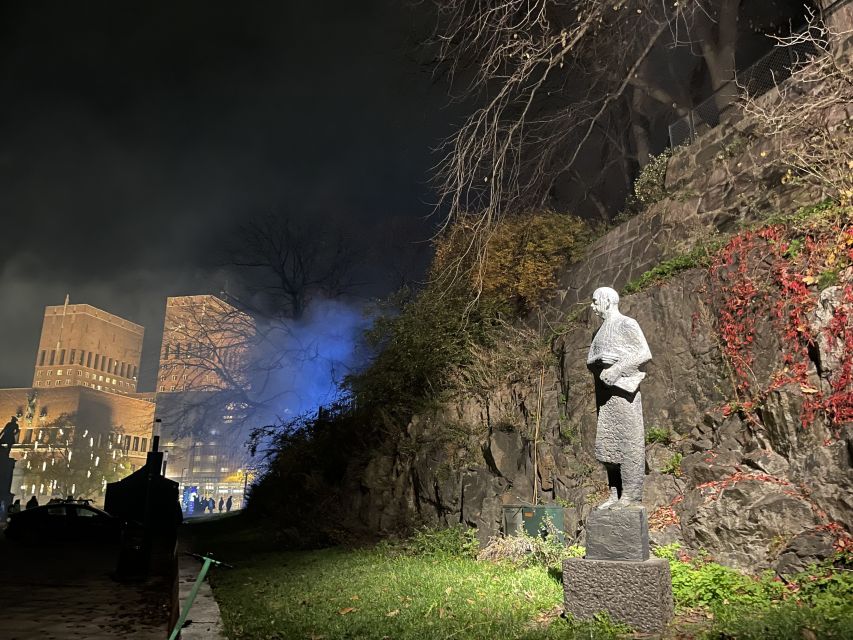
The tour uses the building and its decoration to introduce Norwegian stories and Viking beliefs. Look for the wooden friezes on the walls, where images connect to older ideas about the Nordic world. The guide uses these details to explain how myth and national identity appear in public art.
I find this a better beginning than launching straight into dates and rulers. You get a visual clue first, then the story behind it. The guide may also use this early section to explain how Viking expeditions and beliefs shaped later ideas about Norway.
Do not expect a full museum visit or a long indoor stop. The experience is built around walking between sites, and access to interior spaces can depend on the tour’s exact arrangements. The safe expectation is to meet at City Hall, examine the relevant decoration and surroundings, then continue through central Oslo.
Christiania Torv: the old square behind the modern city
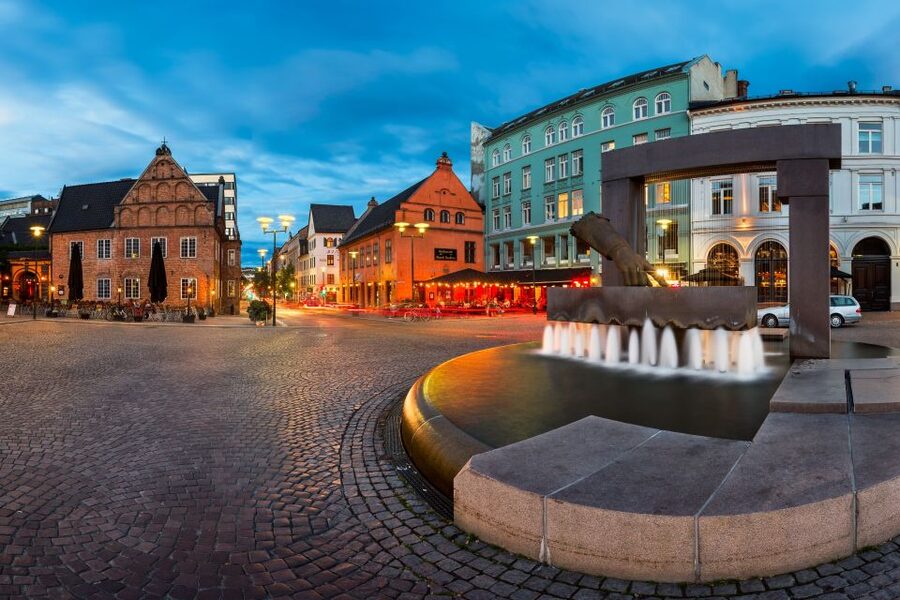
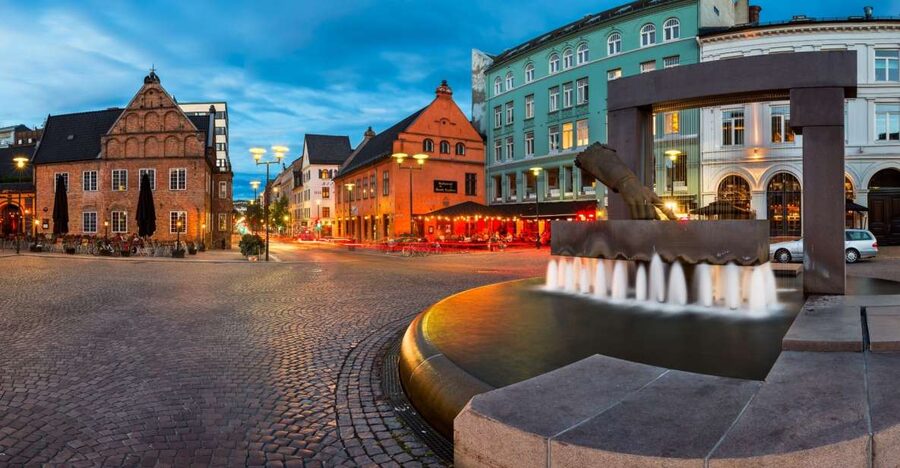
From City Hall, the route continues toward Christiania Torv, one of the historic squares in the old part of Oslo. Here, the guide shifts from broad mythology to stories connected with the city itself.
This is where a good guide earns the price. A square can look like an ordinary open space if you do not know what happened there or how its role changed over time. With the right explanation, it becomes a place where people worked, traded, gathered, argued, and watched the city change.
The tour does not treat history as a list of famous names. Instead, it focuses on episodes and characters that might be missed on a standard city walk. You may hear tales that connect everyday life with local superstition, justice, and social rules.
I especially like this part for first-time visitors. It gives you a sense of Oslo’s older center before you spend the rest of your stay visiting museums or walking on your own. Guides also point out places worth returning to, which makes the tour useful beyond its two-hour length.
Akershus Fortress: walls, engineering, and prison stories
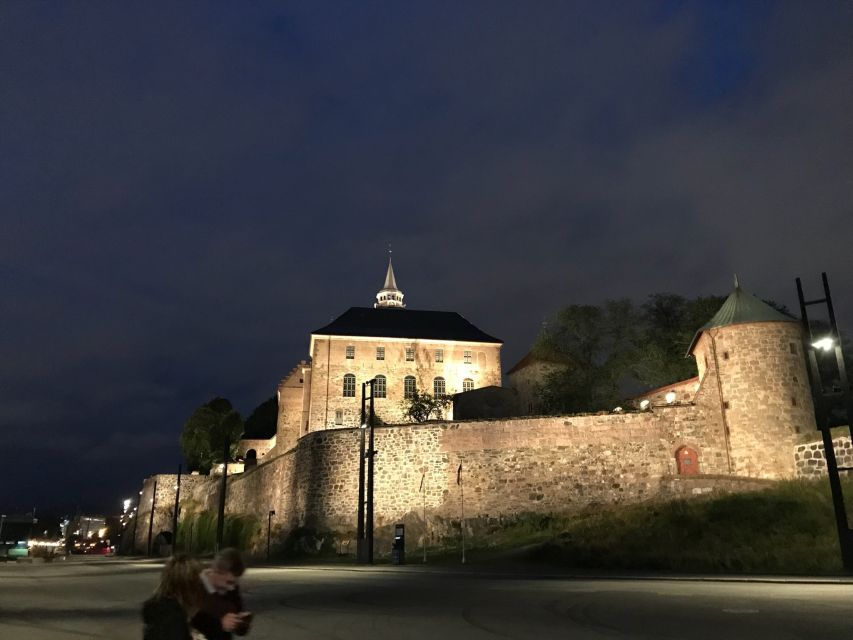
Akershus Fortress is the route’s biggest historic setting. Its walls and design show how seriously Oslo once had to think about defense. The guide explains the fortress as a working structure, not just a photogenic monument.
You will hear about its engineering and the reasons for its layout, along with stories of prisoners held within its walls and the fates they faced. This adds a human edge to the stonework. Instead of seeing only towers and thick walls, you begin to picture the people who guarded, governed, suffered, and survived there.
The fortress section also brings out one of the tour’s useful contrasts. Norwegian folklore can feel playful, with trolls and nisse at the center. Akershus introduces harsher subjects: confinement, punishment, fear, and political power. The guide moves between these themes without turning the evening grim.
The main limitation is that the tour does not promise an extended fortress interior visit or a detailed examination of every room. You are getting an outdoor walking overview with stories attached to the site. If you want a full fortress tour, you would need to set aside extra time separately.
More Walking Tours in Oslo
- Oslo: Best of Oslo Walking Tour
★ 4.5 · 458 reviews - Oslo: Guided Walking Tour of Central Oslo
★ 4.7 · 438 reviews - Taste of Oslo Walking Tour
★ 4.5 · 282 reviews - Central Oslo Guided Walking Tour with Local Guide
★ 4.5 · 278 reviews
Bankplassen and Oslo’s boldest thefts
At Bankplassen, the subject turns toward daring heists and intricate robberies. This is one of the more unusual features of the walk. Many city tours focus on kings, artists, and architecture. Here, crime becomes a way to explain how Oslo’s justice system worked.
The guide explores how medieval crimes were handled and what punishments people could face. That gives you a clearer idea of the rules that shaped daily life. Justice was not an abstract institution. It affected where people could live, how they were treated, and what happened when they crossed a line.
The theft stories also give the tour a welcome change of pace. After mythology and fortress history, a clever robbery can make the city feel immediate and human. You are no longer hearing only about distant centuries. You are following the choices of people who took risks, made plans, and tested the limits of the law.
I would not book this tour expecting a crime-thriller performance. The stories are part of a wider historical walk. Their value is that they reveal how money, authority, and punishment worked in Oslo, while keeping the evening entertaining.
The guides: Maria, Anastasia, and a conversational style
The strongest feature of this experience is the guide. Maria is repeatedly praised for being funny, approachable, and generous with city advice. She answers questions, suggests other places to visit, and makes the material easy to follow. Anastasia receives similar praise for her enthusiasm, clear English, and vivid delivery.
That personal style matters because this is not a tour built around audio devices or dense information panels. You listen to a person connect one place to the next. The guide can pause for questions, explain a point in another way, or adjust the pace when the group stops for photographs.
The walk is relaxed rather than rushed. You have time to listen, look around, and ask about something that catches your attention. That makes it a good first activity in Oslo, especially if you want a useful orientation before exploring alone.
There is one trade-off: the experience depends heavily on the individual guide and the group. The named guides have earned strong praise, but the exact guide may vary. A lively storyteller can make a familiar square memorable. A quieter delivery may make the same material feel less dramatic.
What two hours feels like in different seasons
The tour lasts two hours, which is long enough to cover several central sites without taking up a full day. It is also short enough to fit on a first evening or after a museum visit.
Winter requires serious preparation. Tours have operated in snow, wind, and temperatures in the minus teens. Some people have found the experience enjoyable even in extreme cold, but that does not mean you should treat the weather casually. Wear warm layers, gloves, and a hat, and choose shoes with reliable grip.
Darkness can arrive early. A December tour running from 4:00 to 6:00 p.m. may take place almost entirely after sunset. That changes the experience in a good and bad way. The city lights and mysterious stories create mood, but you may see less architectural detail than during daylight.
Spring and summer should be easier for outdoor comfort, and warmer evenings can offer sunset views. One group enjoyed a dramatic evening sky, while another appreciated seeing Oslo’s buildings lit after dark. Autumn can give you a quieter, cooler setting, but you still need a weather-ready jacket.
The walk is described as manageable, yet the restrictions are important. It is not suitable for children under 13, people with mobility impairments, or wheelchair users. One family reported that children aged 8 and 10 loved it, but the stated age guidance is still under 13, so I would follow the official rule rather than rely on that exception.
How much value do you get for $42?
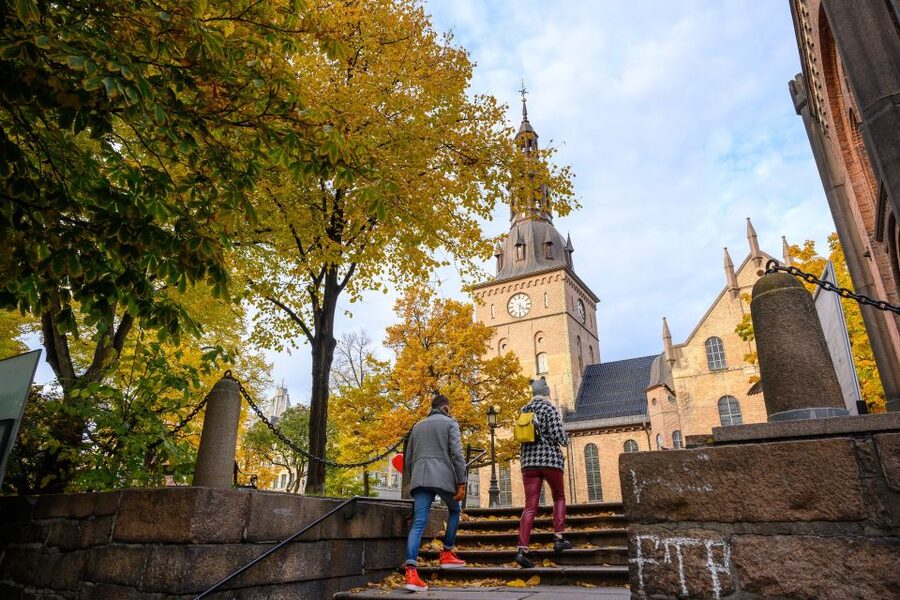
At $42 per person, this is not the cheapest way to walk around Oslo, since you can visit many central areas without paying. The value comes from the guide’s interpretation. You are paying for two hours of connected stories, cultural context, questions, and a route that points out details you might pass without noticing.
The price makes more sense if this is your first or second day in Oslo. You receive a broad introduction to the old center, Norwegian folklore, Viking ideas, the fortress, crime, and local justice. You also leave with suggestions for other places to explore.
It is less valuable if you already know central Oslo well or prefer to read at your own pace. The tour is also not designed for someone seeking a long indoor visit, a formal academic lecture, or a dedicated ghost experience.
Taxes and a live English-speaking guide are included. Food, drinks, hotel pickup, and hotel drop-off are not. Since the meeting point is at City Hall, plan to make your own way there and dress for the entire time outside.
The free cancellation period extends to 24 hours before the tour, and you can reserve now and pay later. Those terms help if your Oslo schedule depends on weather or changing plans, though you still need to check the available start times before booking.
Who will enjoy this Oslo evening walk?
I would choose this tour for a first-time visitor who wants more than a basic list of sights. It is also a good fit for solo visitors, couples, and small groups who enjoy stories and do not mind walking outdoors after dark.
You will likely enjoy it if you like:
- Folklore explained in its cultural setting
- Viking and Norse mythology
- Historic buildings with human stories attached
- Tales of crime, punishment, and old justice
- A relaxed pace with room for questions
- A guide who offers ideas for the rest of your stay
I would think twice if you dislike cold weather, need step-free access, or want a tour focused only on architecture. The route is not a ghost-hunting expedition, and there is no underground exploration. It is also conducted in English, so you need to be comfortable listening to a live guide for two hours.
Should you book Oslo Historic Myths and Legends?
I would book it as an early Oslo activity, especially if you want the city to feel less anonymous. The route gives you City Hall, Christiania Torv, Akershus Fortress, and Bankplassen, but the real benefit is learning how myths, crime, punishment, and public art connect those places.
The strongest reason to go is the storytelling. Maria and Anastasia have both been praised for humor, warmth, clear explanations, and useful local suggestions. The biggest reason to skip it is simple: you must be ready for two hours outside, and winter conditions can be severe.
For $42, it is fair value if you want context rather than just photographs. Wear comfortable shoes, check the forecast, arrive at the Swans fountain, and let the stories guide your first look at Oslo.
FAQ
Where does the Oslo myths and legends tour meet?
The meeting point is near the Swans fountain at the entrance of Oslo City Hall on Fridtjof Nansen’s Square.
How long does the walking tour last?
The tour lasts two hours.
What language is the tour conducted in?
The live tour is conducted in English.
What places does the route visit?
The route begins at Oslo City Hall and includes Christiania Torv, Akershus Fortress, and Bankplassen, along with other central Oslo locations connected to the stories.
What kinds of stories will I hear?
You will hear Norwegian folklore about trolls, nisse, and huldra, along with Viking beliefs, fortress prisoners, ghosts, underground kingdoms, medieval justice, punishments, and daring thefts.
Is this a ghost tour?
No. The tour discusses ghost legends and underground kingdoms in their historical and cultural setting, but it is not a ghost-hunting expedition and does not go underground.
What should I bring?
Bring comfortable shoes. Warm clothing is especially important in winter, when snow, wind, darkness, and very low temperatures can affect the walk.
Is the tour suitable for children?
The activity is listed as unsuitable for children under 13. The stated guidance should be followed even though one family described children aged 8 and 10 enjoying the experience.
Can I cancel or pay later?
You can cancel up to 24 hours in advance for a full refund. You can also reserve your place and pay later, subject to the booking terms and available start times.
More Evening Tours in Oslo
- Oslo: Fjord Evening Cruise with Shrimp Buffet
★ 4.5 · 1,956 reviews - Oslo Fjord Evening Cruise with Shrimp Buffet on a Sailing Ship
★ 4.0 · 170 reviews - Oslo Fjord Evening Live Rock music cruise with Shrimp buffet
★ 4.9 · 15 reviews - Tromsø: Evening Aurora Cruise (dinner optional)
★ 4.4 · 1,570 reviews
Just added around Oslo
- Oslo Winter Highlights Bike Tour★ 5.0 · 36 reviews
- 4 hours Best View of the Oslofjord Winter Edition★ 4.0 · 15 reviews
- The Viking Planet Museum – Mini Group (4 adults)★ 4.0 · 16 reviews
- Unknown war. Oslo and Norway during 1940-45★ 5.0 · 74 reviews
- The Ultimate Norwegian Skiing Experience★ 5.0 · 16 reviews
- The Ultimate Study of the Human Form at Vigeland’s Sculpture Park with a Local★ 4.0 · 14 reviews
- The Oslo Beer Adventure★ 4.5 · 11 reviews
- The Essential Oslo Private Walking Tour★ 5.0 · 79 reviews
Historical Tours, compared.

Reindeer Camp and Sami Cultural Tour with Lunch
Read our review →

Sightseeing Cruise of Bergen’s Historic Landmarks
Read our review →




A Well Balanced History and Food Tour with Focus on the Scandinavian Kitchen
Read our review →Browse the lists this tour appears in