
Reviewed · CITY TOURS
Oslo: City Highlights Walking Tour
Oslo’s story makes the most sense when you walk it in a line, from the medieval fortress and old city grid to the white marble Opera House and grand Karl Johan Street. This two-hour tour connects those pieces neatly, with a German-speaking guide explaining how Oslo grew from a small medieval settlement into Norway’s capital.
I like the route for two clear reasons: it gives you a fast sense of direction, and it mixes major sights with useful background on Norwegian culture, government, language, and the country’s ties to Denmark and Sweden. The German-language format is also a real advantage if you understand German better than English.
The main drawback is the pace. You cover a lot of ground in two hours, and a moderate amount of walking is required. You may want more time for photographs at each stop, and poor weather can make the outing less pleasant, since it normally runs in rain or snow unless there is a severe storm.
Key points at a glance
- A clear historical route: Begin near the Nobel Peace Center, visit Oslo’s medieval core, then return toward the modern city.
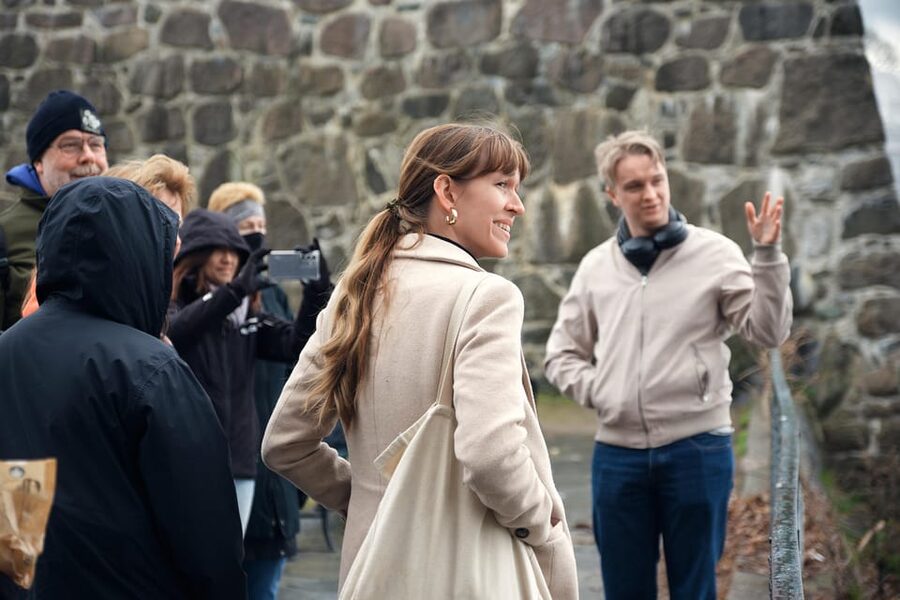
- A German-speaking guide: Guides including Emily, Anna Marie, Maria, Olav, and Ulaf have led previous walks, though your guide may differ.
- Major sights without museum admissions: See Akershus Fortress, Christiania Torv, the Opera House, Karl Johan Street, Parliament, and more from the outside.
- Useful city orientation: The walk helps you understand districts, streets, public buildings, and the layout of central Oslo.
- Strong all-weather planning needed: The tour continues in ordinary rain and snow, so wear suitable clothing.
- Accessible format: The experience is listed as wheelchair accessible, with moderate walking involved.
Starting near the Nobel Peace Center
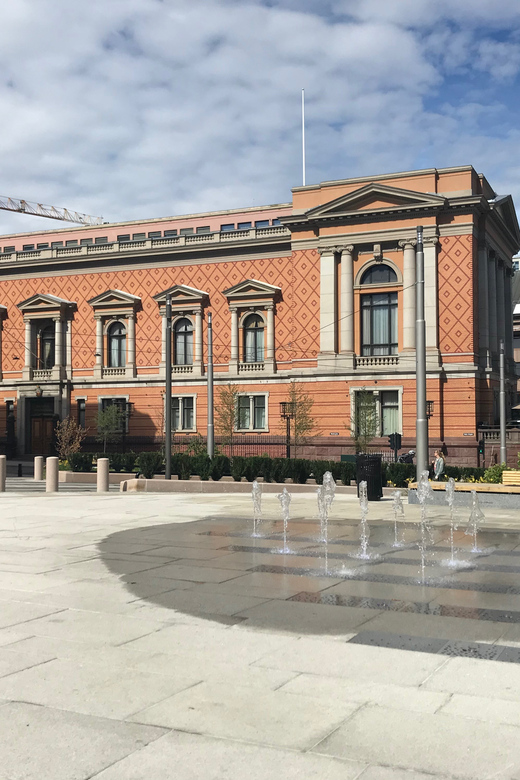
Your meeting point is near the entrance of the Nobel Peace Center, a practical place to begin because it sits between Oslo’s waterfront and central streets. From here, the guide introduces the city’s historical heart before leading you toward its older defensive and commercial areas.
This opening is less about checking off one attraction and more about setting up Oslo’s story. You begin near a modern institution associated with international peace work, then move toward the city’s medieval roots. That contrast helps you read Oslo as a city with several distinct chapters rather than a collection of unrelated buildings.
The guide speaks German throughout the walk. That matters more than it might seem. A good city walk depends on small explanations about names, politics, local customs, and historical connections. If German is your strongest tour language, you can focus on the content instead of translating in your head.
Guides have included Emily, Anna Marie, Maria, Olav, and Ulaf on different departures. Their approaches can vary, but the experience is designed around live explanation rather than a recorded script. Questions are welcome, and one especially useful strength of this format is the chance to ask about daily life in Oslo as well as its architecture.
More City Tours in Oslo
- Oslo: City Sightseeing Hop-On Hop-Off Bus Tour
★ 3.6 · 724 reviews - Oslo: Grand City Sightseeing Tour by Bus with Fjord Cruise
★ 4.6 · 647 reviews - Oslo Combo Tour: Grand City Tour and Oslo Fjord Cruise
★ 4.5 · 555 reviews
Akershus Fortress and Oslo’s medieval beginnings
The route passes Akershus Fortress, one of the most important visual reminders of Oslo’s early purpose. Its defensive walls and commanding position help explain why this area mattered before modern streets, trams, and waterfront redevelopment changed the city.
You should not expect an extended fortress visit with interior rooms or a separate admission. The tour focuses on the outside setting and the historical context. That is useful if you want to understand the site while keeping the walk moving, but it may feel brief if Akershus is high on your personal list.
The guide may connect the fortress to Oslo’s development from the Viking era through the medieval period and into the modern capital. Past tours have also covered the way Oslo expanded, the differences between city districts, and the country’s relationships with Denmark and Sweden.
I find this kind of explanation especially helpful early in a stay. Once you understand why the fortress was built and how the city shifted around it, later sights are easier to place. You are not simply looking at old stone. You are seeing one reason the city grew where it did.
Christiania Torv and the Kvadraturen street plan
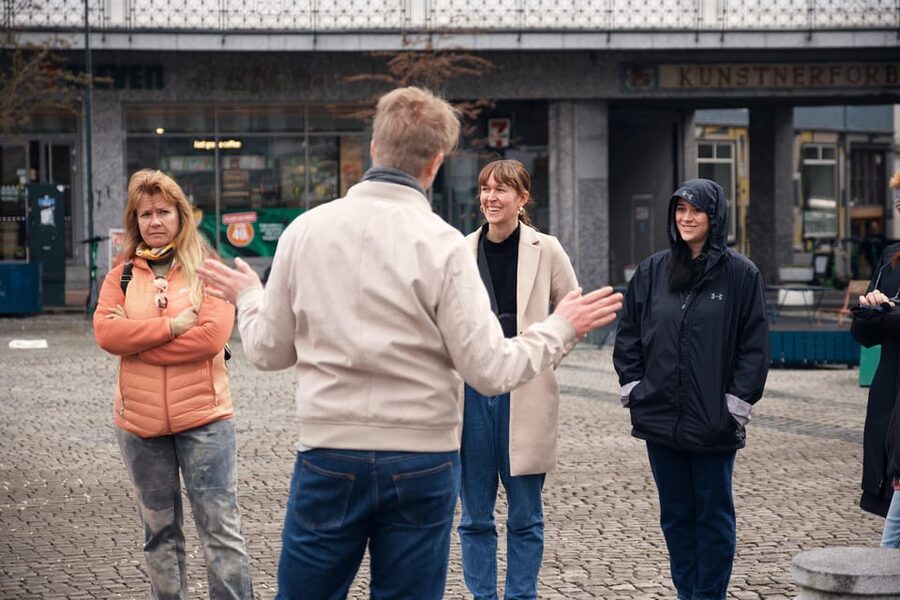
From the fortress area, you continue to Christiania Torv and Kvadraturen, the district linked to Oslo’s original city layout. The name Kvadraturen refers to its ordered, grid-like plan, which gives this section a different feel from the more monumental streets farther west.
Christiania Torv is a good point for talking about Oslo’s changing name and urban identity. The city was rebuilt after a major fire and was associated with the name Christiania for a period before Oslo returned as the official name. The walk uses this area to connect a real street corner with the broader story of rebuilding and relocation.
This is one of the more rewarding parts of the route for anyone who likes cities as working places rather than just postcard views. You see how old planning decisions still shape the streets around you. The guide can also point out how different parts of central Oslo serve different roles.
Allow yourself a moment to look around here, but keep an eye on the group. The walk is paced to reach several major sights, and the guide may move on soon after finishing an explanation. If you want photographs, ask when there will be a short pause. That small request can make the experience more relaxed.
The Oslo Opera House and the modern waterfront
The walk then reaches the Oslo Opera House, one of the clearest symbols of present-day Oslo. Its pale, angular form rises from the fjord edge, and its broad exterior surfaces create a sharp contrast with the fortress and older streets.
The tour presents the Opera House as part of Oslo’s modern identity, not as an isolated architectural curiosity. This is a useful change of mood. After hearing about medieval defense and old city planning, you see how the capital has turned toward the water and contemporary design.
The Opera House is also one of the strongest photo stops on the route. Its setting gives you open views and a chance to photograph the building from different angles. Still, this is a walking tour, not an architecture tour, so the stop may not include a detailed interior visit or a long period for exploring the building.
If modern design interests you, mark the Opera House for a return visit. The tour gives you the orientation and the visual introduction, while a later visit lets you spend more time with the building itself.
More Walking Tours in Oslo
- Oslo: Best of Oslo Walking Tour
★ 4.5 · 458 reviews - Oslo: Guided Walking Tour of Central Oslo
★ 4.7 · 438 reviews - Oslo: Historic Myths & Legends Evening Walking Tour
★ 4.8 · 408 reviews - Taste of Oslo Walking Tour
★ 4.5 · 282 reviews
Karl Johan Street, Oslo Cathedral, and Parliament
After the waterfront section, the route turns toward Karl Johan Street, Oslo’s main thoroughfare. This is where the city’s ceremonial and civic character becomes most apparent. The street links several central landmarks, so the walk can cover a lot without requiring complicated transport.
You pass Oslo Cathedral, a key religious building in the center, and continue toward the Parliament building. The guide explains the role of these places within Norwegian public life and shows how the central street functions as more than a shopping route.
Parliament is particularly useful for visitors who want some political context. The tour can help you understand Norway’s government and how national institutions fit into the city center. Several guides have also discussed Norway’s three city halls, which gives you an unusual way to think about the capital’s civic buildings and changing administrative needs.
This stretch can feel busy, especially compared with the quieter fortress area. You may need to stay close to the guide and listen carefully while walking. The tradeoff is efficiency: you see several important buildings in one continuous section instead of spending time arranging separate visits.
National Theater, the University Aula, and the Royal Palace view

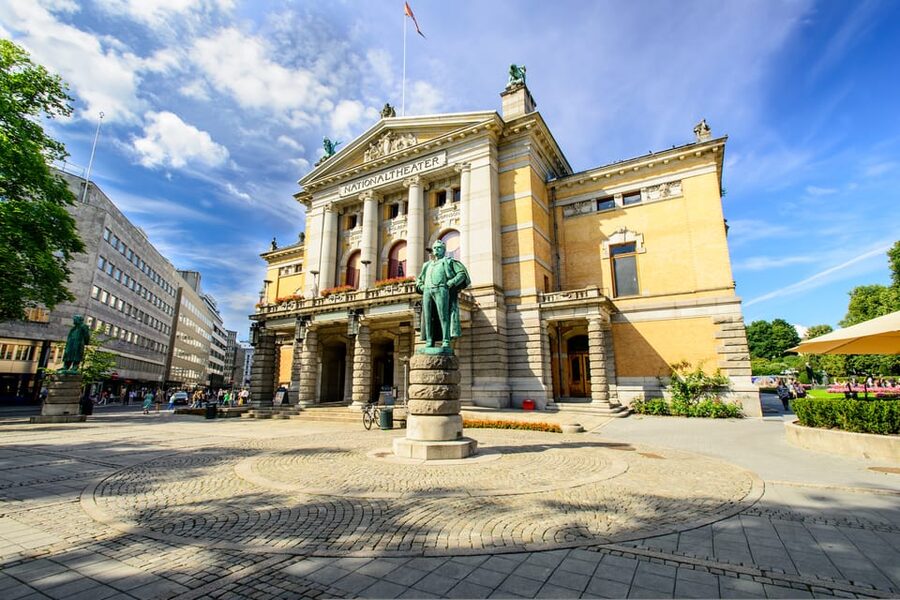
The final part of the walk includes the National Theater and the historic Aula at the University of Oslo. These buildings add a cultural and academic layer to the route. By this point, you have seen military, religious, political, commercial, and artistic parts of the capital.
The University Aula is especially well suited to a walking tour because it helps show the connection between Oslo’s public institutions and its cultural life. The guide may discuss Norwegian society, language, education, and the country’s national development as the group moves toward the university area.
The tour ends near the University of Oslo, with a view toward the Royal Palace. It is a satisfying finish because the route has moved from the waterfront and old city toward the formal western end of Karl Johan Street.
This final viewpoint is not the same as a palace tour. You should think of it as an orientation stop and a good place to continue exploring on your own. If you have more time, you can use the ending point to plan where to go next, based on the sights that caught your attention during the walk.
What the German-language format adds
A German-speaking walk is the central reason to choose this experience over a general city stroll. The tour covers many subjects, including Norwegian language, local culture, history, government, architecture, and the relationship between Norway, Denmark, and Sweden.
The strongest guides on this route do more than recite dates. They connect buildings to how people live in Oslo today. One guide, for example, was praised for discussing the city’s districts and its growth from Viking times to the present. That kind of broad explanation gives you a working map of the city rather than a string of isolated facts.
The quality of a live tour can depend on the individual guide, and the named guides have included Emily, Anna Marie, Maria, Olav, and Ulaf. Descriptions of past departures point to energetic, friendly, and well-prepared guiding, but no specific guide can be guaranteed when you book.
If you have questions, ask them as you go. The route covers enough ground that a short conversation about a building or local custom can make the information more memorable. The German format also suits families, couples, and solo visitors who want a chance to talk with a local guide.
Pace, weather, and accessibility
Two hours is a good length for a first look at central Oslo. You get enough time to see the major public sights without giving up an entire morning or afternoon. The cost is $37 per person, which is reasonable if you value explanation, orientation, and the ability to ask questions.
The price does not include museum entry, food, or transport. That keeps the cost simple, but you should not book this expecting access inside every building. The value is in the route and the guide’s interpretation.
Moderate walking is required. The route includes several central districts and finishes away from the starting point, so comfortable shoes matter. The activity is listed as wheelchair accessible, but you should still consider your own walking needs and confirm current conditions when booking.
Weather deserves attention. The walk normally operates in rain and snow and is canceled only for severe storms. A winter departure can be cold, but the experience can still work if you dress properly. One cold-weather group even stopped at markets for a warm chocolate, though you should not treat that as a guaranteed part of every departure.
Bring a waterproof layer, warm clothing in winter, and protection for your phone or camera. The tour has plenty of photographable locations, but wet weather can make handling a camera less comfortable.
Best for a first day in Oslo
I would choose this walk early in a visit, especially if you have only a day or two in the city. It gives you a useful mental map of the center and helps you decide which places deserve a longer return visit.
It also suits anyone who likes a blend of history and everyday city life. You hear about medieval Oslo, but you also learn about public institutions, language, districts, and modern development. That range keeps the route from feeling like a parade of old buildings.
The tour is less suitable if you want a slow photographic walk, a long fortress visit, or detailed interior access. It is also not ideal for someone who dislikes walking in uncertain weather. If you need frequent breaks, the pace may feel demanding.
The high rating of 4.8 from 197 bookings matches the tour’s strongest qualities: clear city orientation, friendly guiding, and a large amount of useful information in a short time. The one practical weakness is that the schedule can leave little room for photographs or an easy restroom break at the end. You may want to use a café restroom rather than rely on a public facility after the walk.
Should you book the Oslo City Highlights Walking Tour?
Book it if you want a German-language introduction to central Oslo, especially at the start of your visit. The route covers the fortress, old city, waterfront, main street, civic buildings, university area, and Royal Palace view, giving you a strong first framework for the capital.
Skip it if you prefer to explore at your own speed or want substantial time inside the sights. For most visitors who value context and want to get their bearings quickly, $37 is fair for two hours of guided walking. Dress for the forecast, stay ready to walk, and ask for a short photo pause when you need one.
FAQ
Where does the tour meet?
Meet your guide near the entrance of the Nobel Peace Center in Oslo.
How long does the walking tour last?
The tour lasts two hours.
What language is the tour conducted in?
The live tour guide speaks German.
How much does the tour cost?
The listed price is $37 per person.
What sights are included on the route?
The route includes the Nobel Peace Center area, Akershus Fortress, Christiania Torv, Kvadraturen, the Oslo Opera House, Karl Johan Street, Oslo Cathedral, Parliament, the National Theater, the University of Oslo’s Aula, and a view toward the Royal Palace.
Does the tour enter the buildings?
The provided information describes a guided walking route past the landmarks. It does not state that admission or interior visits are included.
Is the tour wheelchair accessible?
Yes, the activity is listed as wheelchair accessible.
How much walking is involved?
A moderate amount of walking is required during the two-hour route.
Can I cancel the tour for a refund?
You can cancel up to 24 hours in advance for a full refund. The tour is generally not canceled because of ordinary bad weather, except in the case of severe storms.
Just added around Oslo
- Oslo Winter Highlights Bike Tour★ 5.0 · 36 reviews
- 4 hours Best View of the Oslofjord Winter Edition★ 4.0 · 15 reviews
- The Viking Planet Museum – Mini Group (4 adults)★ 4.0 · 16 reviews
- Unknown war. Oslo and Norway during 1940-45★ 5.0 · 74 reviews
- The Ultimate Norwegian Skiing Experience★ 5.0 · 16 reviews
- The Ultimate Study of the Human Form at Vigeland’s Sculpture Park with a Local★ 4.0 · 14 reviews
- The Oslo Beer Adventure★ 4.5 · 11 reviews
- The Essential Oslo Private Walking Tour★ 5.0 · 79 reviews
City Tours, compared.
Grand City Sightseeing Tour by Bus with Fjord Cruise
Read our review →
Oslo Combo Tour: Grand City Tour and Oslo Fjord Cruise
Read our review →

Browse the lists this tour appears in