
Reviewed · CITY TOURS
Oslo City Walks: The City of Contrasts
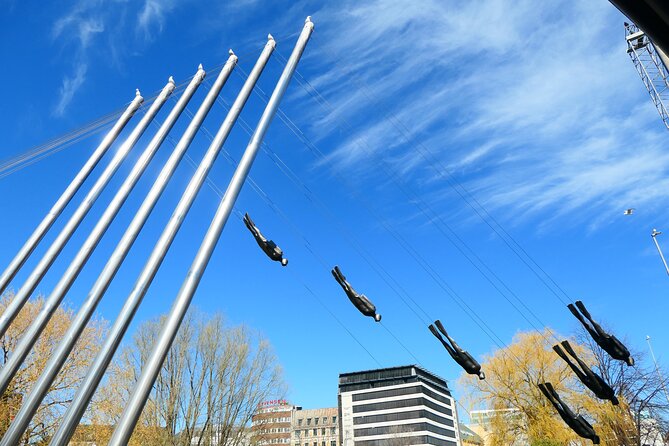
Oslo City Walks: The City of Contrasts is less a greatest-hits tour than a guided lesson in how Oslo is changing. In two hours, you walk from the traditional meeting point at Central Station into the new Bjørvika district, where old industrial land now sits beside striking modern buildings. I like the clear focus on architecture and city growth, along with the chance to see the Acrobat pedestrian bridge, Munch Museum, Opera House, and Deichman Library in one compact outing.
I also like that an authorized Oslo guide leads the walk in English or Norwegian, giving you room to ask questions at a manageable pace. The main drawback is scope: this is not a full tour of Oslo’s classic sights, and one past visitor found the group too large while another felt the route covered too few major landmarks. If you want museums, palace interiors, or a long list of historic sites, choose a broader city tour.
Key points to know before booking
- The route begins at Østbanehallen: Meet in front of the Oslo Visitor Centre inside Oslo Central Station.
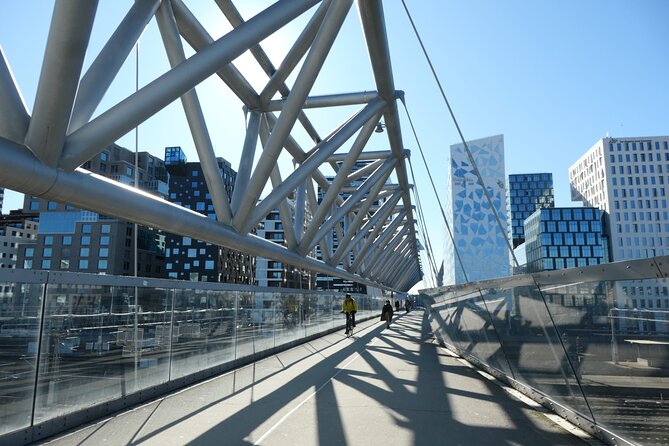
- The Acrobat bridge is an early highlight: You cross this pedestrian bridge from the station area into Bjørvika.
- Bjørvika is the main story: The walk explains how industrial land became one of Oslo’s newest urban districts.
- Modern architecture gets the attention: Expect the Munch Museum, Opera House, Deichman Library, and new development rather than a long museum visit.
- The walk takes about two hours: Arrive 10 minutes early and wear good walking shoes.
- The price is $52 per person: That is reasonable if you value context and questions, but less attractive if you only want quick landmark photos.
Why Oslo’s old-to-new story makes this walk different
Many Oslo sightseeing walks focus on famous buildings one by one. This one links them through a larger story: how industrialization, city expansion, transport, and new construction reshaped the capital.
That approach gives you a useful way to read Oslo. Instead of seeing the Opera House or Munch Museum as isolated attractions, you see them as parts of a major waterfront transformation. The contrast between older structures and new architecture is the point.
I find that especially helpful on a first visit. Modern districts can look polished but confusing when you walk through them alone. A guide can explain why the area looks the way it does and help you notice the relationship between public spaces, transport links, cultural buildings, and former industrial areas.
The tour also takes you beyond a standard central-city loop. You will explore suburban and industrial sections as part of the modernization story. That may sound less glamorous than a castle or historic square, but it gives you a more honest picture of a working capital that is still being reshaped.
More City Tours in Oslo
- Oslo: City Sightseeing Hop-On Hop-Off Bus Tour
★ 3.6 · 724 reviews - Oslo: Grand City Sightseeing Tour by Bus with Fjord Cruise
★ 4.6 · 647 reviews - Oslo Combo Tour: Grand City Tour and Oslo Fjord Cruise
★ 4.5 · 555 reviews
Starting at Oslo Central Station and Østbanehallen
The meeting point is in front of the Oslo Visitor Centre inside Østbanehallen at Jernbanetorget 1. This is a practical place to begin because it sits at Oslo Central Station, close to public transport and easy to identify.
Plan to arrive 10 minutes early. The station area can be busy, and you do not want to spend the first minutes of a short tour trying to locate the guide.
The opening setting also fits the theme. You start in a transport hub before walking into areas shaped by major infrastructure and urban expansion. The tour is not simply about old streets. From the first step, it frames Oslo as a city connected by modern transit and new construction.
Because the tour begins in a station complex, it is worth sorting out food, drinks, and restrooms before departure if you need them. The supplied details do not promise scheduled stops for these needs, so arrive prepared for a continuous city walk.
Crossing the Acrobat bridge into Bjørvika
The walk heads over the Acrobat pedestrian bridge at Oslo Central Station. This bridge provides a clear change of scene: you leave the station district and enter Bjørvika, one of the areas most closely linked to Oslo’s recent development.
The bridge is also a good place to understand the tour’s title. The experience moves from established transport infrastructure toward new cultural buildings and reshaped waterfront districts. You are not just looking at new construction. You are watching the city change as you walk through it.
Bring a camera if you enjoy architectural photography. The route offers several opportunities to frame old and new buildings together, and the bridge itself gives you a useful viewpoint over the surrounding development.
The setting is not a quiet historic lane. It is an urban route, with roads, construction, large buildings, and modern public spaces. That is part of its value, but it also explains why some people may find the tour less visually varied than a classic old-town walk.
Bispevika and the changing waterfront
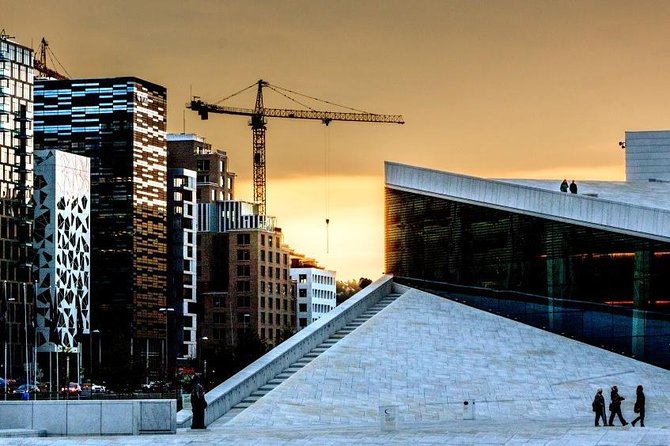
After crossing into Bjørvika, the route passes through Bispevika. This section helps show how Oslo has expanded and updated its waterfront areas.
The guide’s role matters here. New districts often lack the obvious visual clues found in older neighborhoods. A row of modern buildings may tell you little unless someone explains the former use of the land, the city’s growth, or the planning ideas behind the redevelopment.
You should expect commentary rather than entry into a series of attractions. The tour is built around seeing the city from the street, asking questions, and understanding the setting. If you like to connect architecture with city planning, this part should be useful.
If your main goal is to enter museums or spend time inside historic buildings, the route will feel limited. The tour includes views of cultural landmarks, but it does not promise admission or extended visits inside them.
A few more Oslo days to weigh up
- Oslo: Scenic Fjord Cruise with Audio Guide Commentary
★ 4.5 · 5,375 reviews - Oslo Nature Walks: Island Hopping Tour
★ 4.8 · 2,713 reviews - Oslo: 100% Electric Oslofjord Sightseeing Cruise
★ 4.4 · 2,041 reviews - Oslo: Fjord Evening Cruise with Shrimp Buffet
★ 4.5 · 1,956 reviews
The Munch Museum and Oslo’s modern face
The walk passes by the new Munch Museum, one of the most recognizable signs of Oslo’s modern cultural district. Its presence gives the guide a natural chance to discuss contemporary architecture and the city’s effort to place major cultural institutions in the redeveloped waterfront area.
You should not expect a museum visit as part of the two-hour walk. The value here is the exterior setting and the larger explanation of how this part of Oslo was planned and built.
For a visitor comparing several Oslo tours, this distinction is important. You are paying for a guided urban walk, not an art tour. If you already plan to visit the Munch Museum separately, this outing can help you understand its place in the city. If you want a detailed look at Edvard Munch’s work, you will need a separate visit.
The museum also adds variety to the route. The tour is not only about streets and transport. It connects Oslo’s industrial past with its current role as a cultural capital.
The Opera House and the end at Deichman Library
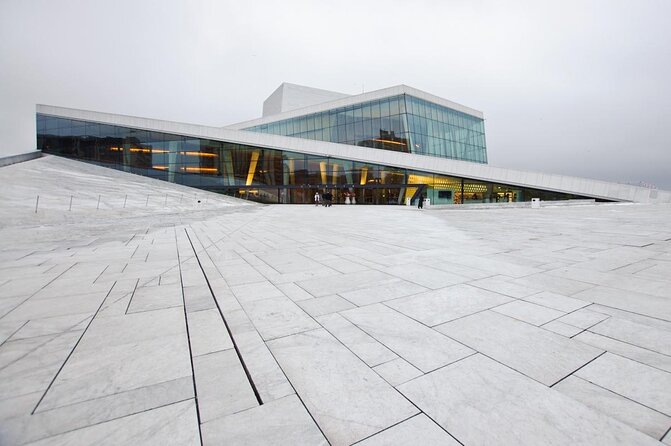
The route concludes at Deichman Library next to the Opera House. These buildings form one of the strongest modern architectural groupings in the city, making a fitting end to a tour about Oslo’s new identity.
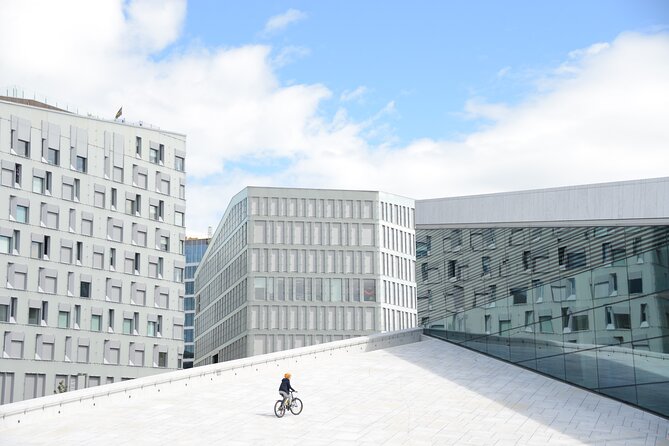
The Opera House is especially useful as a visual stop because its design invites people to move around and look at the building from different angles. The library adds another public cultural institution to the walk, showing that the district is designed for more than offices and apartments.
The finish is convenient if you want to continue exploring Bjørvika on your own. You can photograph the surrounding buildings, visit one of the nearby cultural sites separately, or simply use the area as a new base for the rest of your evening. The activity details do not state a return to the starting point, so plan on ending by the library rather than at Central Station.
One caution: the tour’s short duration means the final landmarks may be viewing stops rather than long visits. You will gain context and see the buildings, but you should not expect time for a full museum or library experience during the walk.
What the guide adds to a $52 experience
The price is $52 per person, and the only listed inclusion is an authorized tour guide. That makes the value depend almost entirely on the quality of the explanation and the way you use the two hours.
For me, the price makes sense if you want more than photographs. A guide can point out changes you might otherwise walk past, explain the relationship between industrial areas and newer districts, and answer questions in real time. That is useful when the subject is urban change, since much of the story is not obvious from the buildings alone.
The value is weaker if you are looking for many attractions, entry tickets, or a long historic overview of Oslo. You are not paying for admissions, transport, or a full-day program. The experience is a focused walk with commentary.
Past feedback gives you a reason to consider group size before booking. One person found the group too large, while another described the guide as lacking personality and felt that the tour covered too few Oslo sights. Those are fair concerns for any short walking tour. Ask yourself if you are comfortable with a group setting and if architecture and city development are enough to hold your interest.
On the other hand, a separate rating praised the guide as fantastic and highlighted the chance to ask many questions while walking at a comfortable pace. That is the kind of experience this tour can provide when the group remains engaged and the guide fits your interests.
Walking conditions, language, and timing
The tour lasts about two hours and is offered in English or Norwegian. Since the route moves through streets, bridges, and public areas, good walking shoes are recommended.
There is no need for high heels. In fact, high-heeled shoes are not allowed, so choose practical footwear. Dress for the weather, since this is an outdoor walk and the supplied details do not promise indoor shelter along the route.
The activity is listed for a typical Monday evening, though you should check the available starting time when booking. Evening light may make the modern buildings appealing for photography, but conditions can change quickly in Oslo. A weatherproof layer is a sensible choice.
The route is described as a walk at a comfortable pace, but you should still be ready to remain on your feet for the full two hours. The information does not specify accessibility details, step-free access, or the exact walking distance, so contact the provider if those points matter to you.
Drones are not allowed. That restriction is easy to follow, and the bridge and waterfront provide plenty of ordinary photo opportunities without special equipment.
Who will enjoy this Oslo walk most
I would choose this tour for someone who likes architecture, transport, urban planning, and the practical story behind a changing city. It also suits a first-time visitor who wants a quick orientation to Bjørvika before exploring the area independently.
It is a good match if you enjoy asking questions. One of the strongest reasons to book is the live guide, who can respond to your interests instead of giving only a fixed audio presentation.
The tour may also suit repeat visitors. If you have already seen Oslo’s best-known central attractions, the focus on industrial areas, suburbs, and newer construction gives you a different angle.
I would be cautious about booking it for young children who need frequent activity changes, or for anyone expecting a long list of historic monuments. The route has a clear theme and does not try to cover all of Oslo.
You should also think about group size. A large group can make it harder to hear or ask questions, and one past assessment specifically found the group too big. If personal attention is your top priority, confirm the expected group arrangement with Oslo Guidebureau AS before committing.
Practical booking advice for a Monday evening
Meet in front of the Oslo Visitor Centre inside Østbanehallen at Jernbanetorget 1. Arrive 10 minutes early, especially if you are unfamiliar with Oslo Central Station.
The activity offers free cancellation up to 24 hours before departure and allows you to reserve now and pay later. Those terms help if your schedule may shift, but they do not change the basic nature of the experience: a two-hour, outdoor, guide-led walk.
Check the available start time before booking, since the duration is fixed but the exact departure time can vary. Wear comfortable shoes, dress for the forecast, and avoid high heels.
English and Norwegian are available. If you need another language, the provided information does not list one.
Should you book Oslo City Walks: The City of Contrasts?
Book it if you want to understand how Oslo grew into a modern capital and you are happy to spend two hours looking at buildings, bridges, streets, and redevelopment rather than entering a long list of sights. The route from Østbanehallen across the Acrobat bridge and through Bjørvika gives you a clear, focused introduction to the city’s newer face.
Skip it if your priority is Oslo’s older history, indoor attractions, or a packed checklist of landmarks. At $52, the tour earns its price through the guide’s explanations, not through admissions or sheer quantity.
My practical call: choose this walk early in your stay if modern architecture interests you and you want a guide to help you read Bjørvika. If you have only one short window in Oslo and want the city’s most traditional highlights, spend that time on a broader sightseeing option instead.
FAQ
Where does the tour meet?
Meet in front of the Oslo Visitor Centre inside Østbanehallen at Jernbanetorget 1, 0154 Oslo.
How long does the walk last?
The tour lasts approximately two hours.
What time does the tour start?
The activity is described as a typical Monday evening tour. Check availability for the exact starting time when booking.
Which languages are available?
The live guide offers the tour in English or Norwegian.
Is the guide authorized?
Yes. The experience includes an authorized Oslo guide from Oslo Guidebureau AS.
What places does the route include?
The walk crosses the Acrobat pedestrian bridge, continues into Bjørvika and Bispevika, passes the new Munch Museum, and ends at Deichman Library next to the Opera House.
Does the tour include museum entry?
No museum or attraction admission is listed as included. The route passes by the Munch Museum and ends near the Opera House and Deichman Library.
Where does the tour finish?
The tour concludes at Deichman Library, next to the Opera House.
What should I wear?
Wear good walking shoes and dress according to the weather. High-heeled shoes are not allowed.
Can I cancel the booking?
You can cancel up to 24 hours in advance for a full refund. The activity also offers a reserve-now, pay-later option.
Just added around Oslo
- Oslo Winter Highlights Bike Tour★ 5.0 · 36 reviews
- 4 hours Best View of the Oslofjord Winter Edition★ 4.0 · 15 reviews
- The Viking Planet Museum – Mini Group (4 adults)★ 4.0 · 16 reviews
- Unknown war. Oslo and Norway during 1940-45★ 5.0 · 74 reviews
- The Ultimate Norwegian Skiing Experience★ 5.0 · 16 reviews
- The Ultimate Study of the Human Form at Vigeland’s Sculpture Park with a Local★ 4.0 · 14 reviews
- The Oslo Beer Adventure★ 4.5 · 11 reviews
- The Essential Oslo Private Walking Tour★ 5.0 · 79 reviews
City Tours, compared.
Grand City Sightseeing Tour by Bus with Fjord Cruise
Read our review →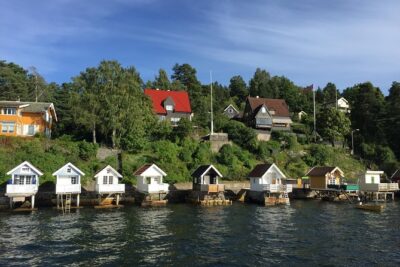
Oslo Combo Tour: Grand City Tour and Oslo Fjord Cruise
Read our review →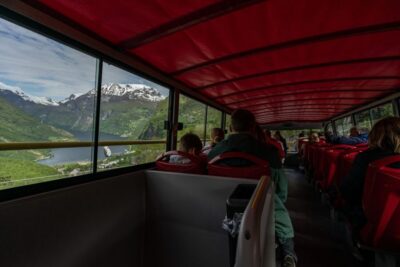
Browse the lists this tour appears in