
Reviewed · MUSEUMS
City Excursion (museums free). Tour of Oslo City’s Hidden Gems
Oslo’s best introduction may be a walk across the roof of its Opera House, then a turn through medieval fortress grounds, waterfront art, and Gustav Vigeland’s remarkable sculpture park. This private tour links the city’s major sights with places you could easily miss on your own.
I like the private format, since your guide can adjust the pace and answer questions as you go. I also like the mix of architecture, royal history, modern art, and public spaces, especially the hour set aside for Vigeland Park. The main drawback is that four hours is tight for five stops, and you’ll need to handle the walking and public transport between areas yourself.
Key points to know before booking
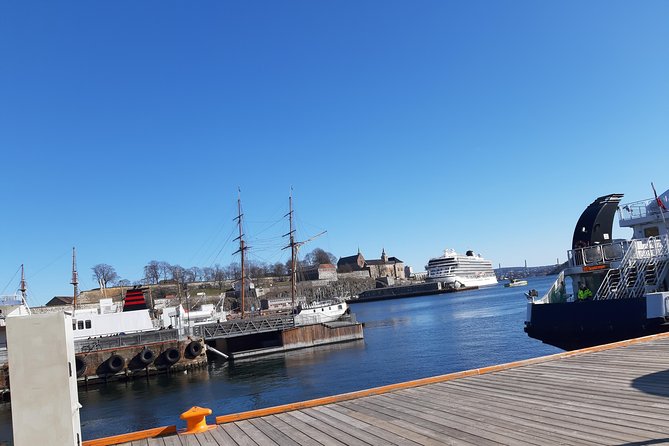
- Roof views at the Opera House: You can walk up the angled white roof for views across Oslo’s harbor and fjord.
- A private group of up to 12: The $503.60 price can be reasonable for a larger family or group, but expensive for one or two people.
- Vigeland Park gets the most time: About an hour is reserved for more than 200 sculptures in bronze, granite, and cast iron.
- No private vehicle is included: The experience begins and ends at Oslo City Hall, and public transport tickets are not covered.
- Free admission at most stops: The Opera House, Akershus Fortress, Tjuvholmen Sculpture Park, and Vigeland Park do not require an admission ticket.
- A moderate walking tour: Smart-casual clothing and a reasonable level of fitness are recommended.
What this private Oslo tour actually gives you
This is an orientation tour, not a slow museum visit. In about four hours, you move through several parts of Oslo with a Blue Badge guide, using the city itself as the main attraction.
That format works well on a first visit. You get a quick sense of where the harbor, old fortress, waterfront art district, sculpture park, and City Hall fit together. You also have someone available to explain what you are seeing and suggest ideas for the rest of your stay.
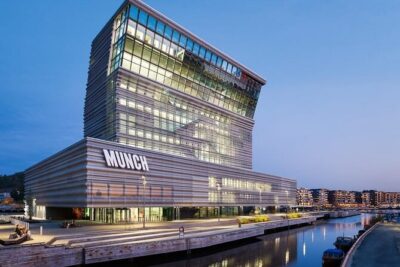
The private setup matters. Your group alone participates, with up to 12 people allowed. You are not tied to the interests or walking speed of a large mixed group. Some past bookings have used the flexibility to see additional places, including the new library and the Munch Museum, but those additions are not listed as guaranteed stops. Ask the guide at the start what can realistically fit.
The price is $503.60 per group, not per person. For 12 people, that works out to about $42 each. For six people, it is roughly $84 per person, and for two people it becomes more than $250 each. The value improves sharply when you are sharing the cost with family or friends.
One important catch: private transportation is not included. The published meeting point is Oslo City Hall, and the tour ends there. You may need to walk or use public transport between areas, with transit tickets at your own expense. Pickup is offered as a feature, but the practical details should be confirmed before booking because no private vehicle is included in the price.
More City Tours in Oslo
- Oslo: City Sightseeing Hop-On Hop-Off Bus Tour
★ 3.6 · 724 reviews - Oslo: Grand City Sightseeing Tour by Bus with Fjord Cruise
★ 4.6 · 647 reviews - Oslo Combo Tour: Grand City Tour and Oslo Fjord Cruise
★ 4.5 · 555 reviews
Starting at Oslo City Hall and the Nobel setting
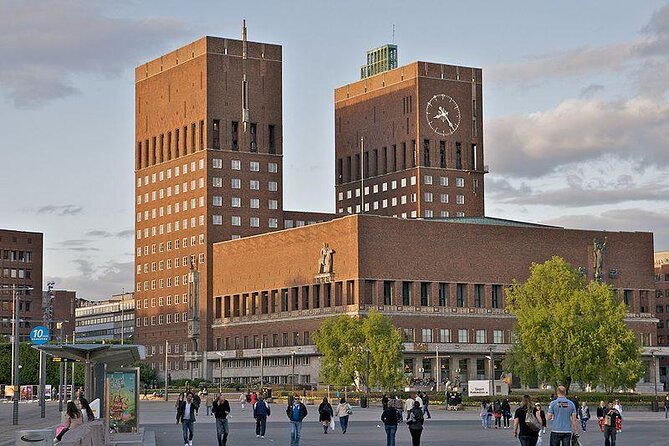
The meeting point is Oslo City Hall, at Rådhusplassen 1. This is a useful place to begin because the building is one of Oslo’s major civic landmarks and is associated with the Nobel Peace Prize ceremony.
The exterior reflects Norwegian national romantic design. Inside access is subject to public availability, so you should not assume that a full interior visit is guaranteed every time. Still, the building gives the tour a strong starting point: you are not simply meeting beside a random street corner, but at a place tied to Norway’s public life and international identity.
The tour allows about 45 minutes here. That is enough time for orientation and some explanation without using the entire morning on one building. If access is available, your guide can help you understand what you are seeing. If it is not, the City Hall area still places you close to the harbor and several central sights.
The tour ends back at this same meeting point. That makes planning easier, especially if you have a later reservation or need to return to your hotel. It also means you should not expect the guide to leave you at Vigeland Park or arrange a final transfer elsewhere.
Walking the roof of the Norwegian National Opera and Ballet
The Opera House is one of the cleverest stops on the route. Its white exterior slopes up from the harbor, allowing you to walk onto the roof rather than simply admire the building from ground level.
You have about 30 minutes here, with no admission charge. The reward is the view: Oslo’s harbor, the fjord, and the sharp meeting point between water and city. The roof also changes the way you experience the building. You are walking on architecture that doubles as public space.
This is a good place for photographs, but the guide’s context is what makes the stop more useful than a quick photo break. You can consider how Oslo has opened its waterfront to public use, rather than treating the harbor as a closed industrial edge.
Thirty minutes is enough for the roof and a short explanation. It is not enough for a performance, an interior tour, or a long visit to the institution itself. Think of this stop as an architectural viewpoint and city orientation, not a backstage visit.
Wear shoes that are comfortable for walking on sloped surfaces. The tour recommends smart-casual clothing, which is a sensible middle ground for a day that combines civic buildings, outdoor parks, and waterfront paths.
Akershus Fortress: Oslo’s medieval core
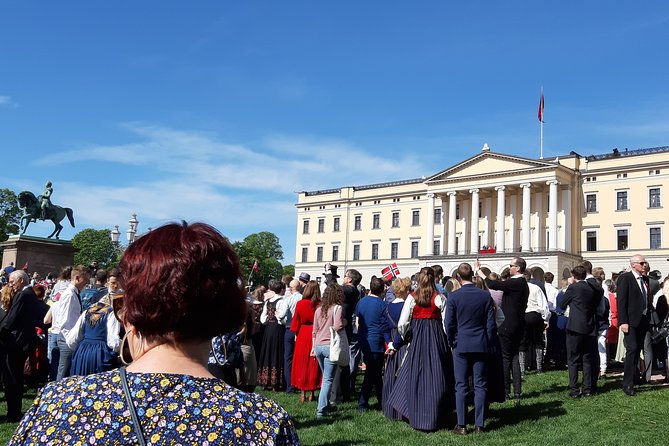
From the modern Opera House, the route shifts to Akershus Fortress. Construction began in 1299 under King Håkon V, and the medieval castle was completed in the 1300s. Its position at the end of the headland gave it a strategic role and helped it withstand several sieges.
That long timeline is the point of this stop. In a short distance, you move from Oslo’s modern cultural architecture into the city’s defensive past. The fortress was later modernized under King Christian IV, who turned it into a Renaissance castle and royal residence.
You have about 30 minutes here, and admission is free. That timing is useful for seeing the grounds and getting the main story, but it is not a full study of every building or museum space within the fortress complex. If you are especially interested in military history, castles, or royal architecture, you may want to return later with more time.
The fortress also offers a change of pace. The Opera House is bright, open, and new. Akershus is built around walls, defensive planning, and centuries of political change. A good guide can connect those periods instead of presenting them as unrelated photo stops.
Because this is an outdoor stop, weather matters. The tour runs in normal conditions, and the overall experience includes substantial walking. Bring a layer suited to Oslo’s changeable weather and plan to stay comfortable outside.
More Museum Visits in Oslo
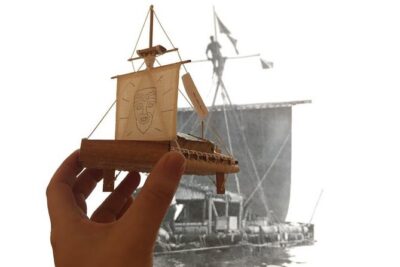
- Kon-Tiki Museum Entrance Ticket
★ 4.5 · 1,096 reviews - Oslo: Paradox Museum Entry Ticket
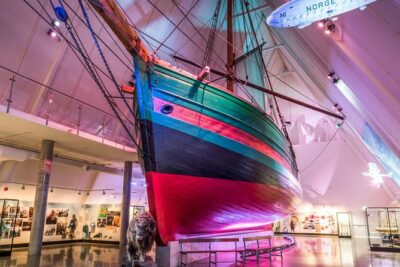
★ 4.3 · 799 reviews - The Fram Museum Admission Ticket
★ 4.5 · 490 reviews - Oslo: Oslo Discovery Tour with 2 Museums Included
★ 4.6 · 334 reviews
Tjuvholmen’s art, architecture, and waterfront setting
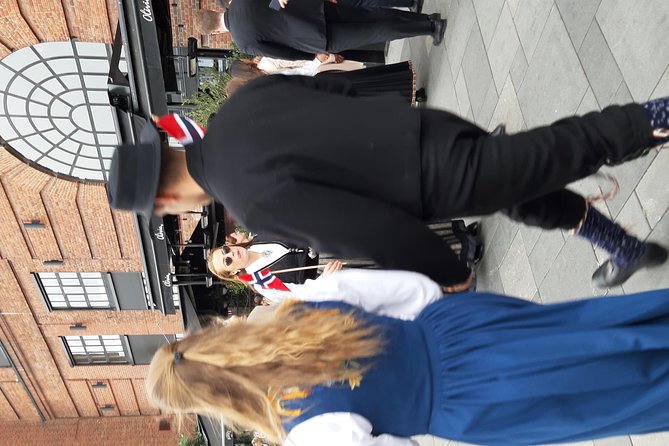
Tjuvholmen is one of Oslo’s newer districts, with a mix of modern buildings, galleries, outdoor art, and places to eat. The area includes the Astrup Fearnley Museum, a sculpture park, and a beach.
The tour gives you about 30 minutes here. That is enough to get a feel for the district and see some of its outdoor art, but not enough for a serious museum visit. Admission to the Astrup Fearnley Museum is not listed as part of the tour, so plan on the sculpture park and public areas unless you arrange something separately.
I like this stop because it keeps the tour from becoming only old buildings and famous landmarks. Tjuvholmen shows a newer Oslo, where art, dining, architecture, and the waterfront share the same district. It also gives you a chance to compare public sculpture with the formal work you will see later at Vigeland Park.
The area is known for restaurants with good locations, but food and drinks are not included. With only half an hour scheduled, you should not count on a proper meal here. If you want to eat, ask the guide whether the timing can accommodate a short stop, or save it for after the tour.
Spending an hour with Vigeland’s 200 sculptures
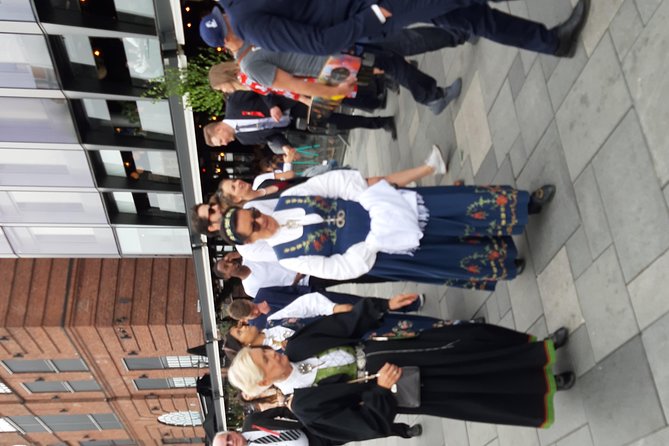
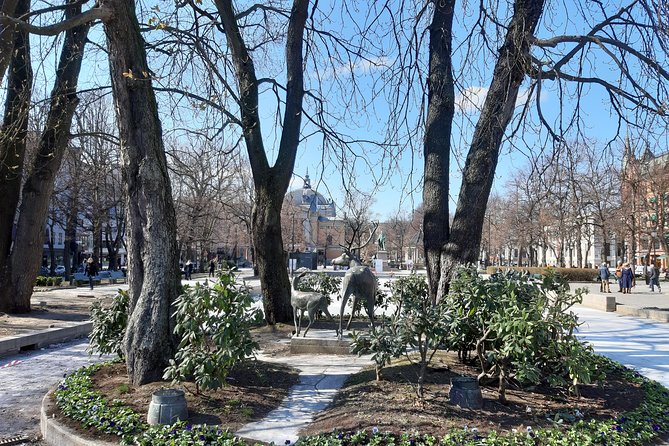
Vigeland Park is the heart of this experience. About one hour is set aside for a walking tour among more than 200 sculptures by Gustav Vigeland, created in bronze, granite, and cast iron.
The park is unusual because the entire setting works as a unified artistic project. You are not moving from one isolated statue to another in a museum. You are walking through an outdoor arrangement that gives the sculptures space, scale, and changing viewpoints.
The works cover human subjects and stages of life, but you should let the guide shape the visit rather than rushing to photograph everything. An hour is a useful amount of time for the major areas and a clear introduction to Vigeland’s work. It is not enough to study every figure closely, particularly if you stop often for photos.
This is also the tour’s most physically demanding section simply because it involves a longer walk in a large outdoor park. The route requires moderate fitness, and comfortable shoes will make a real difference. Anyone who tires easily should tell the guide early so the pace can be adjusted.
The sculpture park was the favorite part for at least one past participant, and it is easy to understand why. The Opera House is a great viewpoint, and Akershus gives you a strong historical setting, but Vigeland Park offers the most time to look, think, and ask questions.
The tour’s strongest feature: a guide who can adapt the day
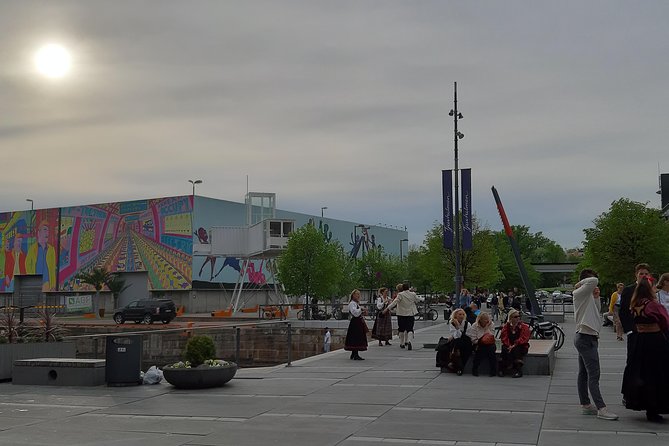
The best reason to choose a private tour is not speed. It is control.
You can ask for more history at Akershus, more art at Tjuvholmen, or more time to understand the sculpture park. You can also tell the guide if your group needs a slower pace. A private format makes those conversations possible, though the guide still has to balance requests against the fixed four-hour window.
The experience includes a Blue Badge guide, but no guide name is provided in the booking information. That means you cannot select a named guide in advance. The supplied feedback includes very different experiences, including one strong complaint about a late start and an unclear plan, while other accounts describe a very enjoyable day, useful information, and the ability to see chosen sights plus extra places.
That contrast gives you a practical lesson: set expectations at the start. Confirm the route, ask how much time is available at each stop, and say which sights matter most to your group. Do not assume that every possible Oslo attraction can fit into four hours.
One past booking ended early after the participant ran out of energy. That is another reason to be clear about walking ability and priorities before setting off. The tour can be personal, but it is still a walking tour with several outdoor stops.
Is $503.60 a fair price?
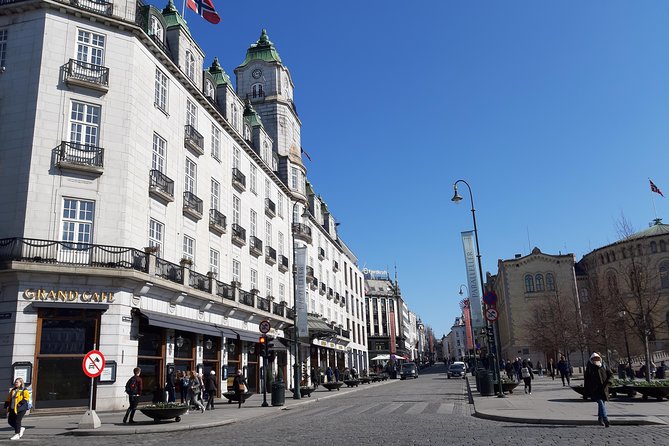
The price makes the most sense for a group, not a solo visitor.
For a full group of 12, the cost is about $42 per person. That can be fair for a private four-hour introduction, particularly if you value having one guide focused only on your group. For four people, the cost is about $126 per person, which is harder to justify unless you want private attention and do not want to organize the route yourself.
Most of the stops are free. You are paying mainly for the guide’s time, planning, explanations, and the convenience of linking distant parts of Oslo in one outing. The tour does not include food, drinks, bottled water, private transportation, or public transport tickets, so add those costs to your plan.
If you are comfortable using Oslo’s public transport and reading a map, you can visit many of these places independently for less. The private tour earns its price through orientation and flexibility. It is especially useful at the beginning of a short stay, when you want to understand the city before deciding what deserves a longer return visit.
Who should book this Oslo experience?
I would choose this tour for a first-time Oslo visitor with limited time, a family or friend group that wants a private guide, or anyone who prefers context over a self-guided checklist.
It suits people who want several different sides of Oslo in one morning or afternoon: modern design at the Opera House, royal and military history at Akershus, newer art districts at Tjuvholmen, sculpture at Vigeland Park, and civic culture at City Hall.
I would be more cautious if you want long museum visits, a relaxed meal, or a vehicle-based city tour. The schedule is active, most stops are outdoors, and the price is high for a small group. It is also not the best match if you have limited mobility or dislike walking, since a moderate level of fitness is requested.
You can cancel for a full refund up to 24 hours before the start time. Service animals are allowed, and the meeting area is near public transportation. Those details help, but they do not remove the need to plan your transport and bring water yourself.
Should you book it?
Book this private Oslo tour if you want a fast, well-rounded introduction and have enough people to share the group price. The strongest parts are the Opera House roof, the contrast between Akershus and Tjuvholmen, and the generous hour at Vigeland Park.
Before paying, decide which two or three stops matter most to you and confirm how the guide will handle transport and timing. If your group is small, compare the cost with visiting the same free sights independently. If your group is larger and you value a personal guide, this can be a practical way to get your bearings without spending days sorting out the route yourself.
FAQ
How long does the tour last?
The tour lasts approximately four hours.
Where does the tour begin and end?
It begins at Oslo City Hall, Rådhusplassen 1, 0037 Oslo, Norway, and ends back at the meeting point.
Is this a private tour?
Yes. Only your group participates, with up to 12 people included in the group price.
What is included in the price?
A Blue Badge guide is included. Admission is free at the Opera House, Akershus Fortress, Tjuvholmen Sculpture Park, and Vigeland Park. City Hall admission is included when access is available.
Are transportation, food, and drinks included?
No. Private transportation, public transport tickets, food, drinks, and bottled water are not included.
Can I cancel for a full refund?
Yes. You can cancel at least 24 hours before the experience start time for a full refund. Changes or cancellations made less than 24 hours before the start time are not accepted for a refund.
Just added around Oslo
- Oslo Winter Highlights Bike Tour★ 5.0 · 36 reviews
- 4 hours Best View of the Oslofjord Winter Edition★ 4.0 · 15 reviews
- The Viking Planet Museum – Mini Group (4 adults)★ 4.0 · 16 reviews
- Unknown war. Oslo and Norway during 1940-45★ 5.0 · 74 reviews
- The Ultimate Norwegian Skiing Experience★ 5.0 · 16 reviews
- The Ultimate Study of the Human Form at Vigeland’s Sculpture Park with a Local★ 4.0 · 14 reviews
- The Oslo Beer Adventure★ 4.5 · 11 reviews
- The Essential Oslo Private Walking Tour★ 5.0 · 79 reviews
Museums, compared.


Troll Museum Entry Ticket with AR Media Experience
Read our review →
Aksla-Alnes-Giske-Sunnmøre museum 100 % Highlights 4.5 H
Read our review →Browse the lists this tour appears in