
Reviewed · HISTORICAL TOURS
Oslo City Walks – Historic River Walk
The most interesting part of this Oslo walk is the change in scenery and purpose along the Akerselva River. What once powered the city’s industrial growth now gives you a pleasant route through converted buildings, riverside paths, cafés, galleries, and a final waterfall.
I like two things here: the walk connects Oslo’s past with its present, and the stop at Mathallen gives you a practical chance to taste Norwegian food after hearing where the city’s working life began. The main drawback is that this is a short, weather-exposed walking tour, so you get an introduction rather than a full exploration of the river.
Key points to know
- Akerselva tells Oslo’s industrial story: The river once drove factories and now forms a green route through the city.
- Mathallen adds a useful food stop: You can browse Norwegian and international dishes in a converted industrial building.
- The walk ends at Beierbrua waterfall: The finish is scenic, but you must arrange your own way back.
- The meeting point is central: Start at Oslo Visitor Center by Jernbanetorget at 2:00 pm.
- The group can include up to 20 people: That is small enough for a guided walk without making it private.
- The price reflects a guided city experience: At $53.28 per person, the value depends on how much you want context, not just scenery.
Why the Akerselva River is a smart way to see Oslo
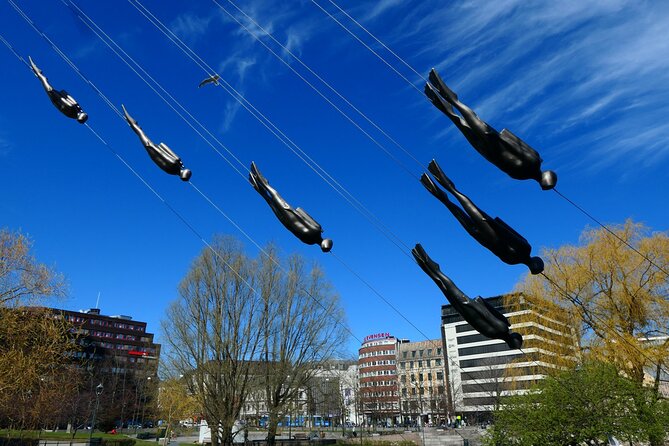
Oslo is easy to picture as a waterfront capital, but the Akerselva gives you another side of the city. The river divides Oslo between east and west, and its banks connect areas shaped by industry, working life, and modern urban renewal.
That makes this more than a pleasant stroll beside water. As you walk, your guide explains how the river helped power Oslo’s industrialization and how old industrial buildings found new uses. The story is about change you can see with your own eyes: factory spaces now linked with cafés, art galleries, and outdoor paths.
I like this kind of city walk because the setting does much of the teaching. You are not sitting in a museum looking at old objects. You are moving through the places where the work happened, with the river providing the thread.
The tour is described as about two hours, with roughly one hour set aside for the Akerselva Miljopark portion. The route finishes at a dramatic waterfall near Beierbrua. That timing gives you a focused look at the river without taking up an entire morning or afternoon.
More City Tours in Oslo
- Oslo: City Sightseeing Hop-On Hop-Off Bus Tour
★ 3.6 · 724 reviews - Oslo: Grand City Sightseeing Tour by Bus with Fjord Cruise
★ 4.6 · 647 reviews - Oslo Combo Tour: Grand City Tour and Oslo Fjord Cruise
★ 4.5 · 555 reviews
Starting at Oslo Visitor Center at 2:00 pm
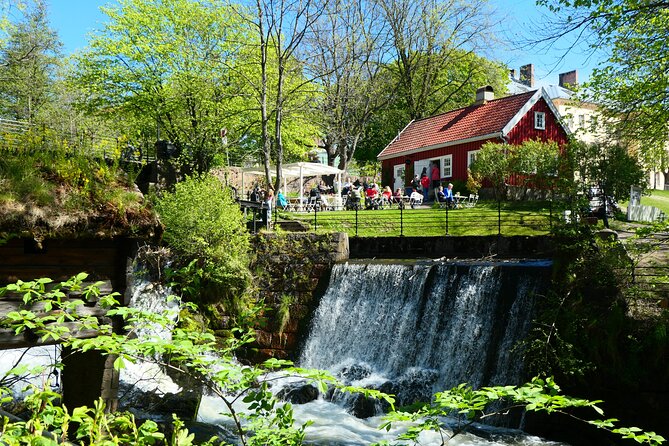
You meet at Oslo Visitor Center, Jernbanetorget 1, beside the city’s main transport area. This is a useful starting point if you are staying in central Oslo or arriving by public transportation.
The start time is 2:00 pm, so plan your day around it rather than treating the walk as a flexible drop-in activity. The guide is included, and the tour is offered in English. Since confirmation arrives when you book, you will have the key meeting details in advance.
The group may include up to 20 people. That is not an intimate private walk, but it is still a manageable size for a city guide. You should expect a shared experience, with the pace shaped by the group.
There is no hotel pickup or drop-off. You need to reach the visitor center yourself and make your own plans after the walk. That is not a problem for most people starting in central Oslo, but it matters because the tour ends away from the original meeting point.
Walking through Akerselva Miljopark
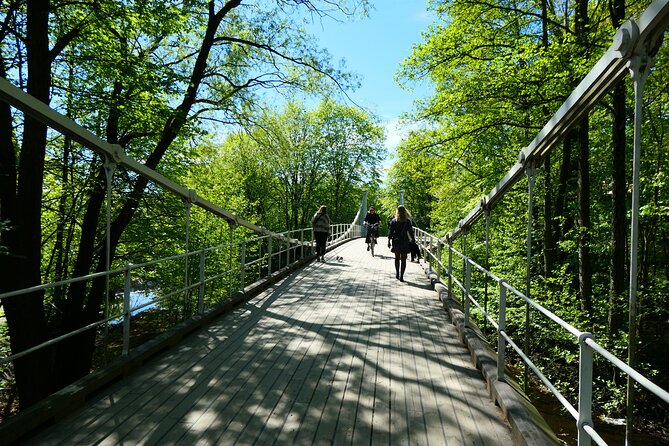
The main section follows the Akerselva through its green corridor. Akerselva Miljopark is the heart of the experience, and you spend about an hour seeing the river and learning how its role changed over time.
The phrase green lung fits the purpose of this route. Instead of spending the whole afternoon among city streets, you get a break beside flowing water and planted riverbanks. The walk also shows how an urban river can become public space after its industrial use fades.
Your guide supplies the context that turns the scenery into a story. You learn why the river mattered to Oslo’s factories and how nearby buildings have been adapted for modern life. The appeal is not simply that the walk is green. It is that the same river can explain both Oslo’s economic past and its present-day city culture.
You may see former industrial spaces now used for cafés and art galleries. The supplied information does not promise specific gallery entries or café visits, so think of these places as part of the route and its setting, not as scheduled attractions.
This is also the part where a moderate level of fitness matters. You are walking outdoors for about two hours, and the tour operates in all weather. Wear shoes suitable for a riverside walk and dress for Oslo’s conditions. A rainy day will not automatically cancel the experience, but it can change how comfortable you feel.
The walk is likely best for people who enjoy hearing the background behind ordinary city scenes. If you only want a fast list of Oslo’s top landmarks, this route may feel too specialized. If you like finding the story in old buildings and public spaces, it offers more substance than a standard central-city stroll.
What the old industrial buildings add
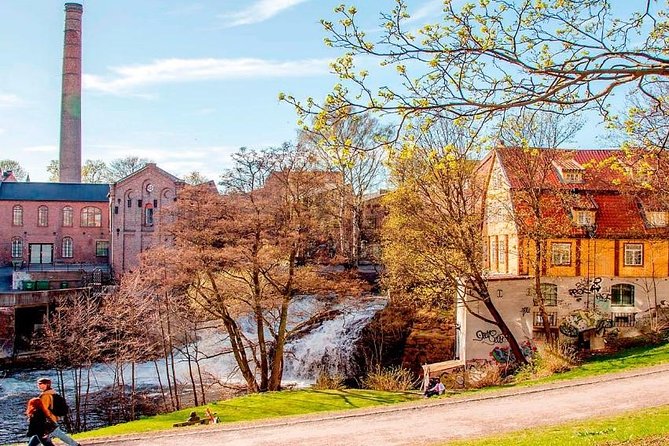
The converted buildings are one of the tour’s strongest ideas. Oslo’s industrial past is not presented as something sealed away behind a museum door. Instead, the city has given old work spaces new roles.
That change is easy to understand on foot. A building that once served production may now hold a café, gallery, or food business. The river remains the link between those uses, so the walk helps you see how urban renewal can preserve a sense of place without leaving an area frozen in the past.
I also appreciate the balance between information and movement. You are not asked to spend two hours listening to a lecture. The river keeps the tour active, while the guide explains what you are seeing.
The information available does not name the individual guide, so I would not book this expecting a particular host. The important point is that an English-speaking guide accompanies the walk and explains the river’s role in Oslo’s development.
More Historical Tours in Oslo
- Oslo: Historic Myths & Legends Evening Walking Tour
★ 4.8 · 408 reviews - Oslo: History, Art and Secrets Tour
★ 4.7 · 62 reviews - A Well Balanced History and Food Tour with Focus on the Scandinavian Kitchen
★ 4.5 · 29 reviews - Jewish Heritage Tour in Oslo
★ 5.0 · 16 reviews
A short stop at Mathallen Oslo
Mathallen is the practical middle stop, lasting about 15 minutes. It occupies an old industrial building and now works as a gourmet food court with Norwegian and international choices.
The stop has two purposes. First, it gives your legs a brief break and provides a toilet stop. Second, it introduces you to a food hall where you can look for Norwegian specialties after hearing about the city’s industrial past.
Do not treat 15 minutes as a full meal. The time is short, and the tour continues to the waterfall. You may have enough time to look around or pick up a small bite, but a relaxed meal belongs before or after the walk, not during this scheduled pause.
Mathallen is a good fit for a city tour because food helps make Oslo feel immediate. Industrial buildings can seem distant and historical. A working food hall brings the same type of space into current daily life.
The stop also gives you flexibility. You can focus on Norwegian offerings, choose an international option, or simply use the facilities and continue. Since admission is free, you are not paying an extra entry fee just to make the stop.
Finishing at Beierbrua waterfall
The tour ends near the spectacular waterfall at Beierbrua, at 0459 Oslo. This gives the walk a clear visual finish rather than ending on an ordinary street corner.
The waterfall is a fitting final scene. The river’s power helped support Oslo’s industrial growth, and the water now provides the visual payoff for the route. After hearing how the river was used, you see the force that made it useful in the first place.
Because the tour ends here, you should not assume you will return to Jernbanetorget with the guide. Hotel transportation is not included, and no return transfer is provided. Before booking, check how you want to continue your day from Beierbrua.
The end point can also work well if you want to keep exploring the river area on your own. The tour itself ends there, so any extra walking is your choice and is not part of the scheduled experience.
Is $53.28 a fair price?
At $53.28 per person, this is not the cheapest way to take a walk in Oslo. You can see a river without paying for a guide, and the green corridor is a public space.
The value comes from the interpretation. You are paying for an English-speaking guide to explain why the river matters, how it shaped industrial Oslo, and how the surrounding buildings gained new uses. You also get a planned route, a food hall stop, and a scenic finish.
I would consider the price reasonable if you are new to Oslo and want a compact introduction to a less obvious part of the city. It is less compelling if you already know Akerselva well or prefer exploring at your own pace.
The group limit of 20 helps. This is not a one-to-one tour, but it should remain small enough for a guide to lead people along a defined route. The overall score is 4.8 from 31 ratings, with 94 percent recommending the experience. Those figures suggest strong satisfaction, especially with the combination of a pleasant walk and useful background, though the sample is not large.
Who will enjoy this river walk?
This experience suits you if you like:
- City history explained through real places
- Short guided walks instead of full-day sightseeing
- Green spaces and riverside scenery
- Adaptive reuse of old industrial buildings
- Food halls and local specialties
- A tour conducted in English
- A group activity with a maximum of 20 people
It is also a good choice for an afternoon in Oslo when you want something more active than a museum but less demanding than a long hike.
Families can book, but children must be accompanied by an adult. Service animals are allowed. You should have a moderate level of physical fitness, and you need to be ready for outdoor conditions.
This may not suit you if you want hotel pickup, a round-trip route, a long meal, or a tour focused on Oslo’s major monuments. It also may not be ideal if rain would ruin your afternoon, since the walk operates in all weather and the experience is outdoors.
Practical advice before you book
Wear weather-appropriate clothing and comfortable walking shoes. The route is not presented as strenuous, but two hours outdoors is long enough for poor footwear or light clothing to become a problem.
Arrive at Oslo Visitor Center with time to find the meeting point. The start is central, but you do not want to search for Jernbanetorget 1 at the last minute.
Think of Mathallen as a short food stop rather than lunch. If you want a proper meal, plan one before the 2:00 pm start or after reaching Beierbrua.
Leave room in your schedule after the waterfall. The end point is different from the start, and you may want time to arrange onward transportation or continue exploring.
Free cancellation is available up to 24 hours before the 2:00 pm start time. Changes or cancellations made less than 24 hours before the experience are not refunded, so keep that cutoff in mind when weather or plans are uncertain.
Should you book the Historic River Walk?
Book it if you want a compact, guided look at Oslo’s industrial past through a river that remains part of city life. The strongest features are the Akerselva setting, the explanation of how old industrial spaces changed, the Mathallen stop, and the waterfall finish.
Skip it if you want a landmark-heavy tour, hotel transportation, or an unhurried food experience. For $53.28, the tour makes the most sense when you value the guide’s context and prefer a planned route over wandering alone.
If you can handle two hours outside and dress for the weather, this is a thoughtful way to see Oslo beyond the usual postcard views.
FAQ
Where does the Historic River Walk start?
It starts at Oslo Visitor Center, Jernbanetorget 1, 0154 Oslo, Norway.
What time does the tour begin?
The tour starts at 2:00 pm.
Where does the tour end?
It ends at Beierbrua, near the waterfall at 0459 Oslo.
Is the tour offered in English?
Yes. The experience is offered in English.
Is food included in the tour price?
No food is listed as included. The tour stops at Mathallen Oslo, where you can find Norwegian and international food offerings.
What happens if I need to cancel?
You can cancel for a full refund up to 24 hours before the experience start time. Cancellations or changes made less than 24 hours before the start are not refunded or accepted.
More Walking Tours in Oslo
- Oslo: Best of Oslo Walking Tour
★ 4.5 · 458 reviews - Oslo: Guided Walking Tour of Central Oslo
★ 4.7 · 438 reviews - Taste of Oslo Walking Tour
★ 4.5 · 282 reviews - Central Oslo Guided Walking Tour with Local Guide
★ 4.5 · 278 reviews
Just added around Oslo
- Oslo Winter Highlights Bike Tour★ 5.0 · 36 reviews
- 4 hours Best View of the Oslofjord Winter Edition★ 4.0 · 15 reviews
- The Viking Planet Museum – Mini Group (4 adults)★ 4.0 · 16 reviews
- Unknown war. Oslo and Norway during 1940-45★ 5.0 · 74 reviews
- The Ultimate Norwegian Skiing Experience★ 5.0 · 16 reviews
- The Ultimate Study of the Human Form at Vigeland’s Sculpture Park with a Local★ 4.0 · 14 reviews
- The Oslo Beer Adventure★ 4.5 · 11 reviews
- The Essential Oslo Private Walking Tour★ 5.0 · 79 reviews
Historical Tours, compared.

Reindeer Camp and Sami Cultural Tour with Lunch
Read our review →

Sightseeing Cruise of Bergen’s Historic Landmarks
Read our review →

A Well Balanced History and Food Tour with Focus on the Scandinavian Kitchen
Read our review →Browse the lists this tour appears in