
Reviewed · FOOD & DRINK
A Well Balanced History and Food Tour with Focus on the Scandinavian Kitchen
Oslo’s best feature on this tour is the mix of food and sightseeing. You walk from the Opera House and waterfront to City Hall and Akershus Fortress, stopping at places tied to everyday Norwegian eating rather than simply admiring monuments from the pavement. I like the chance to try salmon, fish soup, meats, local beer and less familiar specialties in one outing. I also like that guides such as Tanya-Lisa can adjust the pace and add useful restaurant advice.
The main catch is the food costs extra. The advertised price covers the guide, not the tasting plates, and the route can feel more like a walking tour with food stops than a full meal. Sunday hours and weekday evenings after 6 PM can sharply limit what you taste.
Key points at a glance
- Four useful Oslo landmarks: The route connects the National Opera, Aker Brygge, City Hall and Akershus Fortress.
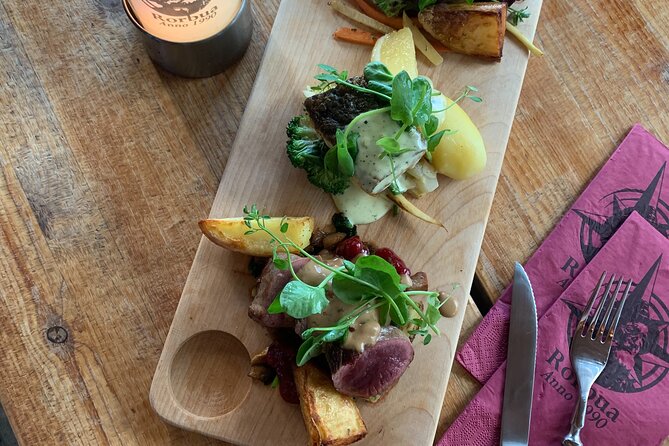
- Norwegian flavors beyond salmon: Depending on the day, you might try fish soup, fish cakes, lamb or chicken sausage, smoked salmon, cold cuts, local beer and other specialties.
- Tastings are not included: Bring room in your budget for food and drinks. A salmon trilogy is listed at about 210 Norwegian kroner per person.
- Timing matters: Sunday tastings are limited, and the main food venue may close after 6 PM on weekdays.
- A personal guide makes a difference: Tanya-Lisa has been praised for her Oslo history, flexibility, pacing and restaurant recommendations.
- Best for curious eaters: This suits you if you want a guided introduction to Norwegian food, not a guaranteed multi-course dinner.
A food tour that also gets Oslo’s bearings right
Oslo can feel spread out when you first arrive. The harbor, medieval fortress, government buildings and modern Opera House all sit within the central area, but a short walk does not always explain how they fit together. This experience gives you that framework while placing food stops along the way.
The route is not a formal restaurant crawl with a fixed tasting menu. It is closer to a private or small-group walking tour with optional purchases at several stops. That distinction matters. If you want a generous lunch, you may leave hungry. If you want to see the center, ask questions and sample a few Norwegian foods, the format makes sense.
The guide is the heart of the experience. Tanya-Lisa, also referred to as Tania in one account, has earned especially strong praise for her warmth, Oslo background and willingness to adapt. She has also taken groups to a seasonal market and helped with restaurant choices for later meals.
I would set expectations clearly before booking. You are paying $348.18 per group, with the stated group limit of up to 10, while the additional information gives a maximum of 12 participants. Confirm the exact group size when booking if that matters to you. For a private group, the price may be fair, especially if you value personal guiding. For one or two people, the food bill can make the total feel high.
More Food Tours in Oslo
- Oslo: Grünerløkka Food & Culture Walking Tour
★ 4.5 · 161 reviews - Oslo: Norwegian Food Tour & Hidden Gems City Walk
★ 4.5 · 73 reviews - Norwegian Food Tour & Hidden Gems of Oslo
★ 4.9 · 60 reviews
Starting at the Opera House
The Norwegian National Opera & Ballet is a strong place to begin because it gives you an immediate sense of modern Oslo. The building is one of the city’s best-known sights, and the harbor setting makes it a natural starting point for discussing Oslo’s newer waterfront development.
You will not simply be taken from one restaurant to another. The walk uses the city as a backdrop. At the Opera House, you can expect an introduction to the area before moving toward Aker Brygge. The guide may also point out additional central sights along the way, including the Royal Palace and the main street, depending on the exact route and timing.
This is where the tour’s history component begins to show its value. You get orientation without committing to a separate long sightseeing walk. The limitation is that the historical detail can vary with the guide and the questions you ask. One group felt the history was too brief, while others found the guide’s explanations and recommendations very helpful.
If history is your main reason for booking, tell the guide early. A good guide can spend more time on the subjects you care about, but three hours is not enough for a full survey of Oslo’s past.
Aker Brygge and the waterfront food culture
Aker Brygge brings the route into one of Oslo’s most popular harbor districts. Its restaurants and waterfront setting make it a useful place to discuss how seafood fits into Norwegian life, both as a traditional food and as a modern commercial product.
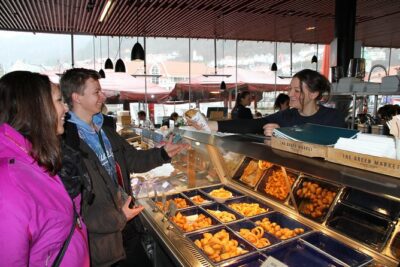
Salmon is likely to be one of the tour’s main themes. Possible tastings include salmon prepared in several ways, smoked salmon and a salmon trilogy. The listed example price for the salmon trilogy is 210 Norwegian kroner per person, and that cost is separate from the tour fee.
Some groups have tasted fish cakes and several salmon bites at a restaurant connected with a salmon farming company. That sort of stop can add useful context, since you learn not only how the food tastes but also something about salmon production in the Norwegian fjords.
Do not assume every departure includes the same dishes. Food availability changes with the day, the opening hours and the choices you make at each stop. The tour description also notes seasonal fish soup, so it may not be available year-round.
Aker Brygge is a good place to ask the guide about where to eat later. Several people have valued the restaurant advice as much as the small samples. That is especially useful if you have several nights in Oslo and want to try traditional Norwegian cooking on your own.
City Hall and the story between the stops
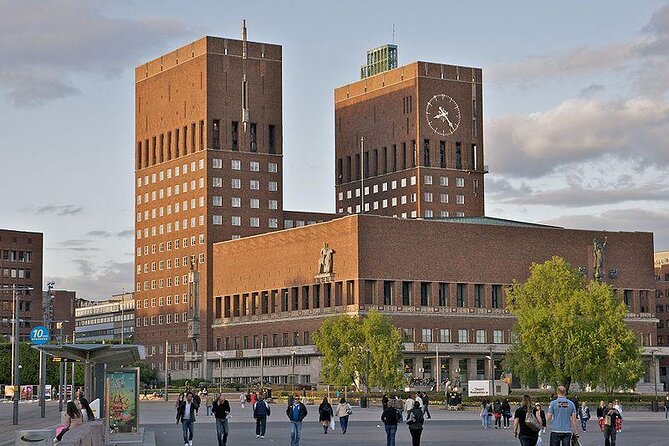
Oslo City Hall is one of the central sights included on the route. It gives the guide another chance to connect the city’s civic life with Norwegian culture and history.
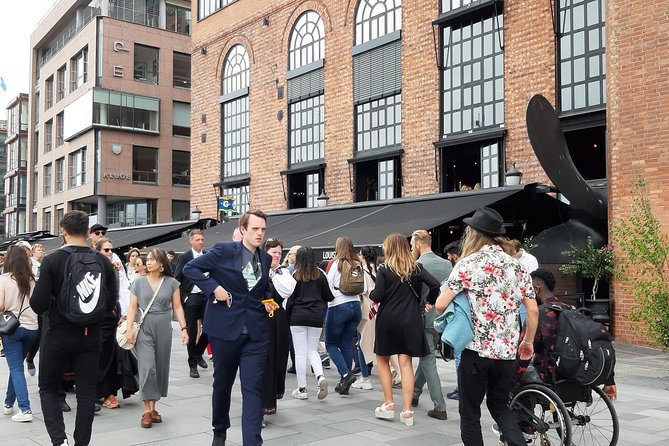
The walking sections are important here. You are not being driven between isolated food venues, so the value depends partly on your interest in the city itself. A guide may point out buildings and places to visit later, explain how the center is arranged and answer questions about Norwegian life.
Some people will find this relaxed style ideal. You can walk, stop, taste and make decisions as you go. Others may find it too loose, especially if they expect a carefully scripted historical presentation at every landmark.
I would ask about the planned walking distance before setting out if you have mobility concerns. One account describes walking at least four miles, while another praises the guide for stopping to let members of the group rest. The stated duration is about three hours, but one group spent four hours with the guide. The pace and route can vary.
More Historical Tours in Oslo
- Oslo: Historic Myths & Legends Evening Walking Tour
★ 4.8 · 408 reviews - Oslo: History, Art and Secrets Tour
★ 4.7 · 62 reviews - Oslo City Walks – Historic River Walk
★ 5.0 · 31 reviews - Jewish Heritage Tour in Oslo
★ 5.0 · 16 reviews
Akershus Fortress, Oslo’s medieval anchor
Akershus Castle and Fortress is the most clearly historical stop. The medieval complex sits beside the harbor and gives you a direct link to Oslo’s older identity, in contrast to the modern Opera House and redeveloped waterfront.
Expect to see the fortress as part of the walk and hear about its place in Oslo’s history. The experience does not promise a dedicated interior visit or an extended guided tour inside the castle, so you should not book it as a substitute for a full fortress admission experience.
Still, the stop adds welcome weight to the food theme. Norwegian cuisine makes more sense when you connect it with the country’s coast, mountains, farming traditions and long reliance on preserved foods. Smoked fish, cured meats and simple hearty dishes are not random samples. They reflect what has been available and practical in Norway.
The route may also include other central landmarks beyond the four main stops. Guides have pointed out the Royal Palace, Grand Hotel and main street on some departures. Ask questions as you walk, since the guide’s commentary is one of the main reasons to choose this tour instead of finding the food stops yourself.
What you may actually eat
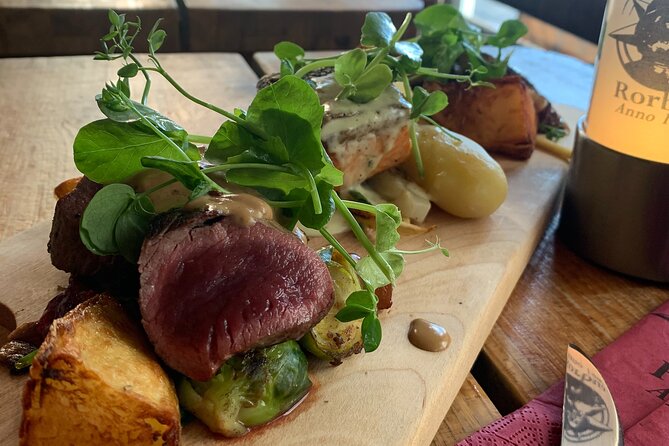
The phrase traditional Norwegian food can cover a wide range of tastes. On this tour, you may encounter:
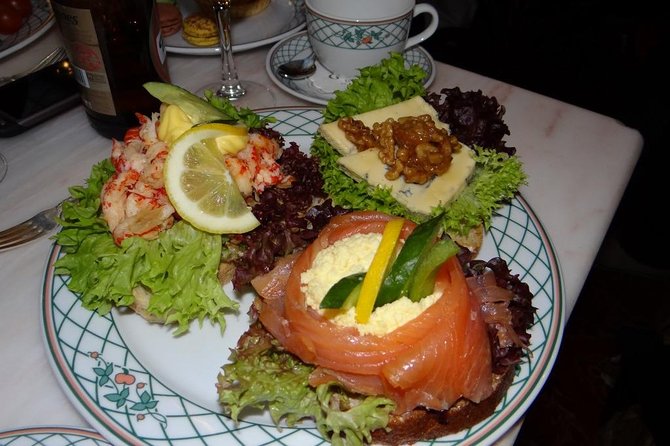
- Smoked salmon and salmon prepared in several styles
- A salmon trilogy
- Fish soup, when it is in season
- Fish cakes, known as fiskekaker
- Mackerel
- Lamb sausage or chicken sausage
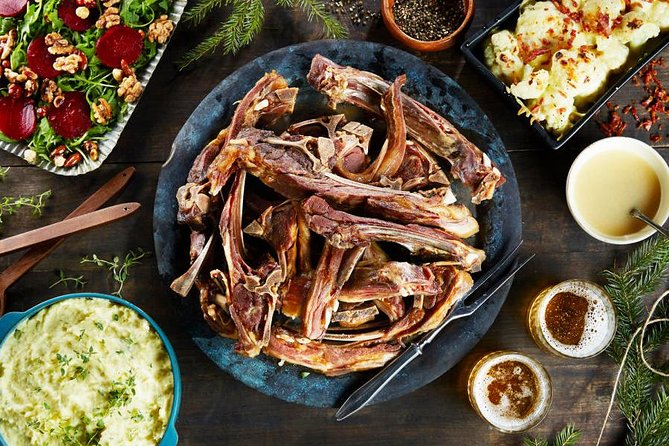
- Traditional cold cuts and other cured foods
- Local beer
- Coffee or tea at a cafe
- Regional specialties such as a thin crepe-like pastry with caramelized goat cheese and sour cream
One particularly unusual possible tasting is whale. It is not likely to suit every palate, but it shows that Norwegian food traditions include more than the familiar salmon and cod.
The portions can be small. That is not always a flaw. Several different samples can be enough for a satisfying introduction, particularly when paired with a later meal. But if you arrive expecting a full lunch, order more at the stops or plan dinner afterward.
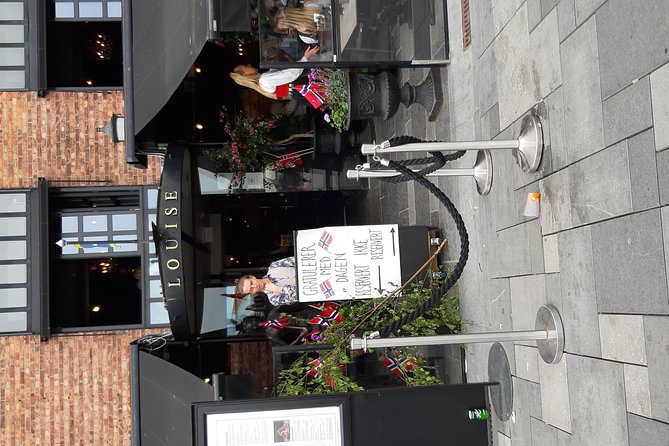
The food venues can also vary in character. You might visit a famous chocolate shop, gourmet supermarket, canteen, traditional pub, fish market or cafe. A fish market shop may offer plenty of products to buy, but you are under no obligation to purchase anything. Keep your budget in mind, since premium Norwegian farm and seafood products can become expensive quickly.
The price, extra food costs and real value
At $348.18 per group, this is not a cheap Oslo activity. The price covers a professional local guide and is based on a group of up to 10 people, although the stated maximum elsewhere is 12. The value improves for a larger private group that wants a flexible guide and a combined food and sightseeing experience.
The cost looks less attractive if you are a couple and expect a substantial amount of food. Tastings and drinks are not included, and the salmon trilogy alone is listed at about 210 Norwegian kroner per person. You may also spend more at a market or gourmet shop if you decide to buy food to take away.
I would compare this with the cost of booking a separate private city walk and paying for meals on your own. The tour gives you a guide, a route and access to food suggestions in one package. It also saves you from guessing which Norwegian specialties are worth trying.
The price is harder to justify if you mainly want a meal. You can eat more for less by choosing a restaurant yourself. Book this for the combination of local guidance and food discovery, not for quantity.
Timing can make or break the experience
The tour is usually about three hours, but allow a little flexibility. A group has spent four hours with the guide, and a longer route can result when you stop to rest, ask questions or visit an extra market.
Try not to book blindly for Sunday. The food options are limited that day, and several restaurants may be closed. The tour can still provide a city walk and some samples, but it may not match your expectations if you want several active food stops.
Weekday departures after 6 PM have a similar problem. The main tasting venue may be closed, even though the guide can sometimes make special arrangements. A same-day evening booking is therefore a gamble.
I would choose a Saturday or a weekday daytime departure when possible. Before confirming, ask exactly which tastings will be open on your date and what you will pay at each stop. That one question can prevent most disappointment.
The activity is offered in English, though the guide may be multilingual. Confirmation is provided at booking, and most people can participate. Pickup is offered, with the stated start and end point at Oslo Municipality, but confirm the meeting details because the guide may arrange a hotel meeting point.
Who will enjoy this most
I would recommend this to you if you want a first look at Oslo and prefer food experiences that come with explanation. It is particularly useful on an early day in the city, when you can use the guide’s restaurant suggestions for the rest of your stay.
It also suits groups with mixed interests. One person can ask about history, another can focus on seafood, and everyone gets a walk through central Oslo. Tanya-Lisa has been praised for adjusting the pace, helping undecided groups and being attentive when people need a break.
Food-focused visitors should book with realistic expectations. You may get excellent ingredients and unusual samples, but you will not necessarily receive a large spread. The exact menu depends on opening hours, season and the tasting choices you make.
This is less suitable if you dislike walking, need a fixed meal included in the price or want a detailed lecture at every landmark. It can also disappoint if you book on Sunday without checking the available food stops.
Should you book this Oslo food and history tour?
Book it if you want a guided introduction to Oslo’s center, plus a chance to taste Norwegian specialties that you might otherwise skip. The strongest reasons are the guide’s personal attention, the useful landmark route and the possibility of trying several forms of salmon, fish, meat and traditional treats.
Skip it if you are measuring value by the amount of food alone. The $348.18 group price is only the beginning, since tastings and drinks are extra. Choose a daytime departure outside Sunday, ask what will be served, and budget for at least one paid tasting.
For the right person, this is a pleasant way to get oriented, learn how Norwegian food connects with the country’s coast and history, and leave with better ideas for the rest of an Oslo stay. Just treat it as a food-centered walking tour, not an all-you-can-eat meal.
FAQ
How long does the tour last?
The stated duration is approximately three hours. Some departures may run longer, with one reported duration of four hours.
Are food and drinks included in the tour price?
No. Food and drinks are paid for separately unless a specific value-added offer is provided by the guidebook. A salmon trilogy is listed as an example at about 210 Norwegian kroner per person.
Which Oslo sights are included?
The route includes the Norwegian National Opera and Ballet, Aker Brygge, Oslo City Hall and Akershus Castle and Fortress. The guide may also point out other central sights such as the Royal Palace and the main street.
What food might I taste?
Possible foods include salmon, smoked salmon, seasonal fish soup, fish cakes, mackerel, lamb or chicken sausage, cold cuts, local beer, coffee and regional specialties. The exact selection varies.
Is Sunday a good day to take the tour?
Sunday has limited food tastings, so it is not the best choice if food is your main reason for booking. Weekday departures after 6 PM can also have fewer options because the main tasting venue may be closed.
What is the cancellation policy?
You can cancel for a full refund up to 24 hours before the local start time. Cancellations or changes made less than 24 hours before the start are not accepted for a refund.
Just added around Oslo
- Oslo Winter Highlights Bike Tour★ 5.0 · 36 reviews
- 4 hours Best View of the Oslofjord Winter Edition★ 4.0 · 15 reviews
- The Viking Planet Museum – Mini Group (4 adults)★ 4.0 · 16 reviews
- Unknown war. Oslo and Norway during 1940-45★ 5.0 · 74 reviews
- The Ultimate Norwegian Skiing Experience★ 5.0 · 16 reviews
- The Ultimate Study of the Human Form at Vigeland’s Sculpture Park with a Local★ 4.0 · 14 reviews
- The Oslo Beer Adventure★ 4.5 · 11 reviews
- The Essential Oslo Private Walking Tour★ 5.0 · 79 reviews
Food & Drink, compared.

Fjords & Beaches Tour with Campfire and Arctic Food
Read our review →
Aurora Tour with Photos, Campfire and Arctic Food
Read our review →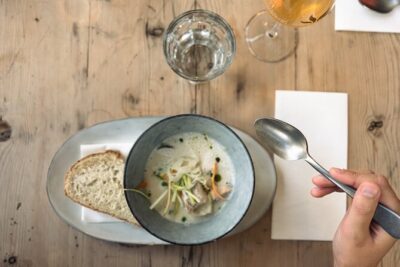
3 Hour Guided Food Walk Tour in Alesund, Norway
Read our review →
Geiranger Fjord Boat Tour with Waterfall Tasting
Read our review →
Browse the lists this tour appears in