
Reviewed · WALKING TOURS
Oslo: Best of Oslo Walking Tour & Fjords Sightseeing Cruise
Oslo is easiest to understand when you see both sides of it: the compact city center under your feet, then the water and islands that shape the Norwegian capital. This four-hour combination pairs a guided central walk with a two-hour fjord cruise, so you get context first and scenery second.
I like the clear split between city and water, and I like the small group limit of 10 people. A guide such as Csilla can make the streets feel more personal, while the boat gives you views of the Opera House, City Hall, islands, and Bygdøy that are hard to gather in one land-based outing.
The main consideration is pace. Two hours on foot followed by two hours afloat leaves little room for lingering, museum visits, or a relaxed meal. The walking tour is in English, while the included mobile audio guide offers English, Spanish, French, Italian, and German.
Key points to know before booking
- Two very different Oslo views: Walk through the central streets, then see the city from the fjord.
- A compact historic route: Parliament, the Grand Hotel, Karl Johan street, Christiania, City Hall, and the Opera House all fit into two hours.
- The boat portion is scenic, not a museum visit: You pass Bygdøy museums and Huk beach, but you do not tour them.
- Small group size matters: The tour is limited to 10 participants, making it easier to hear the guide and ask questions.
- Csilla received specific praise: One review calls her very knowledgeable and helpful, with the boat trip also praised for its variety.
- Useful practical setup: Meet at University Aula at Karl Johan Str. 47, near the statue of P. A. Munch, for the 10 a.m. departure.
Starting beside University Aula
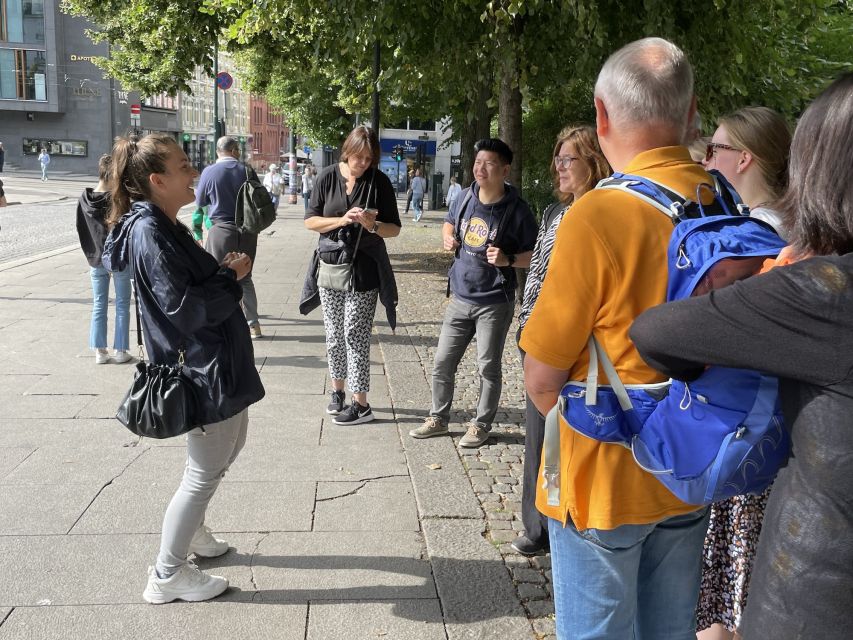
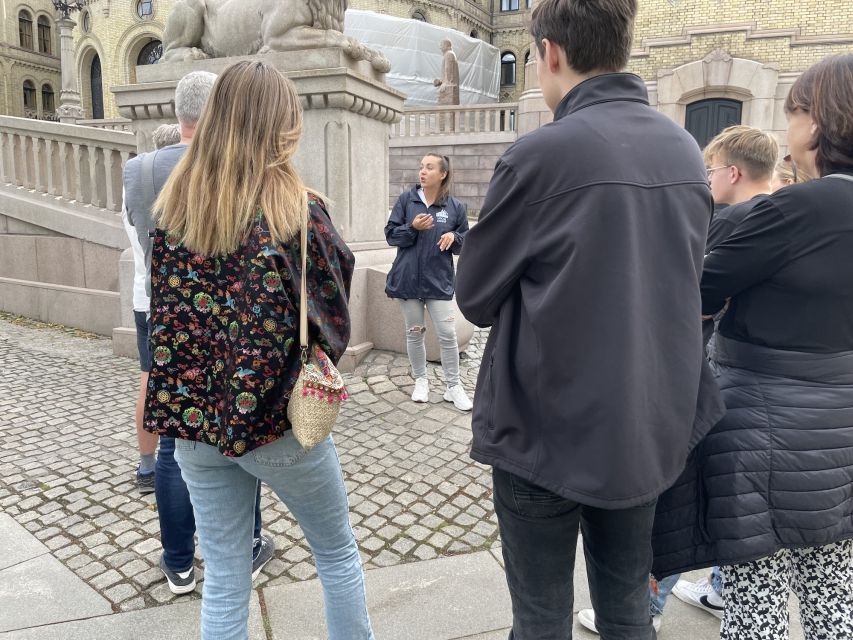
The tour begins at University Aula on Karl Johan Str. 47. Look for the guide near the statue of P. A. Munch by the entrance. This is a central meeting point, but give yourself enough time to find the exact spot, especially if you are unfamiliar with Oslo’s street layout.
The stated departure is 10 a.m. Availability should be checked when booking, since starting times can vary. Your guide leads the first two-hour section in English. The group limit is 10 people, which is a useful middle ground: small enough for direct conversation, but not a private tour.
Wear comfortable shoes. The walking route links several central sights, and you will get more from it if you are not thinking about sore feet. Bring a charged smartphone as well. An included sightseeing app provides extra information, with audio support in English, Spanish, French, Italian, and German.
An umbrella belongs in your day bag. Oslo weather can change quickly, and the cruise is much more enjoyable when you are prepared for a shower rather than hoping the clouds behave.
More Walking Tours in Oslo
- Oslo: Best of Oslo Walking Tour
★ 4.5 · 458 reviews - Oslo: Guided Walking Tour of Central Oslo
★ 4.7 · 438 reviews - Oslo: Historic Myths & Legends Evening Walking Tour
★ 4.8 · 408 reviews
Karl Johan street, Parliament, and the Grand Hotel
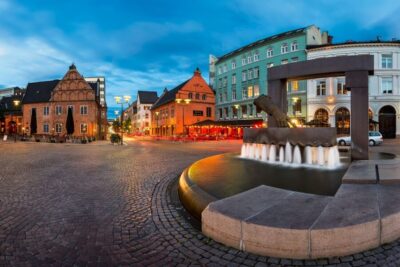
The walking section begins with Oslo’s central civic and architectural story. You pass the Norwegian Parliament, where the guide can explain the building’s role as a symbol of democracy, then continue toward the Grand Hotel and Karl Johan street.
Karl Johan is one of the city’s main public streets. It gives you a useful sense of how Oslo’s formal center fits together, with important buildings and public spaces close to one another. This is not a tour built around obscure side streets or long transport transfers. You spend the time seeing the core sights directly.
The 19th-century architecture gives the opening part of the route its character. The guide’s job here is especially useful because the facades mean more when you know what role the buildings play. If Csilla is leading your group, the available feedback describes her as helpful and well informed, a good sign for visitors who prefer stories and explanations over a simple list of photo stops.
The drawback is that the route cannot give every building much time. You will see the Parliament and Grand Hotel from the outside, not spend a long period inside each one. Think of this portion as orientation and city context rather than a series of indoor visits.
Why Oslo is called the Tiger City
The walk also explains Oslo’s nickname, the Tiger City. That detail gives the route a little local flavor and helps turn a standard city walk into a story about how residents and writers have viewed the capital.
This is the kind of information that can make the rest of your Oslo stay easier. After hearing the explanation, you may notice how the nickname appears in public art, city references, or local conversation. The tour does not simply point at a famous street and move on. It connects the city’s identity to the places you are passing.
For first-time visitors, this part of the walk is useful because Oslo can initially feel modern and spread out. A guide helps you see how the central streets, institutions, and waterfront relate to each other. You get a framework for later exploring on your own.
Christiania and the city’s changing name
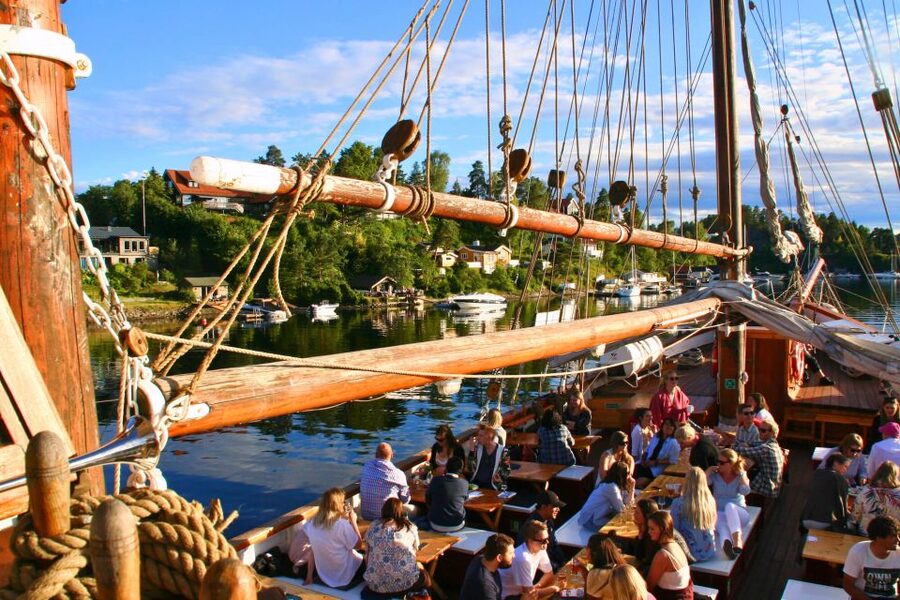
The route continues into Christiania, Oslo’s historical core. Here the guide covers the story behind the city’s name change centuries ago, giving you a glimpse of how Oslo has changed over time.
Christiania is important because it shows that the modern capital is not just a collection of new buildings and polished waterfront architecture. Its name carries an earlier chapter of the city’s development. The walk gives you that connection without asking you to spend a full day on a specialized history tour.
Expect an outdoor explanation rather than a museum lecture. You are moving through the city while hearing the story, so stay close enough to the guide and keep your attention on both the route and the surroundings. With only two hours for the entire walking section, this stop is likely to be concise.
Same base, a completely different kind of day:
- Oslo: Scenic Fjord Cruise with Audio Guide Commentary
★ 4.5 · 5,375 reviews - Oslo Nature Walks: Island Hopping Tour
★ 4.8 · 2,713 reviews - Oslo: 100% Electric Oslofjord Sightseeing Cruise
★ 4.4 · 2,041 reviews - Oslo: Fjord Evening Cruise with Shrimp Buffet
★ 4.5 · 1,956 reviews
The Opera House and Oslo’s modern face
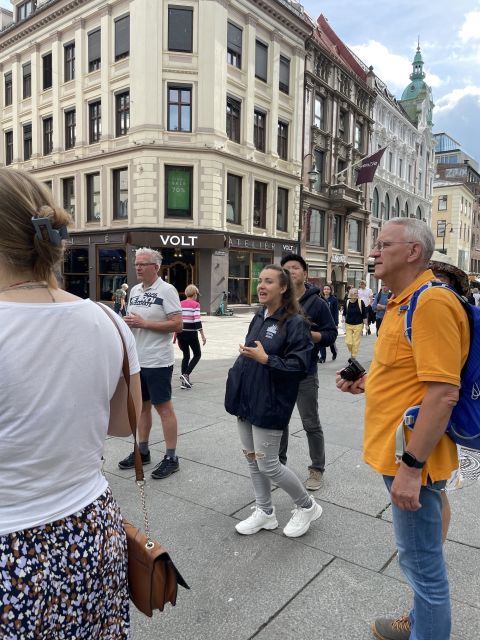
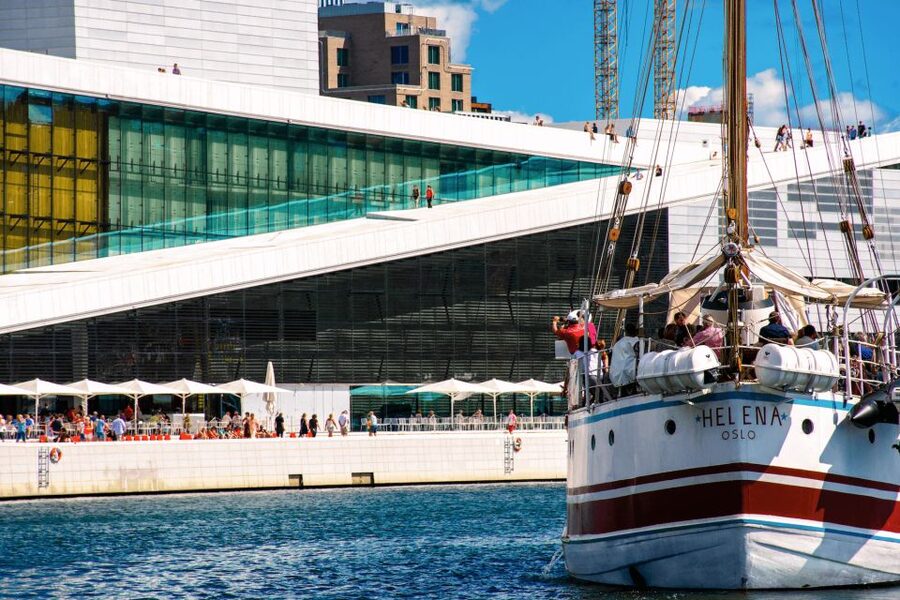
The Norwegian Opera House is one of the most striking stops on the route. Its modern design gives the city a very different feel from the Parliament, Grand Hotel, and older central streets.
The Opera House is home to The Norwegian National Opera & Ballet and is known for its award-winning architecture. Even if modern buildings are not usually your main reason for sightseeing, this one is worth seeing because it connects architecture, culture, and the waterfront in one place.
You will also see the Opera House later from the boat. That repeat is useful rather than redundant. From land, you can appreciate its form as a building in the city. From the water, you see how it sits within Oslo’s shoreline and wider harbor setting.
The walking tour lets you compare Oslo’s 19th-century buildings with its newer cultural architecture. That contrast is one of the strongest reasons to book the combination rather than choosing only a basic city walk.
City Hall and the Nobel Peace Prize connection
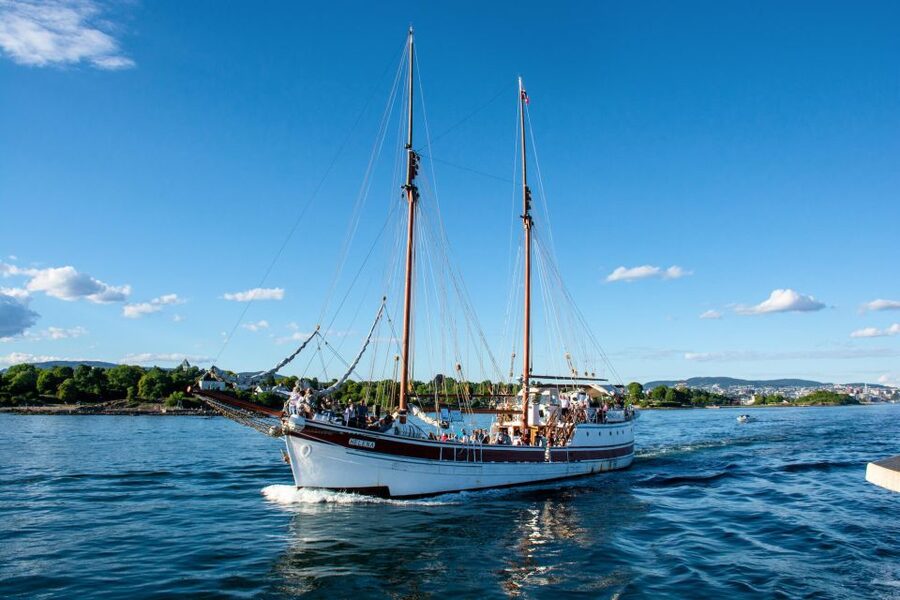
The walking section ends at City Hall, the site associated with the Nobel Peace Prize ceremony. This gives the final land-based stop a global connection and a sense of civic importance.
City Hall is more than a large public building. It represents Oslo’s role in an event watched around the world each year. Your guide explains why the location matters, adding a wider political and cultural frame to the city streets you have just covered.
This is also a practical ending point for the walk because the cruise follows as the second half of the day. Confirm the exact handoff with your guide, since the supplied meeting information says the overall activity begins and ends at the University Aula meeting point, while the cruise itself is described as the concluding part of the experience.
Boarding the historic vessel for two hours
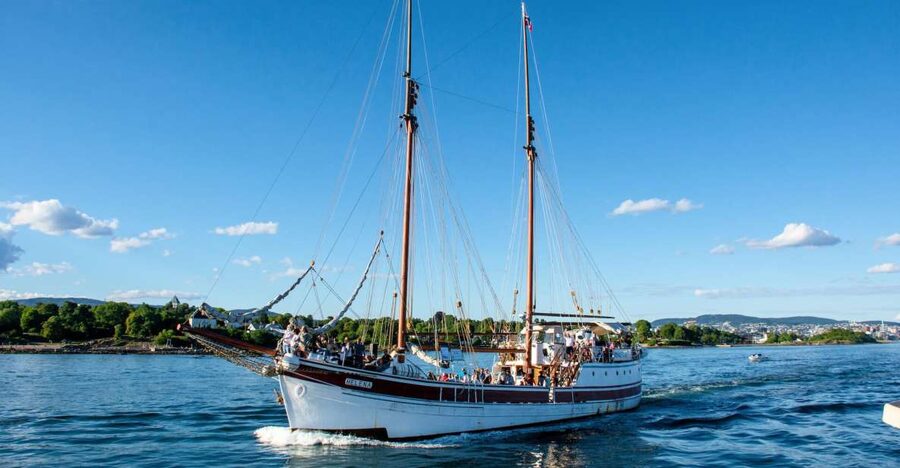
The cruise changes the pace completely. After two hours on foot, you can sit back on a historic vessel and let Oslo come to you. The boat travels through narrow straits, bays, and channels, passing small islands and summer homes.
The vessel is described as open-top, so the best views may be outside. That also means you should dress for the conditions, even when the city feels comfortable on land. An umbrella is worth carrying, and a charged phone gives you an easy way to take photos and use the included app.
The cruise is not just a ride across open water. Oslo’s geography is made up of islands, inlets, and sheltered coves, and the boat shows how closely nature sits beside the capital. You get changing angles of the shoreline rather than one fixed harbor view.
One review singled out the boat trip for its variety. That matches the route described here: city buildings, small islands, a lighthouse, beaches, museums, and summer homes all appear during the two-hour ride.
Hovedøya, Dyna Lighthouse, and quiet coves

Hovedøya is one of the islands on the route. You pass it from the water rather than visiting on foot, which lets you see Oslo’s island setting without spending time arranging separate transport.
The cruise also passes Dyna Lighthouse. A lighthouse gives the water portion a clear visual marker, and it helps break up the ride as the boat moves through narrower channels and more open stretches.
The quieter coves and summer homes are a welcome contrast to the central city. You can watch the shoreline change from formal public buildings to small retreats and wooded islands. This is the point where the cruise feels most like a scenic outing rather than an extension of the walking tour.
Keep your camera ready, but do not spend the whole ride looking down at your phone. The views change as the boat turns, and the most appealing scene may last only a short time.
Bygdøy, Huk beach, and Oslo’s museum shore
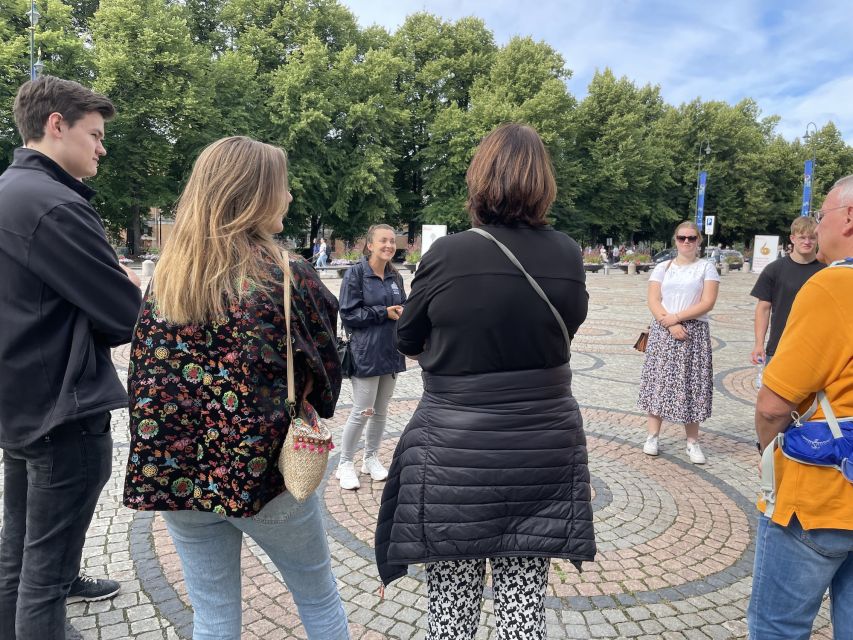
As the boat approaches the Bygdøy peninsula, you see a different side of Oslo again. Bygdøy is associated with several museums and beaches, including Huk beach. The cruise gives you a preview of the area from the water.
The Maritime Museum is visible along the shore, with vintage sailing ships anchored nearby. The Fram Museum is another major sight, known for the polar exploration vessel Fram. Both are valuable references for planning a later visit, but they are not part of the included museum entry on this cruise.
That distinction matters. If the Maritime Museum or Fram Museum is a priority, you will need separate time and admission to explore them properly. The boat gives you orientation and exterior views, not a full museum experience.
Huk beach adds another texture to the route. It shows that Oslo’s waterfront is not only about offices, government buildings, and cultural venues. Beaches and outdoor spaces are part of the city’s everyday setting too.
What you get for $82
At $82 per person, the price is easiest to judge as a two-part purchase. You receive a two-hour guided walking tour and a two-hour sightseeing cruise, along with the mobile app and its multilingual audio content.
That is reasonable value if you want a structured introduction to Oslo and would otherwise pay separately for a city walk and a scenic boat trip. The small group limit strengthens the value because you are not joining a large crowd of 30 or 50 people.
The price is less attractive if you mainly want a cruise. Half of the scheduled time is spent walking, and the boat portion does not include museum visits. It is also not the best choice for someone who prefers to explore at an unhurried pace.
I would see this as a first-day Oslo activity. It covers the city center, explains key names and landmarks, then gives you a broad view of the fjord area. Afterward, you can decide which places deserve a longer return visit.
Timing, comfort, and who should book
Four hours is a useful length for a short stay. You can cover major central sights and enjoy the water without giving up an entire day. It also leaves time afterward for lunch, a museum visit, or independent wandering, depending on your schedule.
The walk and cruise require different kinds of preparation. Comfortable shoes matter for the first half, while layers and rain protection matter for the second. If you have limited mobility, the activity is described as wheelchair accessible, though the exact route and boat arrangements should still be confirmed when you book.
I would recommend this to first-time visitors, couples, families with older children, and anyone who wants a broad Oslo introduction without handling several separate bookings. It also suits people who enjoy a guide’s local explanations but want time to look quietly at the scenery.
I would be more cautious about booking if you dislike fixed schedules, outdoor weather, or guided walks. You will not have much free time at each stop, and the cruise is designed for viewing rather than getting off at the islands or museum peninsula.
The available rating is 4.2 from 24 reviews, and the strongest specific praise focuses on the guide, particularly Csilla, and the varied boat route. That is useful guidance: the human quality of the walking section can shape the day, while the cruise supplies the visual variety.
Should you book this Oslo combination?
Book it if you want a practical first look at Oslo that joins its central streets with its fjord setting. The Opera House, City Hall, Parliament, Christiania, Hovedøya, Dyna Lighthouse, and Bygdøy all appear within four hours, giving you plenty of reference points for the rest of your visit.
Skip it if you want long museum visits, a slow photography outing, or a cruise without a walking tour. For most short-stay visitors, though, the two-part format is smart. You learn where Oslo came from, then see why the water still shapes the city.
FAQ
How long does the activity last?
The total duration is four hours. It includes a two-hour Best of Oslo walking tour and a two-hour fjords sightseeing cruise.
Where does the tour begin?
Meet at University Aula, Karl Johan Str. 47, near the statue of P. A. Munch by the entrance.
What time does the tour depart?
The stated departure time is 10 a.m. Check availability when booking to confirm the starting time for your date.
What language is the live tour guide?
The live tour guide speaks English.
Which languages are available through the audio guide?
The included sightseeing mobile app offers audio support in English, Spanish, French, Italian, and German.
Is the activity wheelchair accessible?
Yes, the activity is listed as wheelchair accessible.
How many people are in the group?
The activity is limited to 10 participants.
What should I bring?
Bring comfortable shoes, a charged smartphone, and an umbrella.
Can I cancel for a full refund?
Yes. You can cancel up to 24 hours in advance for a full refund. You can also reserve your place and pay later.
Just added around Oslo
- Oslo Winter Highlights Bike Tour★ 5.0 · 36 reviews
- 4 hours Best View of the Oslofjord Winter Edition★ 4.0 · 15 reviews
- Unknown war. Oslo and Norway during 1940-45★ 5.0 · 74 reviews
- The Viking Planet Museum – Mini Group (4 adults)★ 4.0 · 16 reviews
- The Ultimate Norwegian Skiing Experience★ 5.0 · 16 reviews
- The Ultimate Study of the Human Form at Vigeland’s Sculpture Park with a Local★ 4.0 · 14 reviews
- The Oslo Beer Adventure★ 4.5 · 11 reviews
- The Essential Oslo Private Walking Tour★ 5.0 · 79 reviews
Walking Tours, compared.
Past & Present Small Group Guided Walking Tour
Read our review →
Walking Tour in Bergen of the Past and Present
Read our review →
Browse the lists this tour appears in