
Reviewed · WALKING TOURS
Best of Oslo Guided Walking Tour
Oslo reveals itself quickly on this two-hour central walking tour. You move from the university and Royal Palace down the main street, past the parliament and cathedral, then toward the Opera House, Akershus Fortress, City Hall, and the waterfront. It is a smart first look at Norway’s capital, especially if you have only a day in port.
I like two things here. First, the route links major sights without requiring museum tickets or public transport. Second, the guide can turn formal buildings into a readable story about royal life, politics, theatre, art, and modern Norway. Guides including Tetiana, Anastasia, Emily, Ihor, and Maria have been praised for energy, humor, and useful advice.
The main drawback is pace. You cover a lot of ground in two hours, and the tour is an overview rather than a detailed visit inside each attraction. Wind and weather can also make the walk less pleasant, and unclear meeting instructions have caused serious problems for some customers.
Key points to know before booking
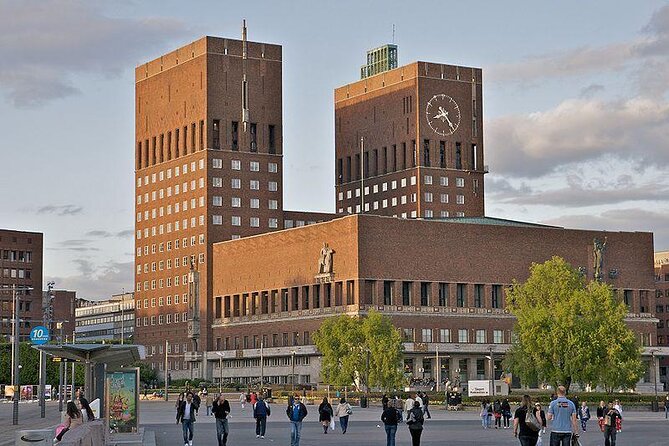
- The route covers central Oslo’s big sights: You see the Royal Palace, Storting, Oslo Cathedral, Opera House, Akershus Fortress, City Hall, Nobel Peace Center, and waterfront.
- The guide makes the difference: Strong guides such as Tetiana, Anastasia, Judit, Emily, and Ihor have been praised for stories, current context, and practical suggestions.
- It is a sightseeing walk, not an interior tour: Entry fees are not included, though one guide-led visit inside the Opera House has been described.
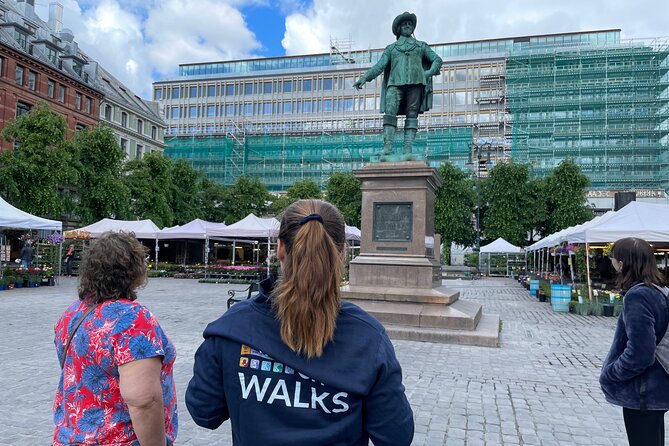
- The walk starts at 10:00 a.m.: Meet by the statue of P.A. Munch near the Faculty of Law entrance at University Aula.
- The app extends the experience: Scan the QR code on your voucher to access self-guided audio tours in English, Spanish, German, French, and Italian.
- Check your voucher carefully: English tours and other language tours may have different meeting points.
Starting at University Square and Karl Johans gate
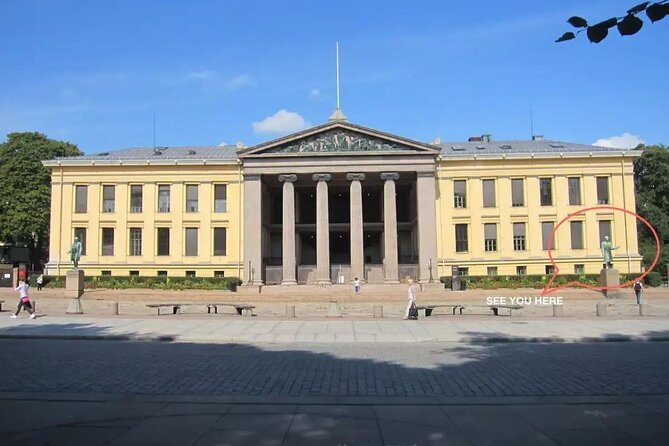
The walk begins at University Square, beside the Faculty of Law building at Karl Johans gate 47. Look for the statue of P.A. Munch near the entrance to University Aula, and arrive about five minutes early. That small buffer matters because a walking group will not always be able to wait for late arrivals.
The first stop is the original University of Oslo building, a ceremonial hall in the center of town. This is a useful beginning because it places you in Oslo’s civic heart, where education, government, royalty, and national ceremony all sit close together.
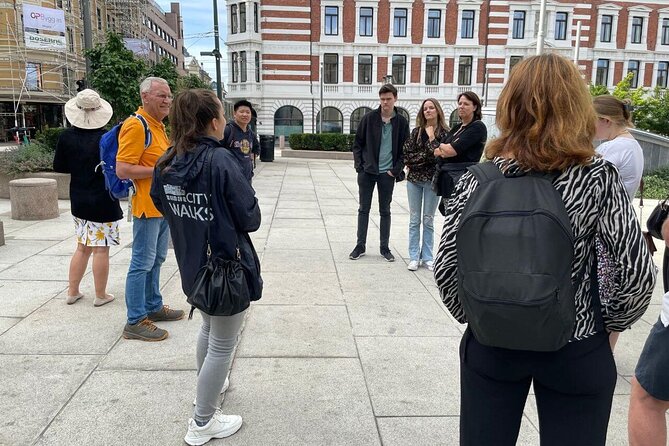
From here, the guide introduces Oslo’s theatre tradition near one of the city’s best-known landmarks. The tour uses buildings and public spaces as its classroom. You will not sit through a long lecture. Instead, you get short explanations while moving through the city.
That format works well for first-time visitors. You begin to understand how the central streets fit together, and you can return later to the places that deserve more time.
More Walking Tours in Oslo
- Oslo: Best of Oslo Walking Tour
★ 4.5 · 458 reviews - Oslo: Guided Walking Tour of Central Oslo
★ 4.7 · 438 reviews - Oslo: Historic Myths & Legends Evening Walking Tour
★ 4.8 · 408 reviews
Royal power, Norwegian theatre, and the main street
The Royal Palace is one of the early highlights. Built as a royal residence and guarded by His Majesty The King’s Guard, it gives the tour a clear sense of Norway’s constitutional monarchy. The visit is an exterior stop, so you should not expect a palace tour or indoor rooms.
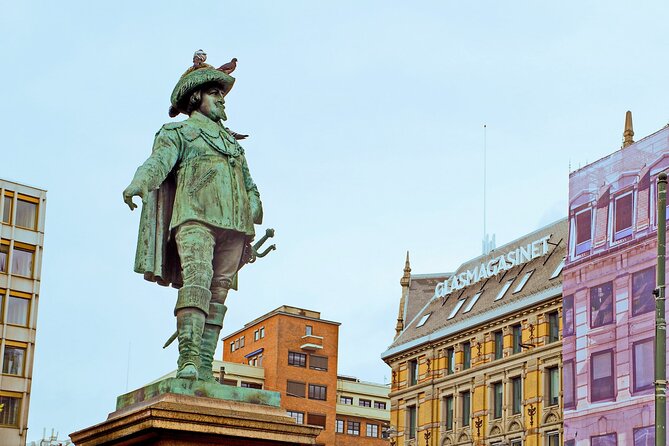
The route then follows Karl Johans gate, Oslo’s main street. Shops and restaurants line the avenue, and the statue of King Karl XIV Johan helps explain the street’s name and ceremonial role. This is the sort of place where a guide adds value by connecting the monument, the royal residence, and the city’s daily routine.
You also pass the Storting building, home to Norway’s parliament since 1866. The stop offers a useful introduction to national politics and how public institutions shape the center of Oslo. If you enjoy civic history, this section may be more rewarding than a simple monument checklist.
The guide may also point out details connected with Norway’s theatre and cultural life. Strong guides have been praised for discussing figures such as Henrik Ibsen and Edvard Munch, as well as the royal family and modern Norwegian society. The quality can vary by guide, but the best ones make the city feel lived in rather than frozen in a history book.
Hotels, market halls, and Oslo Cathedral
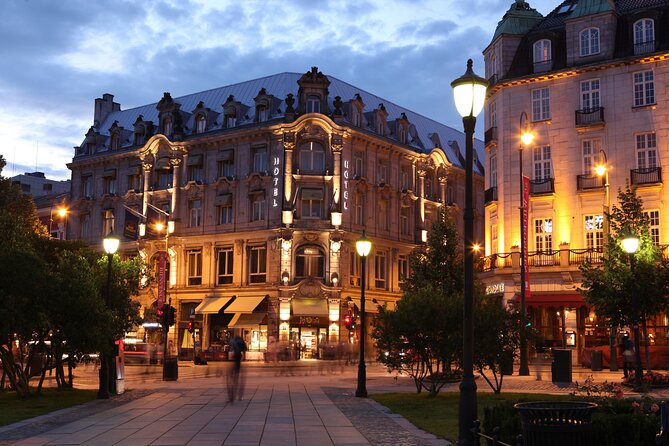
One of the route’s notable stops is the grand hotel where Nobel Peace Prize winners stay each year. Its white granite façade makes a good photo, but the larger point is its connection to the Nobel tradition. This is an easy detail to miss when walking alone.
You then pass the red-brick halls that have housed shops selling arts, crafts, cafés, and other goods for centuries. The description is broad, and the exact amount of time here may depend on the group and guide. Still, the stop adds a more everyday side of Oslo, away from palaces and government buildings.
A glamorous shopping center follows, with designer labels, local shops, gifts, and lower-priced purchases. This is not a major cultural stop, but it helps you orient yourself if you want to shop later. You will know where the central retail area sits in relation to the historic streets.
Oslo Cathedral, called Domkirka, is another important exterior sight. It is the main church for the Diocese of Oslo and the seat of the Bishop of Oslo. The visit does not include a guaranteed interior entry, so treat it as a chance to admire the building and hear about its role rather than as a full church visit.
The Opera House and Oslo’s changing waterfront
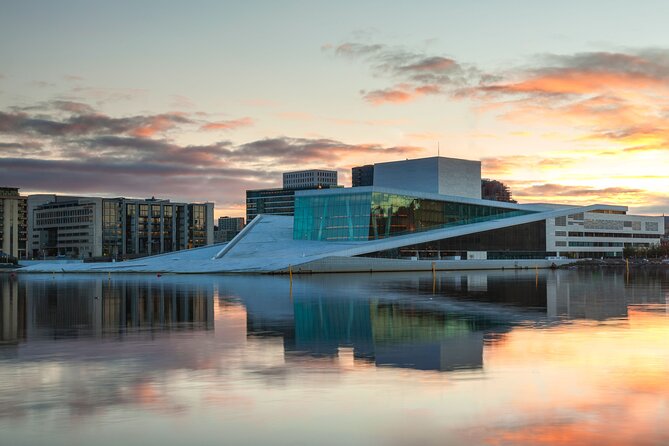
The Opera House is one of the most memorable stops. Its modern design gives you a sharp contrast with the palace, parliament, and older church buildings seen earlier. It houses the Norwegian National Opera and Ballet and is especially rewarding as a photo stop.
One particularly useful detail from the tour experience is that a guide may take the group inside the Opera House. This is not listed as an included attraction entry, so do not book the tour expecting a formal performance venue visit. Still, the chance to see the building from within can add something to an otherwise exterior-focused walk.
The route then heads toward the city’s oldest district, with cobblestone streets and older architecture. This change of surface and scale helps break up the long city avenue. You also visit a historic market square where some of Oslo’s oldest buildings can be found.
At this point, you should expect a fair amount of walking. One two-hour tour can cover many sights, but it cannot linger at each one. Wear comfortable shoes, and keep in mind that Oslo’s wind can make an open-air walk feel colder than the temperature suggests.
Same base, a completely different kind of day:
- Oslo: Scenic Fjord Cruise with Audio Guide Commentary
★ 4.5 · 5,375 reviews - Oslo Nature Walks: Island Hopping Tour
★ 4.8 · 2,713 reviews - Oslo: 100% Electric Oslofjord Sightseeing Cruise
★ 4.4 · 2,041 reviews - Oslo: Fjord Evening Cruise with Shrimp Buffet
★ 4.5 · 1,956 reviews
Akershus Fortress and the Nobel Peace Center
Akershus Fortress brings a different kind of story. The castle complex has served as a royal residence, prison, military base, and more. Its complicated past gives the guide plenty to explain, but the walking tour does not include entry to the fortress buildings.
This is a good stop for anyone who wants to see how Oslo’s defensive and royal past connects to its modern waterfront. You get the setting and the essential context, then you can decide if you want to return for a longer visit.
The City Hall is next. Its exterior artwork presents scenes tied to Oslo’s history and cultural life. This is a useful place to pause because the building is both a working civic center and a public art statement. A guide can help you notice details that might otherwise blend into the façade.
The Nobel Peace Center, built in 2005, shifts the subject from national institutions to international peace and understanding. Again, the tour takes you to the outside rather than including admission. If the center interests you, plan a separate visit and allow extra time beyond the walk.
Tjuvholmen and the Oslo waterfront
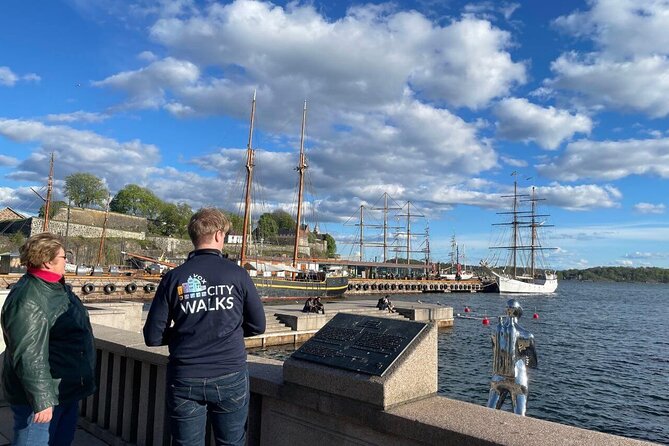
The waterfront section gives the tour breathing room. You can look across the harbor toward the city skyline, take photographs, and see how Oslo opens toward the water. It is one of the more scenic parts of the route, though the weather matters greatly here.
Tjuvholmen shows how quickly Oslo has changed. Once a fishing and shipbuilding community, it has been transformed with restaurants, shops, and art galleries. The area is useful for a later meal or an art-focused wander, but this tour only gives you an introduction.
I like this part because it adds present-day Oslo to the royal and historic material earlier in the walk. You see a city that values older buildings while also making room for new architecture, dining, and public spaces.
The final stop is often described as Norway’s National Mall. It is a place where people express political views and give feedback to the government. That makes it a fitting end to a route that has already passed the parliament, royal palace, and city hall.
The activity ends back at the meeting point. That return is practical if you have onward plans, though the tour’s exact pace can affect how much time you have afterward.
What the $38.70 price buys you
At $38.70 per person, this tour is reasonably priced if you want a guided orientation to central Oslo without paying for several separate attractions. You get a live English-speaking guide, a planned route through many key sights, and access to the Vox City sightseeing app.
The value depends on your travel style. If you like to walk, ask questions, and gather ideas for the rest of your visit, the price is fair. Several guides have given practical suggestions for food, museums, and nearby sights, which can save you time later.
If you want detailed access to the Opera House, Akershus Fortress, Nobel Peace Center, or other buildings, the value is weaker because entry is not included. You would need to budget for those separately.
The app helps stretch the purchase beyond the two-hour meeting. Scan the QR code on your voucher before arriving and download the self-guided audio tour. It includes commentary in English, Spanish, German, French, and Italian. The live guide is English only, so the app may be useful if someone in your group prefers another language.
Guide quality, group size, and practical concerns
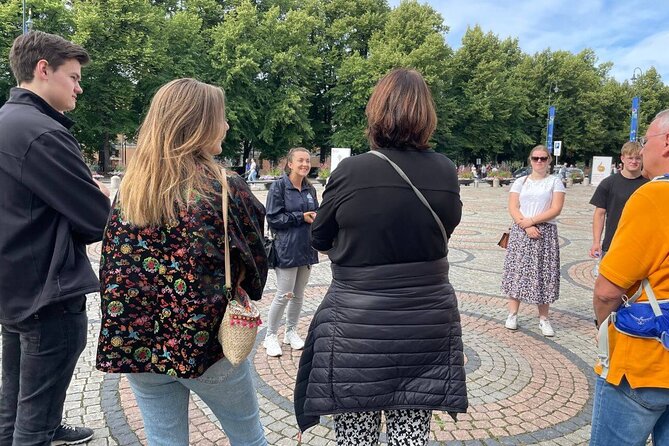
The strongest part of this experience is the guide. Tetiana has been praised for humor, warmth, and insight into Norwegian life. Anastasia has been credited with being flexible and giving extra time when a very small group arrived late. Emily, Ihor, Maria, Judit, Amelia, Kinji, Ann Marie, and others have also been praised for clear explanations and lively storytelling.
That said, your experience depends heavily on who leads the walk. Some guides may tell more stories about historical events, while others may focus more on current life, politics, or cultural figures. A good guide can make the fast pace feel relaxed. A less effective one may leave the route feeling like a list of façades.
The advertised maximum is 99 people, which is large enough to affect how easily you hear and how long the group can pause. Some departures may be much smaller, but you should not assume a private or intimate walk. The best reviews often describe small groups, while the booking terms allow a far larger one.
There have also been complaints about cancellations, late communication, and meeting-point confusion. One concern involved an English booking connected to the wrong location for another language. Another person arrived late after trying to contact the operator and could not find the guide. Check that your voucher clearly says the English tour and the University Square meeting point.
The tour runs at 10:00 a.m. and lasts about two hours. Public transportation tickets are not included, though the meeting point is near public transport. Service animals are allowed, and most people can participate, but the route is still an active city walk with outdoor exposure.
Who will get the most from this Oslo walk?
I would choose this tour for a first morning in Oslo, especially if you want to get your bearings before choosing museums and longer visits. It also fits a cruise stop well because the route covers many central sights in a limited time.
It suits adults who enjoy history, architecture, politics, and urban change. Families may appreciate the movement and variety, but the tour is not designed specifically for children. One person found the pace and content better suited to adults.
You should consider another option if you dislike walking, need guaranteed indoor access, or want deep treatment of a single attraction. This tour gives you breadth, not a long look at one place.
Bring comfortable shoes, a weather layer, and a charged phone for the app. Keep your voucher handy, arrive early, and confirm the meeting details before leaving your accommodation. The cancellation policy allows a full refund if you cancel at least 24 hours before the start time. Poor weather may lead to a new date or a full refund.
Should you book the Best of Oslo Guided Walking Tour?
Book it if you want a useful first look at central Oslo, a live English-speaking guide, and a route that joins royal, political, historic, artistic, and waterfront sights. The strongest guides add much more than directions, offering stories about Ibsen, Munch, Norwegian politics, the royal family, and daily life.
Skip it if your priority is entering major attractions or moving at a slower pace. The tour covers a lot, but most stops are outside, and weather or group size can shape the experience.
For a first visit, I think the $38.70 cost is justified, provided you confirm the meeting point and treat the walk as an introduction. Use the remaining day to return to the Opera House, Akershus Fortress, Nobel Peace Center, or any museum that catches your interest.
FAQ
How long is the Best of Oslo Guided Walking Tour?
The guided walk lasts approximately two hours.
What time does the tour start?
The scheduled start time is 10:00 a.m.
Where does the tour begin?
It begins at University Square, at the Faculty of Law building at Karl Johans gate 47 in Oslo.
How do I find the guide at the meeting point?
Meet near the statue of P.A. Munch by the Faculty of Law building entrance at University Aula.
Where does the tour end?
The activity ends back at the meeting point.
Is the live tour offered in English?
Yes. The live guide portion is offered in English only.
What languages are available through the sightseeing app?
The app includes multilingual commentary in English, Spanish, German, French, and Italian.
Are attraction entrance fees included?
No. Entry to attractions and public transportation tickets are not included.
Can I cancel for a full refund?
Yes. You can cancel at least 24 hours before the experience start time for a full refund. If poor weather causes the operator to cancel, you will be offered another date or a full refund.
Just added around Oslo
- Oslo Winter Highlights Bike Tour★ 5.0 · 36 reviews
- 4 hours Best View of the Oslofjord Winter Edition★ 4.0 · 15 reviews
- The Viking Planet Museum – Mini Group (4 adults)★ 4.0 · 16 reviews
- Unknown war. Oslo and Norway during 1940-45★ 5.0 · 74 reviews
- The Ultimate Norwegian Skiing Experience★ 5.0 · 16 reviews
- The Ultimate Study of the Human Form at Vigeland’s Sculpture Park with a Local★ 4.0 · 14 reviews
- The Oslo Beer Adventure★ 4.5 · 11 reviews
- The Essential Oslo Private Walking Tour★ 5.0 · 79 reviews
Walking Tours, compared.
Past & Present Small Group Guided Walking Tour
Read our review →
Walking Tour in Bergen of the Past and Present
Read our review →

Browse the lists this tour appears in