
Reviewed · WALKING TOURS
Oslo: 3-hour Private Walking Tour of Bohemian Grünerløkka
Grünerløkka gives you a different Oslo: a bubbling river, old brick factories, colorful wooden houses, street art, music venues, and quiet parks. I like the walk to Blå, with its giant chandelier and graffiti, and the stop at Our Saviour’s Cemetery, where Ibsen, Bjørnson, and Edvard Munch are buried.
I also like that the route ends at Mathallen Foodhall, right when lunch becomes a good idea. The main drawback is the price: $461 for a private group of up to one person makes this a costly choice unless you place a high value on a private guide and focused attention.
Key points about the Grünerløkka walk
- Munch’s Oslo connection: Visit Our Saviour’s Cemetery and learn about Edvard Munch’s links to the neighborhood.
- A strong mix of old and new: Follow the river past industrial brick buildings, creative spaces, colorful houses, and street art.
- Blå is a memorable photo stop: See the famous chandelier and colorful art around this music venue.
- Damstredet and Telthusbakken add charm: These small streets bring wooden houses, gardens, and hillside views into the route.
- Lunch is built into the finish: The walk ends at Mathallen in the Vulkan district, with no need to search for a restaurant afterward.
- Private and multilingual: The three-hour tour is available in English, Spanish, French, German, Italian, or Norwegian.
Starting at Youngstorget and leaving central Oslo
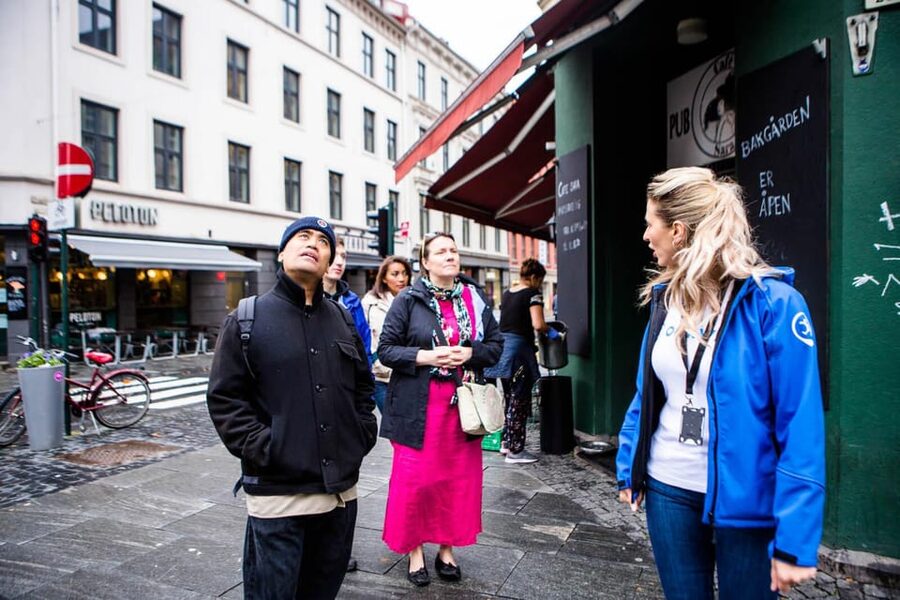
Your guide meets you by the fountain in the middle of Youngstorget, in central Oslo. Look for the guide holding a sign with the local partner’s name. The guide arrives about 10 minutes before departure, so you have a clear meeting point rather than a vague instruction to wait somewhere in the square.
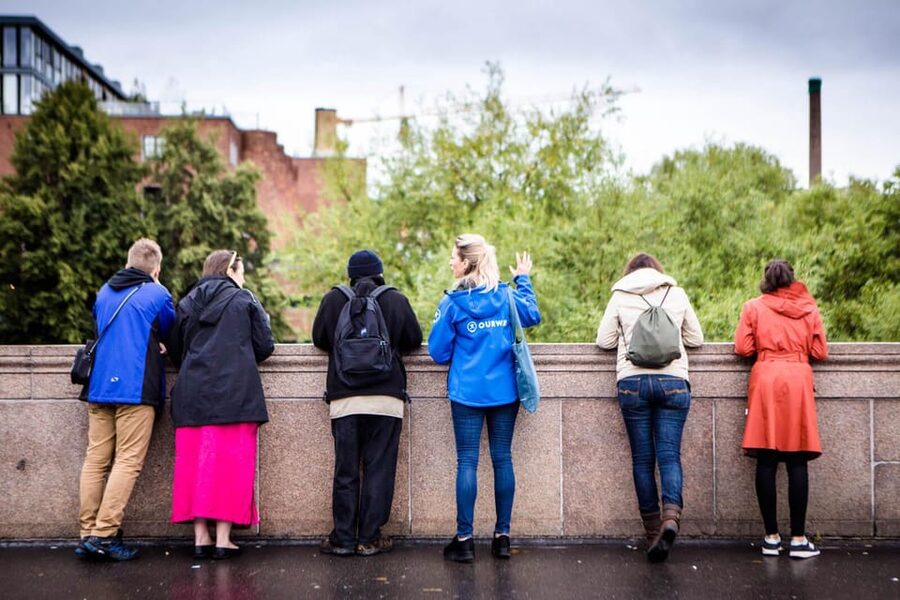
The first part covers Sentrum and takes about 30 minutes. This opening helps connect central Oslo with the neighborhoods ahead. You pass Torggata and see Kulturkirken Jakob before reaching Ankerbrua, a bridge that leads toward Grünerløkka.
This is a useful beginning because the tour does not drop you straight into a collection of disconnected photo stops. You move from central streets toward the river and former industrial areas, watching Oslo change as you walk. Bring comfortable shoes. Three hours on foot is manageable for most people, but the route includes streets, bridges, and some uphill or downhill sections.
A private tour also lets you ask questions early. If you are curious about Oslo’s artists, street art, urban change, or famous residents, this is the time to tell your guide. Diana is praised for being flexible and easy to spend time with, while Tone is noted for clear explanations about the city and its artwork. Guide availability depends on the date and language you choose.
More Walking Tours in Oslo
- Oslo: Best of Oslo Walking Tour
★ 4.5 · 458 reviews - Oslo: Guided Walking Tour of Central Oslo
★ 4.7 · 438 reviews - Oslo: Historic Myths & Legends Evening Walking Tour
★ 4.8 · 408 reviews
Following the river into Grünerløkka
Grünerløkka is the main subject of the walk, and you spend about two and a half hours in the district. The area works well for a walking tour because several different sides of Oslo meet here.
You walk beside a bubbling river, with old industrial brick buildings on one side and colorful houses, artwork, and creative spaces on the other. The setting helps explain why Grünerløkka became associated with artists, free thinkers, musicians, and independent businesses.
I like this part because it gives you more than polished central Oslo. You see the city as a place that has changed over time, with former work buildings now connected to food, music, art, and neighborhood life. The industrial sections may appeal especially to you if grand public monuments are not your main reason for taking a tour.
At the same time, the walk is not focused on one grand attraction. Its appeal comes from small details and the guide’s stories. If you prefer a fast list of major landmarks, this may feel slower and less spectacular. If you enjoy seeing how different parts of a city fit together, the pace makes sense.
Olaf Ryes plass and the creative side of the district
Olaf Ryes plass gives the route a neighborhood center. Here, you get a closer look at Grünerløkka as a social and artistic part of Oslo rather than simply a historic quarter.
The tour then continues toward Blå, a music venue surrounded by colorful street art. The giant chandelier is one of the route’s most unusual visual details, and it makes a natural photo stop. Blå also shows how performance, public art, and old industrial spaces can share the same corner of the city.
You should not expect a concert as part of the tour. Blå is included as a sightseeing stop, so the value comes from the setting, the art, and the guide’s explanation. This portion will suit you if you enjoy places with a creative edge and a little roughness around the edges.
The route also includes Brenneriveien, another area where industrial buildings and graffiti help set the tone. The colorful artwork is not presented as a separate museum visit. Instead, it becomes part of the walk, giving you a chance to see Oslo’s creative culture in ordinary streets.
Damstredet and Telthusbakken’s wooden houses
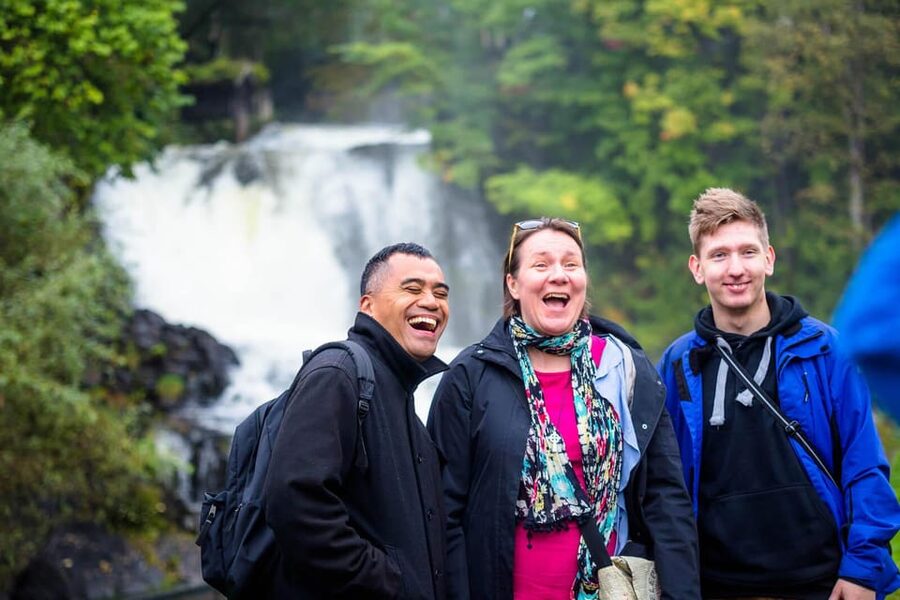
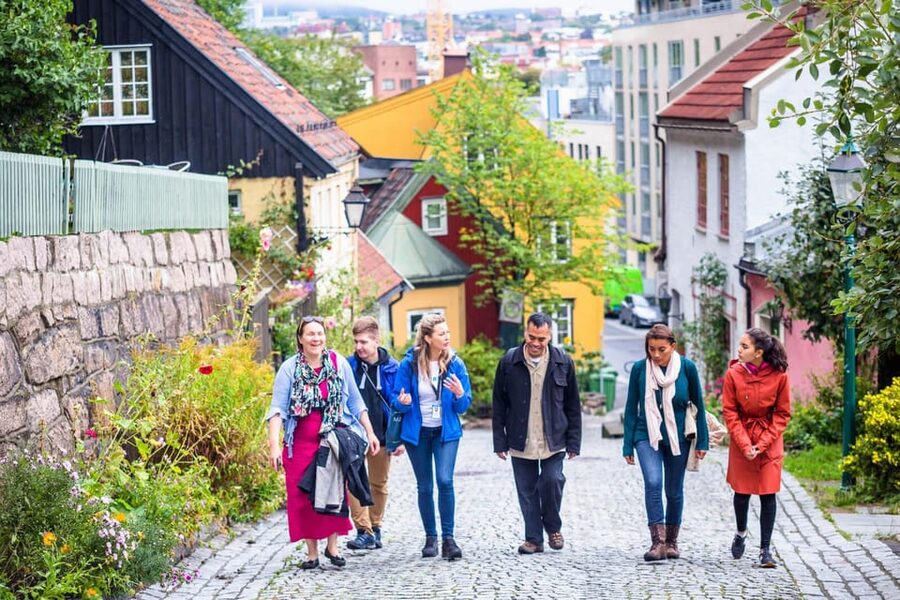
The tour changes pace at Damstredet. Here you walk along a quaint street lined with colorful houses, gardens, and older residential details. It is the kind of place where you will want to pause for a picture rather than hurry from one stop to the next.
Telthusbakken adds another scenic section. The route takes you down this hillside street, where small houses and gardens create one of the most charming views of the day. These streets offer a strong contrast to the brick industrial buildings near the river.
I especially like this shift between settings. Grünerløkka is not treated as only hip or artistic. You see a quieter side, too, with older homes and human-scale streets. The walk becomes more personal here, since the appeal lies in the details of the buildings and the way the streets rise and fall.
The exact amount of time at each stop depends on the guide and the group. Since this is private, you can usually ask for a short photo pause or spend more time on a topic that interests you. The tour is still limited to three hours, so do not expect a long stop at every location.
Same base, a completely different kind of day:
- Oslo: Scenic Fjord Cruise with Audio Guide Commentary
★ 4.5 · 5,375 reviews - Oslo Nature Walks: Island Hopping Tour
★ 4.8 · 2,713 reviews - Oslo: 100% Electric Oslofjord Sightseeing Cruise
★ 4.4 · 2,041 reviews - Oslo: Fjord Evening Cruise with Shrimp Buffet
★ 4.5 · 1,956 reviews
Our Saviour’s Cemetery and Oslo’s literary names
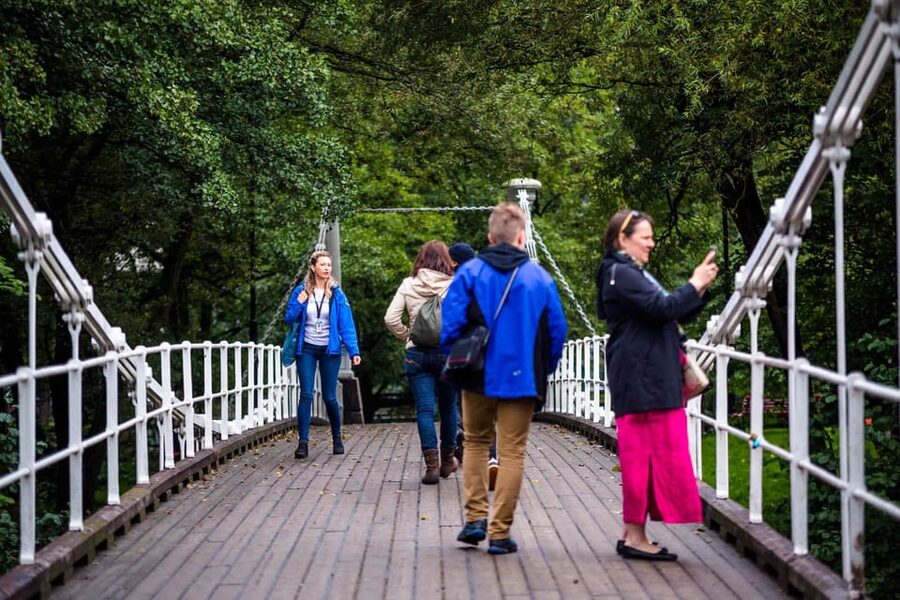
Our Saviour’s Cemetery, also known as Vår Frelsers Gravlund, brings a serious historical note to the route. You see the graves of three major Norwegian figures: Henrik Ibsen, Bjørnstjerne Bjørnson, and Edvard Munch.
The Munch connection is particularly useful if you are interested in the artist. The tour explains that Munch lived at several addresses in the area, linking the famous painter to the streets you have already been walking through. His grave is not an isolated cultural stop. It fits into a wider story about Oslo’s artists and the city districts that shaped their lives.
This cemetery stop also gives the tour more substance. Street art and colorful houses are fun to photograph, but the graves of Ibsen, Bjørnson, and Munch remind you that Oslo’s cultural identity is tied to writers and artists as well as modern design and food.
You should keep your expectations reasonable. This is a sightseeing stop within a walking route, not a full museum visit or a dedicated Munch tour. If Munch is your central reason for coming to Oslo, you will need other time for the Munch Museum. But if you want one meaningful Munch connection woven into a broader neighborhood walk, this works well.
Quan Thang Ancient House and the route’s odd details
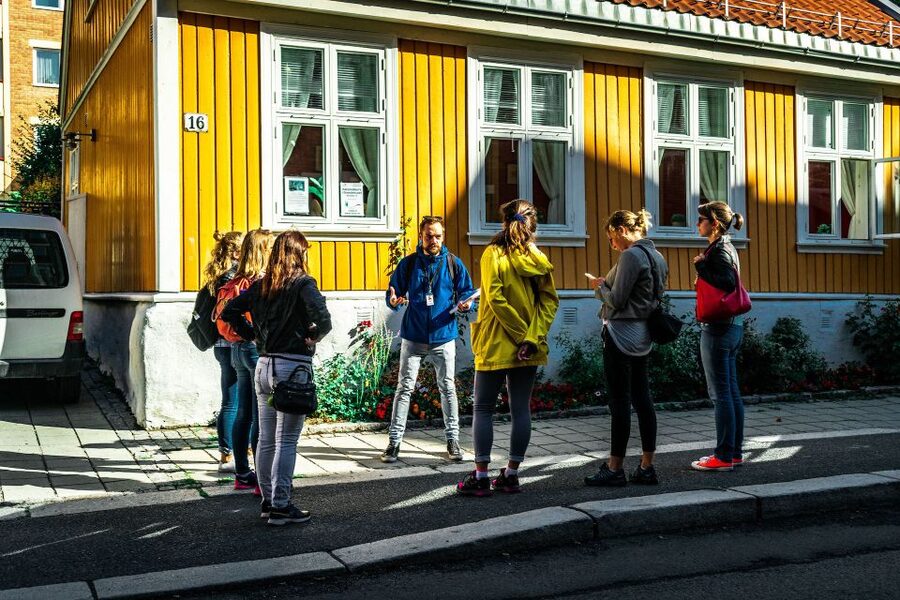
The itinerary also includes Quan Thang Ancient House. Its place among the wooden houses, cemetery, river, and industrial streets adds another small point of interest to the walk.
The available information does not specify the length of the stop or exactly how the guide presents it, so you should think of it as one part of the neighborhood story rather than a major standalone attraction. That is typical of this tour. The pleasure comes from the accumulation of distinctive places, not from spending an hour inside each one.
A private format is useful here because you can ask the guide to explain what catches your eye. A fixed group tour may need to keep moving, while a private guide can adjust the conversation to your interests, within the three-hour schedule.
Finishing at Vulkan and Mathallen Foodhall
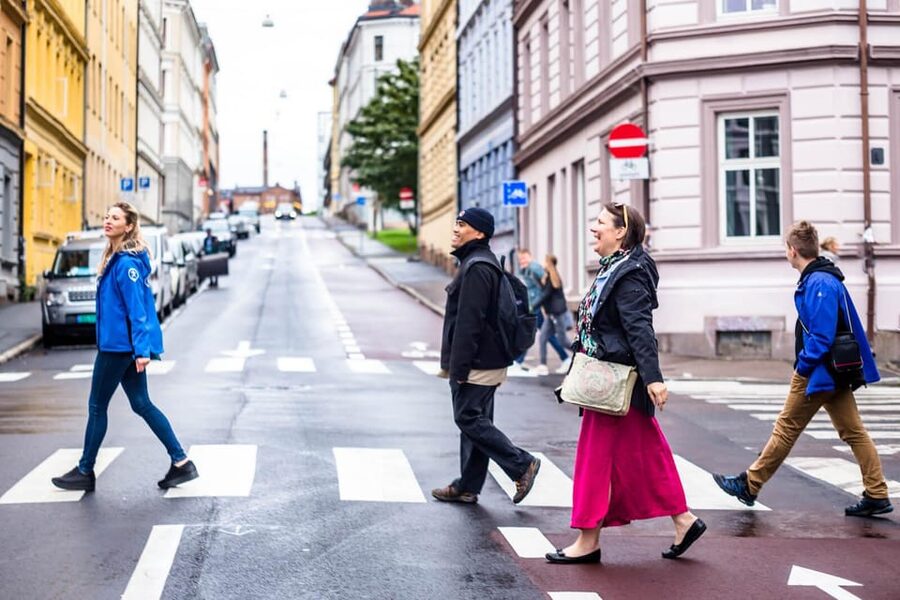
The tour ends at Vulkan 16, by the entrance to Mathallen Oslo. This is one of the route’s smartest practical choices. After three hours of walking, you finish at one of Oslo’s main food destinations rather than at another transit stop.
Mathallen sits in the sustainable Vulkan district, an area shaped around food, older industrial buildings, and eco-focused development. The surrounding architecture and colorful graffiti continue the tour’s blend of old and new.
Plan to stay for lunch if the food hall’s opening hours suit your schedule. The tour does not include a meal, so you pay for anything you eat or drink. Still, ending here lets you choose your own pace and budget. You might make a full meal of it, grab a quick bite, or simply continue exploring Vulkan.
This finish also makes the tour easy to combine with an afternoon in Grünerløkka. You are not forced to return immediately to the city center. If you do want to go back, the starting point at Youngstorget is about a 15-minute walk, roughly 1 kilometer, from the end. Public transport is another option, but its ticket is not included.
What the private format is worth
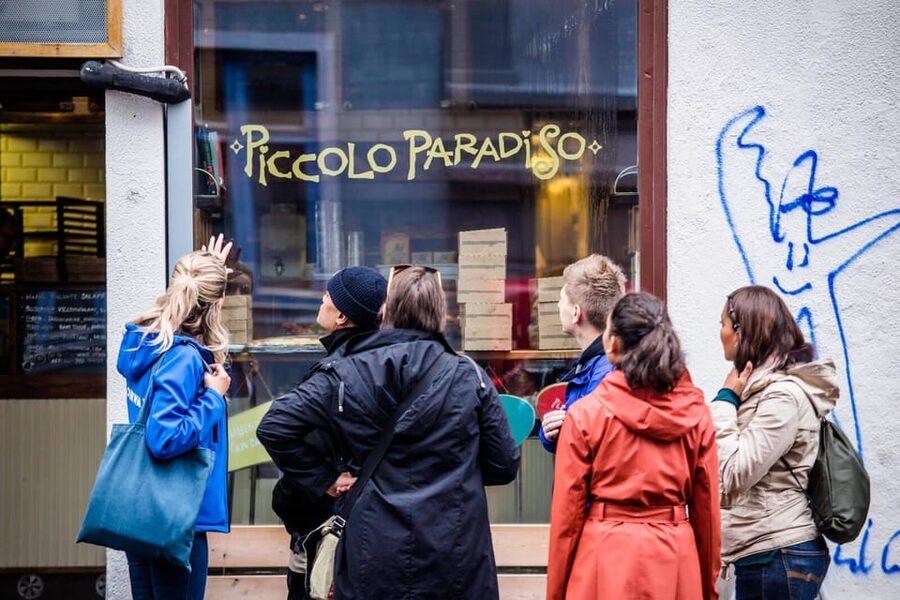
The listed price is $461 per group of up to one person. That is a steep cost for a three-hour walk, especially for a solo visitor. The private setup changes the calculation, since you are paying for personal attention rather than a seat in a larger group.
For a couple, family, or small private party, confirm the exact booking price and group terms before paying, because the stated capacity is up to one person. Based on the listed terms, the price is best viewed as a premium private experience rather than a budget introduction to Oslo.
I would consider it good value if you want a flexible route, a guide in your preferred language, and a closer look at places that are easy to miss on your own. The guides Tone and Diana have both received especially strong praise for their personal approach, flexibility, and clear explanations.
I would skip it if your main goal is to see Oslo’s biggest famous sights in a short time. The Royal Palace, major museums, and other central attractions are not the focus here. This tour earns its price through neighborhood detail, not through entry to ticketed sights.
Languages, timing, and practical preparation
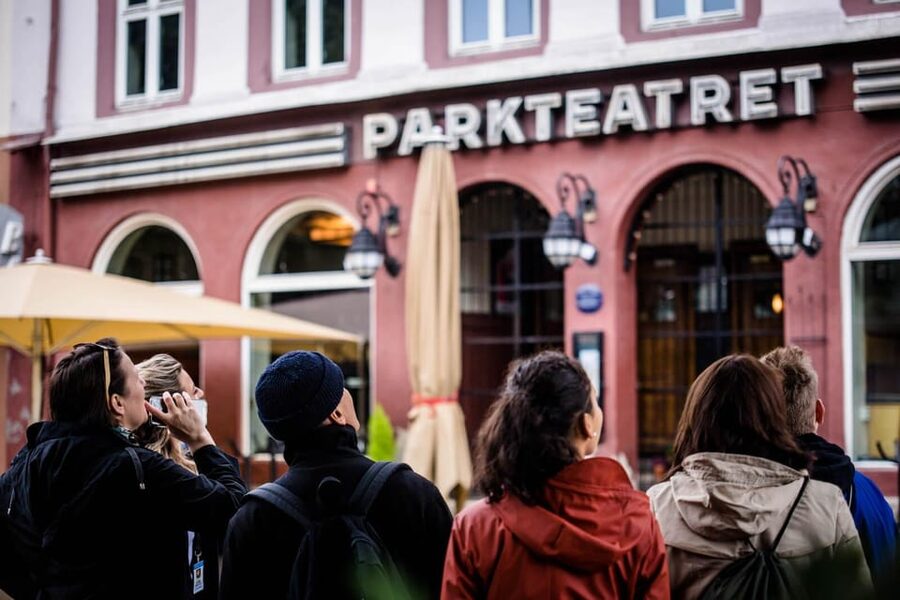
The tour lasts three hours and runs with a live guide in English, Spanish, French, German, Italian, or Norwegian. Starting times vary, so check availability for your chosen date.
Wear comfortable shoes and clothing suited to the weather. Oslo conditions can change, and the experience is outdoors for the full route. You should also leave room in your schedule after the official end if you want lunch at Mathallen.
The tour has free cancellation up to 24 hours before departure for a full refund. You can also reserve now and pay later, which helps if your Oslo plans are still shifting.
Since the route begins and ends in different places, plan for the return. Walking back to Youngstorget takes about 15 minutes, or 1 kilometer. Public transport is available, but you need to buy that ticket separately.
Who will enjoy this Oslo walk
I would recommend this tour to you if you like cities through their neighborhoods rather than only through major sights. It is a good fit for people interested in street art, artists, old houses, industrial architecture, cemeteries, and local food.
It also suits repeat visitors to Oslo who have already seen central landmarks and want a more relaxed look at another side of the city. The route has enough variety to keep a first-time visitor interested, too, especially if you want your introduction to include creative spaces and everyday streets.
Families and mixed-interest groups may find the private format useful because you can ask questions and pause for photos without keeping up with strangers. However, the price is hard to justify for a solo budget visitor, and the walking focus may not suit anyone looking for an indoor or vehicle-based tour.
Should you book the Grünerløkka tour?
Book it if you want a personal, story-led walk through Oslo’s artistic and alternative side, with Munch’s grave, Blå, Damstredet, Telthusbakken, and Mathallen all connected in one route. The river, industrial buildings, graffiti, hillside houses, and food hall give the three hours a clear sense of place.
Think carefully about the cost before booking. At $461 for a private group of up to one person, this is not a low-cost city introduction. For a private party that values a flexible guide and unusual neighborhood stops, it can be a rewarding choice. For everyone else, compare the price with a shared walking tour and explore Mathallen on your own.
FAQ
Where does the tour begin?
The tour begins at the fountain in the middle of Youngstorget in central Oslo. The guide arrives about 10 minutes before departure and holds a sign with the local partner’s name.
Where does the tour finish?
It finishes at Vulkan 16, by the entrance to Mathallen Oslo in Grünerløkka.
How long does the walking tour last?
The tour lasts three hours. About 30 minutes covers central Oslo before roughly two and a half hours in Grünerløkka.
Which languages are available?
The live tour is available in English, Spanish, French, German, Italian, and Norwegian.
Is the tour private?
Yes. It is offered for a private group, with the listed price covering a group of up to one person.
Is lunch at Mathallen included?
No. The tour ends by the entrance to Mathallen, but you pay separately for any food or drinks.
How do I return to Youngstorget afterward?
You can walk back in about 15 minutes, covering roughly 1 kilometer, or use public transport. A public transport ticket is not included.
More 3-Hour Experiences in Oslo
- Oslo: 3-Hour Highlights Bike Tour
★ 4.8 · 1,609 reviews - Oslo: 3-hour Kayaking Trip on the Oslofjord
★ 4.9 · 43 reviews - Private Bike Tour (3 hours)
★ 5.0 · 33 reviews - 3 Hours Walking Tour for Great Food in Oslo
★ 5.0 · 32 reviews
Just added around Oslo
- Oslo Winter Highlights Bike Tour★ 5.0 · 36 reviews
- 4 hours Best View of the Oslofjord Winter Edition★ 4.0 · 15 reviews
- The Viking Planet Museum – Mini Group (4 adults)★ 4.0 · 16 reviews
- Unknown war. Oslo and Norway during 1940-45★ 5.0 · 74 reviews
- The Ultimate Norwegian Skiing Experience★ 5.0 · 16 reviews
- The Ultimate Study of the Human Form at Vigeland’s Sculpture Park with a Local★ 4.0 · 14 reviews
- The Oslo Beer Adventure★ 4.5 · 11 reviews
- The Essential Oslo Private Walking Tour★ 5.0 · 79 reviews
Walking Tours, compared.
Past & Present Small Group Guided Walking Tour
Read our review →
Walking Tour in Bergen of the Past and Present
Read our review →

Browse the lists this tour appears in