
Reviewed · WALKING TOURS
Oslo: Private Walking Tour
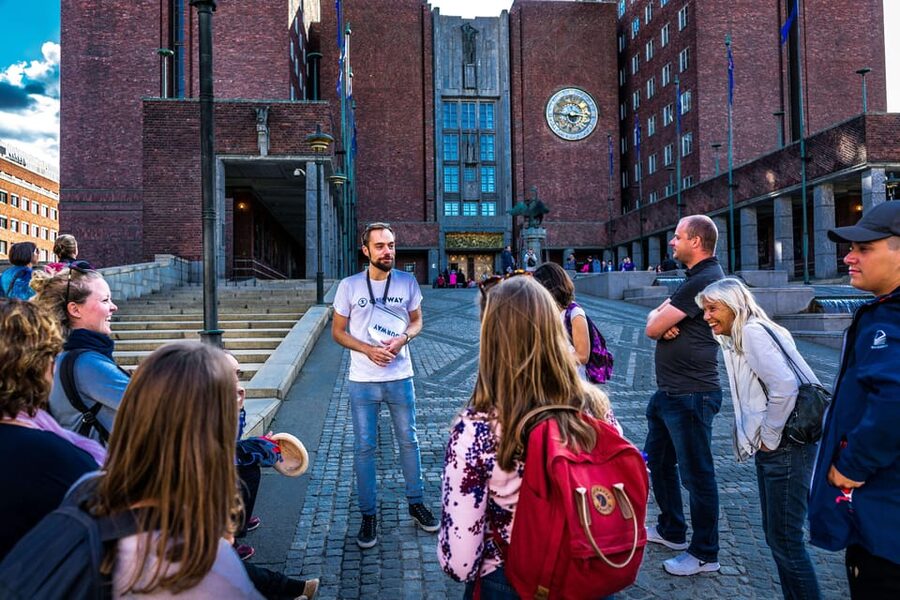
Oslo’s story is written across a surprisingly small area. In two hours, you can walk from the Nobel Peace Center and harborfront to the Royal Palace, Parliament, Akershus Fortress, and the striking Opera House. The route gives you both old Christiania and modern Oslo without wasting time on transport.
I like the private format, since your guide can adjust the pace and answer your questions rather than delivering a fixed speech to a large crowd. I also like the mix of grand civic buildings and odd little details, from the Nobel Peace Prize ceremony site to urban farming behind the Opera House. The main drawback is price: at $461 for a group listed as up to one person, this is a costly way to take a walking tour unless you are sharing the fee with a larger private party or place a high value on personal guiding.
Key points at a glance
- A compact central route: Cover major sights from the Nobel Peace Center to Langkaia in two hours.
- A private guide in your language: English, Spanish, French, German, Italian, and Norwegian are available.
- Strong first-day orientation: Learn the layout of central Oslo before exploring museums or neighborhoods on your own.
- A useful city contrast: See royal and parliamentary buildings beside modern City Hall and the angular Opera House.
- A good family option: Inger has adjusted the walk for groups with children, and other guides have been praised for warmth and patience.
- Expect city noise: Most of the route is in central Oslo, so traffic sounds are part of the experience.
Starting beside the Nobel Peace Center
Meet your guide outside the Nobel Peace Center at Brynjulf Bulls plass 1. The guide should arrive about 10 minutes before departure and carry a sign with the local partner’s name. This is a sensible meeting point, close to Oslo Harbour and the Aker Brygge area.
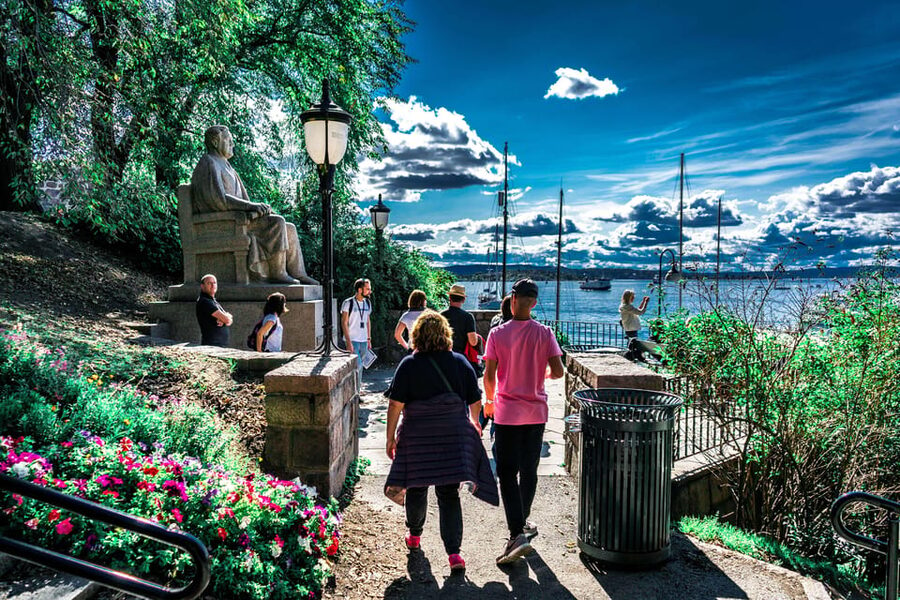
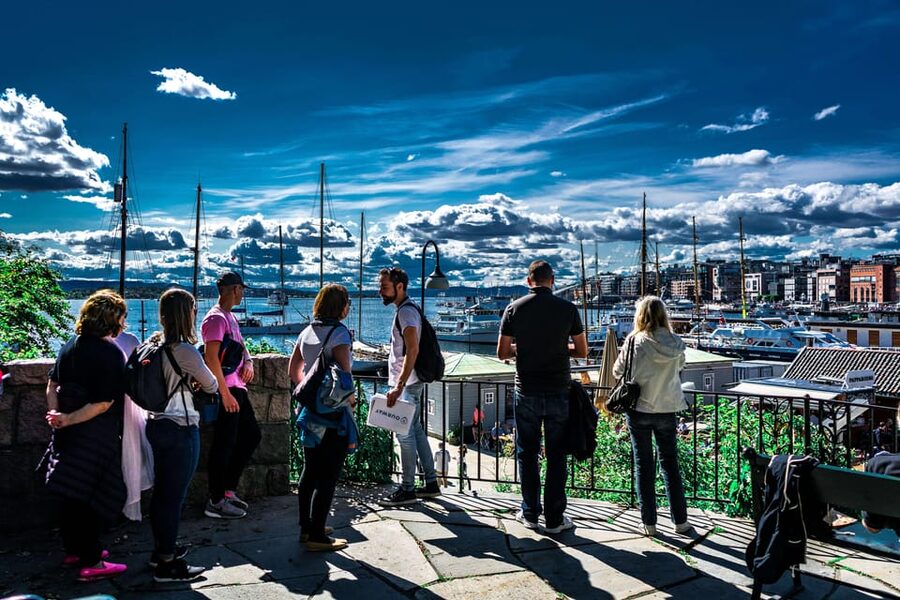
The opening view gives you an immediate sense of Oslo’s setting. The city reaches toward the Oslo Fjord, and the waterfront puts the capital’s relationship with the sea right in front of you. You will not spend the whole tour at the harbor, but beginning here helps connect the city center to the water.
The Nobel Peace Center is also a useful first stop because it links Oslo to one of Norway’s best-known international traditions. The Nobel Peace Prize ceremony takes place at Oslo City Hall, which you will see shortly afterward. Your guide can provide context about the buildings and the city without requiring you to enter the center itself.
This is a sightseeing walk, not an indoor museum tour. If you want time inside the Nobel Peace Center or City Hall, you would need to arrange that separately and should not expect the two-hour route to include it.
More Walking Tours in Oslo
- Oslo: Best of Oslo Walking Tour
★ 4.5 · 458 reviews - Oslo: Guided Walking Tour of Central Oslo
★ 4.7 · 438 reviews - Oslo: Historic Myths & Legends Evening Walking Tour
★ 4.8 · 408 reviews
Oslo City Hall and the Nobel Peace Prize connection
From the waterfront, the route continues toward Oslo City Hall. The building is a major civic landmark and the place associated with the Nobel Peace Prize ceremony. Its role gives the stop more weight than a quick photograph of a large municipal building.
The tour is especially useful here because your guide can explain how the city presents itself through architecture and public institutions. You will hear about City Hall as part of Oslo’s modern identity, then continue into the older central district.
Keep in mind that the tour includes sightseeing stops rather than long interior visits. You should expect to pause, look, listen, and take photographs, not spend extended time inside each location. For a first visit, that approach works well because it keeps the route moving.
Traffic noise is unavoidable around much of central Oslo. If you have difficulty hearing in busy streets, stay close to your guide and mention it at the start. A private group makes that easier than a large public walk.
The National Theatre and University Square
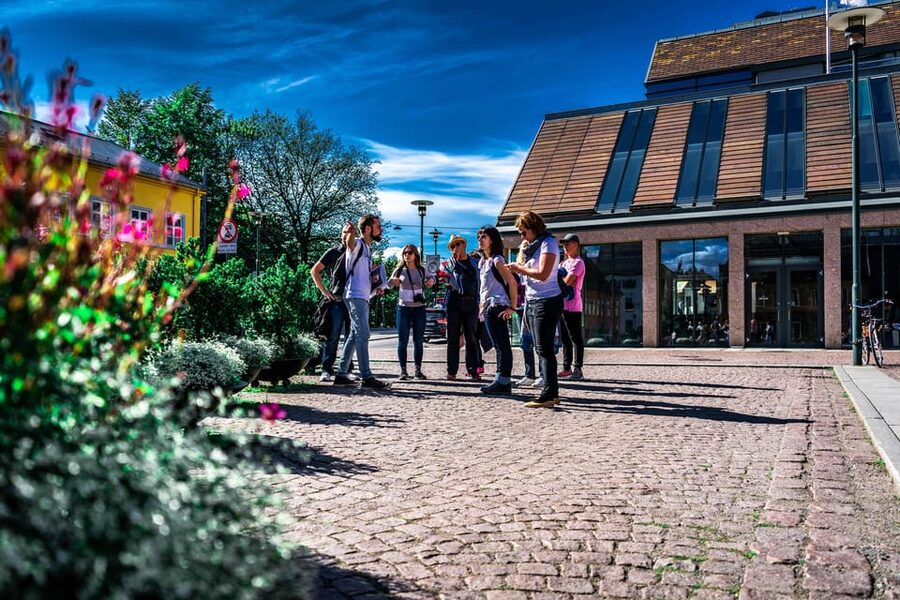
The National Theatre gives the route a more formal, cultural character. Its impressive building sits near University Square, where the city’s institutional and academic sides meet. This section is a good reminder that Oslo is not only a harbor city or a royal capital. It is also a place shaped by education, theater, public debate, and national ceremony.
The value of this stop depends heavily on the guide. A strong guide can connect the building to Oslo’s civic life and explain what you are seeing without burying you in dates. Amanda has been praised for giving the right amount of information and taking time to answer questions. That kind of pacing matters on a short walk.
Anya has also been singled out for giving a warm start to a stay in Oslo, while Tine has been praised for adding less obvious details to the route. The experience can therefore feel different depending on who leads it, but the common advantage is direct access to a local person who can respond to your interests.
You will not get a full theater performance history in two hours. Instead, treat the National Theatre as one piece of a larger introduction to the capital.
Karl Johans gate, the Royal Palace, and Parliament
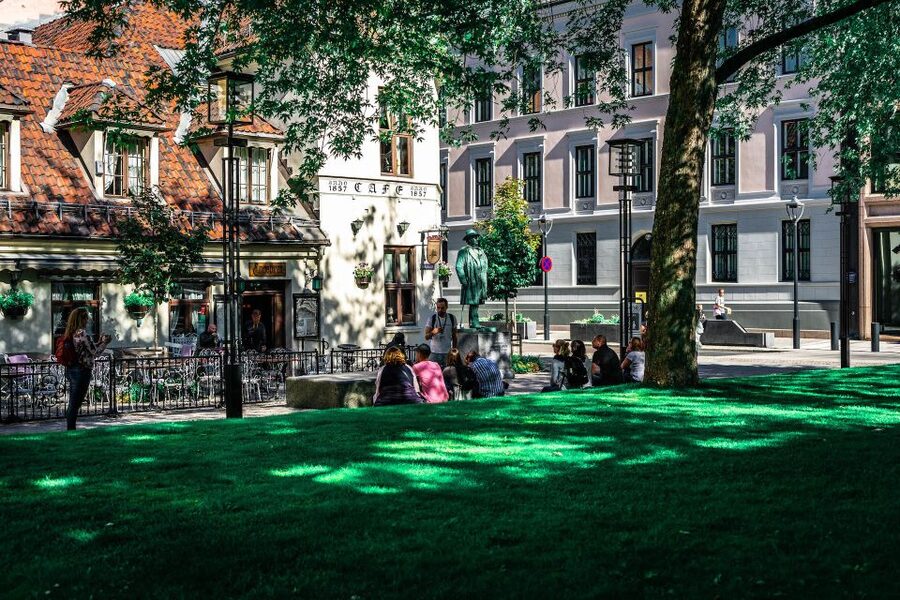
Karl Johans gate is Oslo’s main shopping street and one of the clearest routes through the city center. Walking along it gives you an easy sense of the capital’s scale. The street links several important buildings, so you can understand how the center fits together rather than seeing isolated landmarks from a vehicle.
The Royal Palace is one of the tour’s essential photo stops. It represents Norway’s monarchy and gives the route a change of mood after the harbor and theater district. You will see the palace from the outside, with your guide explaining its place in Oslo’s civic center.
The Norwegian Parliament follows naturally. This building adds the democratic side of the capital to the royal one. With the palace, theater, university area, and Parliament all on the same walk, you get a practical introduction to the institutions that shape the city.
This section may be the easiest part of the route to explore again on your own later. Karl Johans gate is central and straightforward, so you can return for shopping, a meal, or a second look at the buildings after the guide has given you some orientation.
Same base, a completely different kind of day:
- Oslo: Scenic Fjord Cruise with Audio Guide Commentary
★ 4.5 · 5,375 reviews - Oslo Nature Walks: Island Hopping Tour
★ 4.8 · 2,713 reviews - Oslo: 100% Electric Oslofjord Sightseeing Cruise
★ 4.4 · 2,041 reviews - Oslo: Fjord Evening Cruise with Shrimp Buffet
★ 4.5 · 1,956 reviews
Akershus Fortress above the Oslo Fjord
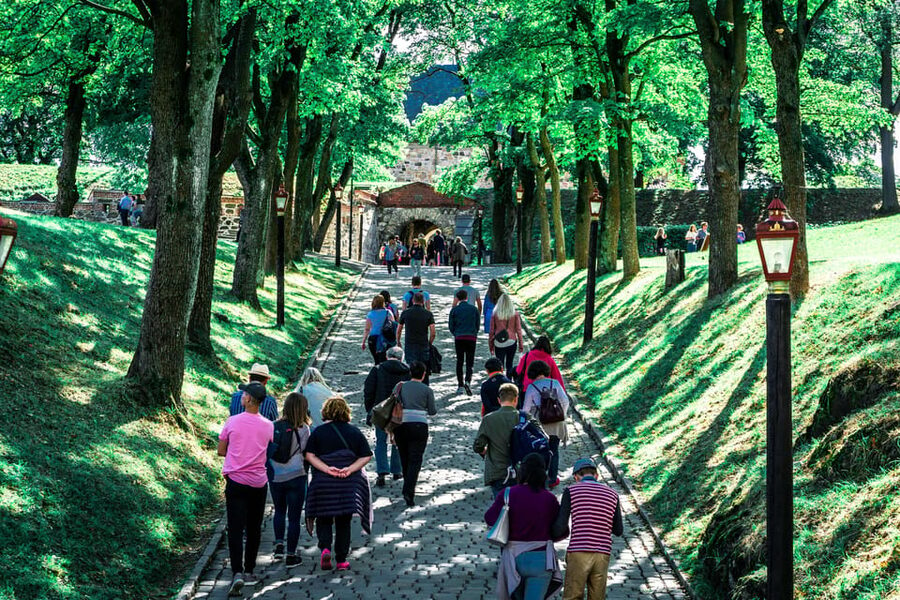
Akershus Fortress is the route’s most atmospheric historic sight. It overlooks the Oslo Fjord and gives you a physical sense of the city’s defensive past. The fortress is not simply another grand building on a street. Its position adds height, views, and a stronger link to Oslo’s military history.
The stop is valuable because it breaks up the formal city-center sequence. After the palace, Parliament, and National Theatre, the fortress offers older stonework and open views toward the water. You can expect sightseeing here, but the exact amount of time depends on your guide and the group’s pace.
Wear comfortable shoes. This is a walking tour with several stops, and a historic fortress area is more enjoyable when you are not worrying about sore feet. Weather-appropriate clothing is just as important. Oslo’s conditions can change, and the tour operates outdoors.
If your main interest is medieval or military history, remember that this experience offers an introduction rather than an extended fortress visit. You will see Akershus as part of a broader city walk, not as a dedicated tour of every section.
Christiania Torv and Oslo’s older city plan
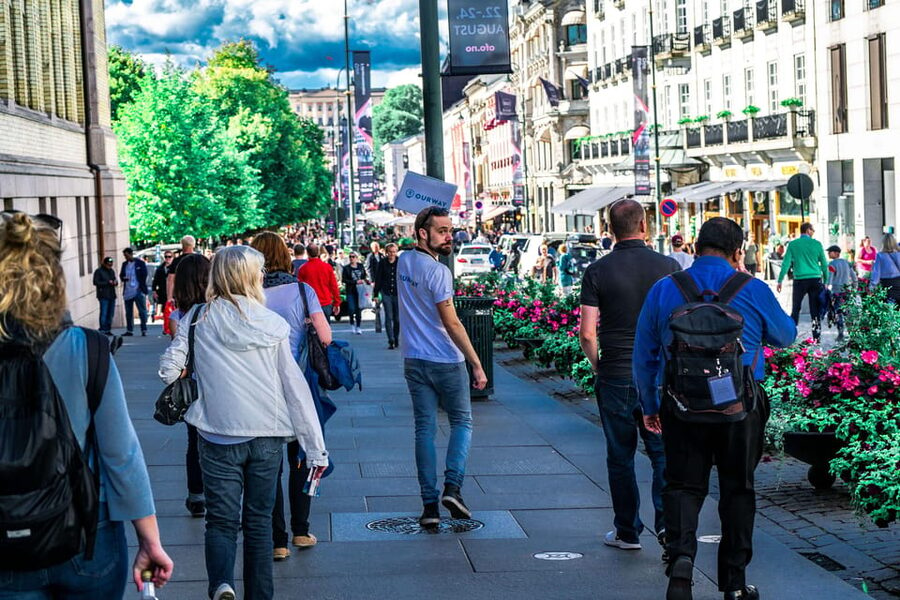
Christiania Torv helps explain why modern Oslo is not located exactly where the earliest city developed. The tour connects today’s capital with the rebuilding carried out after a devastating fire in the 1600s. King Christian IV chose to move and reconstruct the city rather than simply rebuild in its former position.
That story gives the walk a useful thread. You are not just moving from one landmark to another. You are seeing how fire, royal planning, defense, and later urban growth shaped the city you see today.
Christiania Torv and the Bank Square area add a more historic feel to the route. These stops are brief, but they help you notice the layers beneath the modern center. Your guide can point out how old and new Oslo sit close together, often within a short walk.
This part may appeal most to you if you enjoy understanding why a city looks the way it does. If you prefer entering museums or spending a long time at one monument, the quick pace may feel less satisfying.
The Bank Square and Oslo Stock Exchange
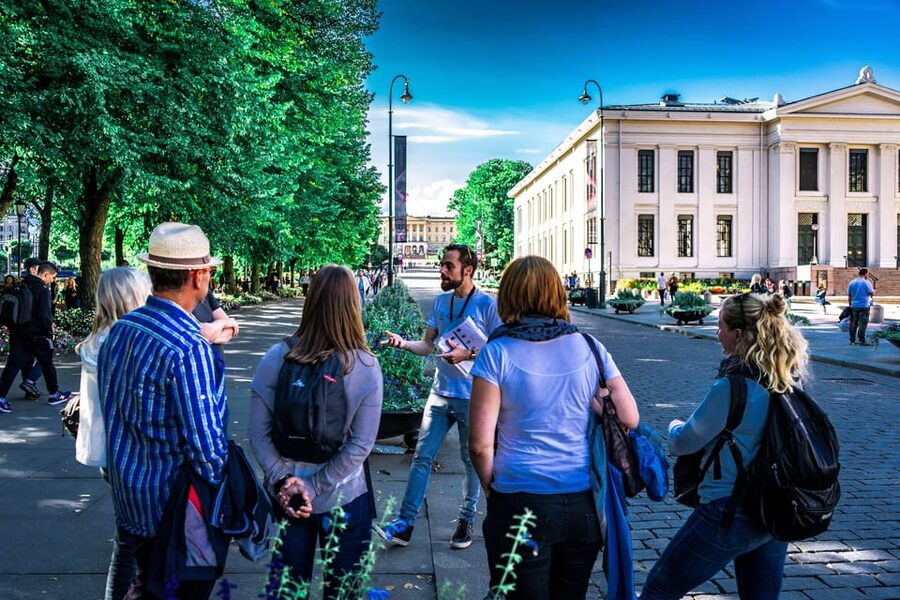
The Bank Square and Oslo Stock Exchange continue the walk through Oslo’s commercial and civic center. These locations may not have the instant recognition of the Royal Palace or Opera House, but they fill in the city’s working identity.
A good walking tour makes room for such places because they show more than a collection of postcard sights. The route includes government, culture, trade, finance, and waterfront development. Together, these stops help you see Oslo as a functioning capital rather than a museum set.
Do not expect a detailed financial history at the Stock Exchange. The tour’s purpose is to give you a broad, readable picture of central Oslo. Two hours is enough to establish the main framework, but not enough for lengthy specialist commentary at every address.
The Opera House and Oslo’s modern waterfront
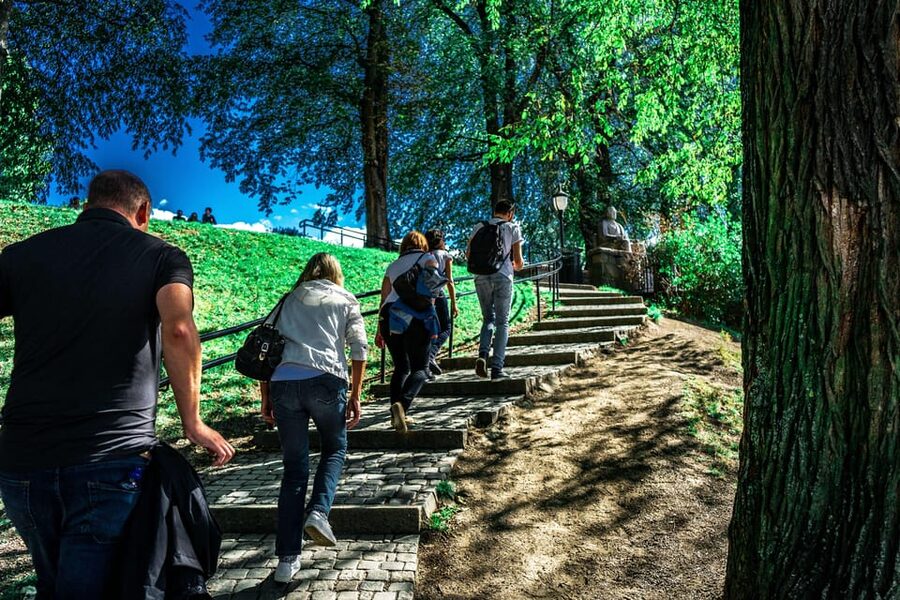
The Oslo Opera House is the route’s most playful architectural moment. Its pale, sloping exterior can look like an iceberg rising from the harbor. The design invites you to walk upward, making the building feel like public space as much as a performance venue.
The tour ends at Langkaia 1, near the Opera House. That final location is practical because you can continue exploring the waterfront afterward. You can also climb to the top of the Opera House after the tour for views and a closer look at how the building works as an urban gathering place.
Behind the Opera House, the route points out an unexpected feature: urban farming. This small detail gives the modern district a human scale and shows Oslo’s interest in new uses for city space. It is the kind of observation that can make a short guided walk more memorable than a simple list of famous buildings.
The Opera House is also where the route’s contrast comes together. You begin with the Nobel Peace Center and harbor, pass royal and parliamentary landmarks, visit a fortress, and finish among contemporary architecture and newer city development.
How the two-hour pace works
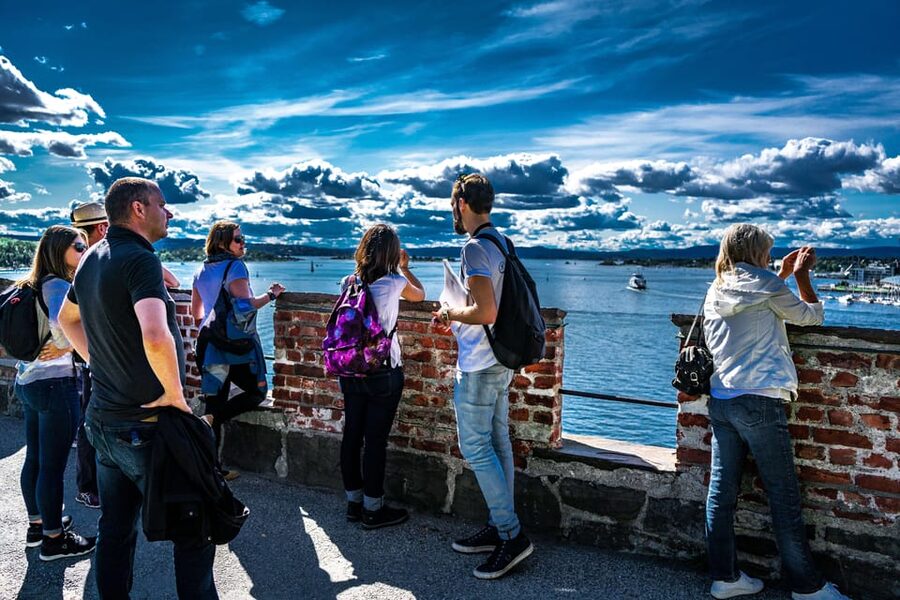
Two hours is a sensible length for a first look at central Oslo. You will cover a lot, but the walk is not designed for long stops or relaxed café breaks. The guide needs to keep moving so you can reach the Opera House at the end.
That pace suits you if you have only an afternoon in Oslo, are arriving before a longer trip, or want help getting your bearings before exploring independently. Magali’s experience is a good example of the tour’s purpose: with only an afternoon available, the route helped fit the main character of the city into a short window.
The private setup gives the walk some flexibility. If your group has children, mention their needs at the beginning. Inger has been praised for paying close attention to children in a group of six adults and four children. That suggests the format can work for families, though you should still be ready for a steady walk.
The route is mainly outdoors and takes place in central streets. Noise from surrounding traffic is part of the setting. Choose shoes that can handle two hours of walking, and dress for the weather rather than relying on a polished city-center appearance.
Guides, languages, and the personal touch
The available languages are English, Spanish, French, German, Italian, and Norwegian. That range makes the tour useful for international groups and gives you a better chance of discussing local life comfortably.
Several guide names have been associated with particularly strong experiences. Amanda has been praised for being friendly, clear, and willing to answer every question. Anya has been described as warm and well informed, making her tour a good first contact with Oslo. Tine has been noted for detailed explanations and less obvious city stops, including a futuristic library. Inger has shown care with family groups and children.
You cannot normally choose a particular guide unless the booking arrangement allows it, so treat these names as useful examples rather than a guarantee. The important point is that guide quality matters greatly here. The buildings are easy to find on a map, but the stories, local explanations, and answers to your questions are what justify booking a private walk.
Is $461 good value?
The stated price is $461 per group up to one person, which is high for a two-hour walking tour. The value becomes easier to assess if you are traveling with a private group and can share the cost, but the provided pricing should be checked carefully before booking because the wording is unusual.
For a solo visitor, the price is difficult to defend on sightseeing alone. You can walk past many of these landmarks independently. The private guide adds value through route planning, context, language support, and the ability to shape the conversation around your interests.
This makes the tour a better match for you if time is limited, you want a personal introduction, or you are traveling with family and prefer a private pace. It is a weaker choice if you are comfortable using a map, reading about Oslo in advance, and exploring the center without help.
Free cancellation up to 24 hours before departure and the option to reserve now and pay later reduce the booking risk. They do not change the basic price question, so compare the total cost with other private Oslo walks before committing.
Who should book this Oslo walk?
Book it if you want the main central sights explained in one continuous route. It works particularly well for first-time visitors, short-stay visitors, families, and anyone who wants a clear introduction before visiting other parts of the city.
It is also a good fit if you care about architecture. The route moves from the National Theatre and Royal Palace to City Hall, Akershus Fortress, and the Opera House, giving you several distinct styles in a short distance.
Skip it if you want museum entry, a slow historical tour, or a specialist visit focused only on Akershus Fortress. You should also think twice if the price feels out of proportion to your budget. Oslo’s center is walkable, and independent sightseeing is possible.
For the right person, the private format is the main reason to book. You get a local guide, a compact route, and a chance to ask the questions that a standard group walk may not cover.
FAQ
Where does the tour start?
The tour starts outside the entrance to the Nobel Peace Center at Brynjulf Bulls plass 1 in Oslo.
Where does the tour finish?
The walk finishes at Langkaia 1, 0150 Oslo, near the Oslo Opera House.
How long does the tour last?
The guided walking tour lasts two hours.
Is the tour private?
Yes. It is offered as a private group experience.
Which languages are available?
Guiding is available in Spanish, English, French, German, Italian, and Norwegian.
What should I bring?
Bring comfortable shoes and clothing suitable for the weather. Most of the tour takes place outdoors in central Oslo.
Can I cancel for a full refund?
Yes. You can cancel up to 24 hours before departure for a full refund. You can also reserve now and pay later.
Just added around Oslo
- Oslo Winter Highlights Bike Tour★ 5.0 · 36 reviews
- 4 hours Best View of the Oslofjord Winter Edition★ 4.0 · 15 reviews
- The Viking Planet Museum – Mini Group (4 adults)★ 4.0 · 16 reviews
- Unknown war. Oslo and Norway during 1940-45★ 5.0 · 74 reviews
- The Ultimate Norwegian Skiing Experience★ 5.0 · 16 reviews
- The Ultimate Study of the Human Form at Vigeland’s Sculpture Park with a Local★ 4.0 · 14 reviews
- The Oslo Beer Adventure★ 4.5 · 11 reviews
- The Essential Oslo Private Walking Tour★ 5.0 · 79 reviews
Walking Tours, compared.
Past & Present Small Group Guided Walking Tour
Read our review →
Walking Tour in Bergen of the Past and Present
Read our review →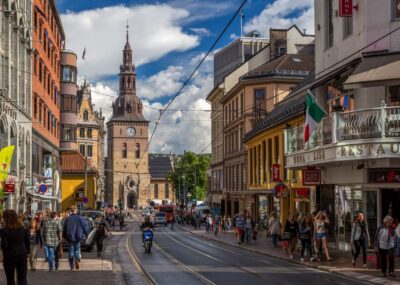

Browse the lists this tour appears in