
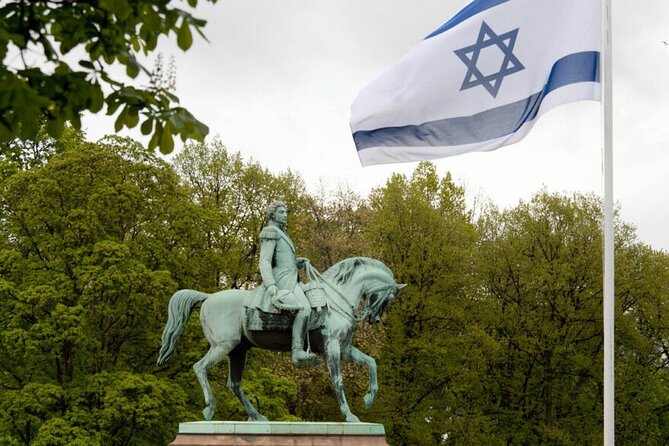
Reviewed · HISTORICAL TOURS
Jewish Heritage Tour in Oslo
Oslo’s Jewish story is small in numbers but large in meaning. This private walk links ordinary city streets with the first Jewish family to settle in Oslo, Jewish-owned shops, political life, wartime persecution, and the continuing Jewish community. Guide Rami Kafarov brings the subject to life with careful storytelling and historical photographs, while Janine may lead the synagogue portion.
I like the tour’s personal format, since your group of up to five can ask questions and steer the conversation toward family history, WWII, religion, or Norwegian politics. I also like the way it uses familiar places such as Karl Johans Gate and the Royal Palace, rather than keeping Jewish history in a single museum room. The main drawback is that the synagogue visit is not guaranteed, and two hours can feel brief for such a serious subject.
Key points
- A private walk for up to five people, with time to ask questions and shape the discussion.
- Seven central Oslo stops, beginning at Jernbanetorget and ending near the synagogue.
- A clear WWII focus, including Jewish life and persecution during the 1940 to 1945 occupation.
- Political and civic context, from the Norwegian Constitution to Jewish members of Parliament.
- The synagogue visit is the possible highlight, but entry is not always available.
- Good value for a small group, especially if several people share the $256.18 price.
Why Oslo’s Jewish story works best as a walking tour
A Jewish heritage tour in Oslo is not mainly about grand monuments. The city’s Jewish story appears in addresses, shops, streets, government buildings, and places connected with people who lived ordinary lives before extraordinary events changed them.
That makes walking useful. At Jernbanetorget, you begin with the first Jewish family known to have settled in Oslo and the location of its property. The point is not simply to mark an address. It gives you a starting point for understanding how a small Jewish population became part of Norwegian city life.
From there, the route moves through central Oslo. You see well-known sights, but the guide adds a second layer to them. A cathedral, a hotel, a shopping street, Parliament, and the Royal Palace each connect to a different part of Jewish life in Norway.
The result is a tour that asks you to look twice at places you might otherwise pass without thought. I find that approach more useful than a long list of dates, since you can connect the history to the streets around you.
More Historical Tours in Oslo
- Oslo: Historic Myths & Legends Evening Walking Tour
★ 4.8 · 408 reviews - Oslo: History, Art and Secrets Tour
★ 4.7 · 62 reviews - Oslo City Walks – Historic River Walk
★ 5.0 · 31 reviews
Jernbanetorget begins with one family and one address
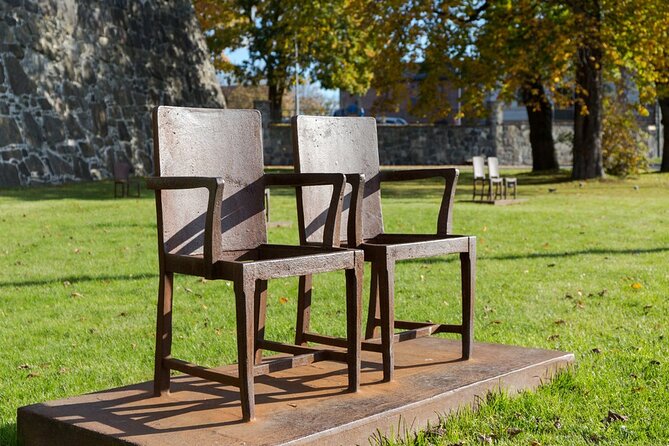
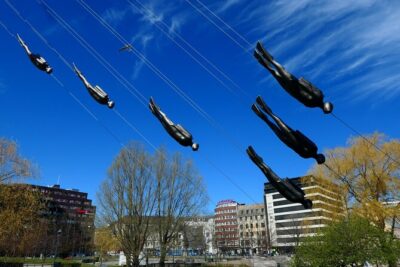
The meeting point is The Tiger sculpture at Jernbanetorget, at 0154 Oslo. This is a practical place to start because it is central and close to public transportation.
The opening ten minutes introduce the first Jewish family settled in Oslo and show the actual location of its property. That detail gives the tour a human scale from the start. You are not beginning with an abstract account of Jewish life in Norway. You are beginning with a family, a home, and a place on the city map.
The stop is short, so do not expect a full lecture before the walking begins. Its role is to set up the questions that return throughout the tour: how did Jewish residents become part of Norwegian society, where did they work and worship, and how did their lives change during the occupation?
Stortorvet connects Jewish history to Oslo’s old center
The next stop, Stortorvet, includes Oslo Cathedral and the monument to Christian IV. You have about ten minutes here.
This is a useful pause for Norwegian context. The cathedral and the monument help place Jewish life within the country’s wider religious and political past. The tour is not limited to Jewish institutions. It explains the setting in which Jewish residents lived, worked, and sought a place in Norwegian society.
The stop is outdoors and relatively brief. If you want long architectural discussion about Oslo Cathedral, this is not that kind of visit. The focus stays on how the surrounding city helps explain the Jewish experience.
Parliament adds a civic side to the story
At the Norwegian Parliament, the guide turns to the Constitution and Jewish members of Parliament. This stop takes about ten minutes.
I like this part because it moves beyond persecution and memorials. Jewish heritage tours can sometimes focus so heavily on tragedy that Jewish people appear only as victims in the story. Here, Parliament gives you a way to consider citizenship, public life, and political participation.
The Constitution also supplies important national context. You hear how Norway’s political framework relates to Jewish inclusion and to the people who later took part in public life. The stop may be short, but it helps balance the tour’s wartime material with evidence of Jewish civic involvement.
Same base, a completely different kind of day:
- Oslo: Scenic Fjord Cruise with Audio Guide Commentary
★ 4.5 · 5,375 reviews - Oslo Nature Walks: Island Hopping Tour
★ 4.8 · 2,713 reviews - Oslo: 100% Electric Oslofjord Sightseeing Cruise
★ 4.4 · 2,041 reviews - Oslo: Fjord Evening Cruise with Shrimp Buffet
★ 4.5 · 1,956 reviews
Grand Hotel brings commerce, culture, and public life together
Grand Hotel is another ten-minute stop. Here, the focus includes Jewish shops that once operated at the site and the Nobel Peace Prize.
The hotel is an effective place to discuss the overlap between business, social life, and public culture. Jewish history in Oslo was not confined to the synagogue. It also involved shops, trade, customers, and the daily work of building a life in the city.
The Nobel Peace Prize adds a broader Oslo connection, though the precise importance of the stop depends on the guide’s presentation and your questions. If you are especially interested in Jewish businesses or the city’s commercial past, tell Rami early in the tour so he can give that thread more attention.
Karl Johans Gate gets the longest look
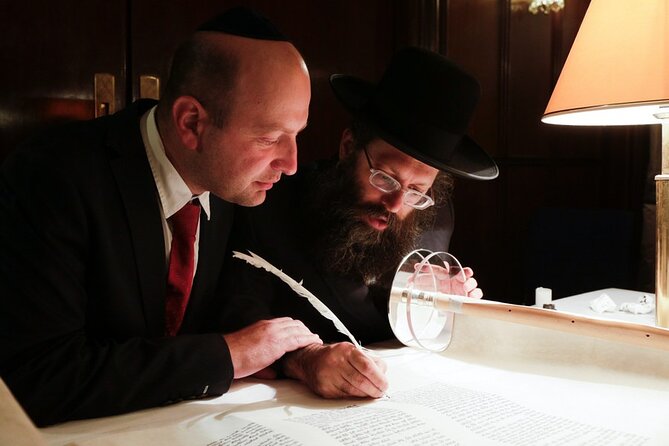
Karl Johans Gate receives about 50 minutes, making it the main section of the walk. This is where you hear about Jewish-owned stores and see monuments tied to Jewish history in Norway and Oslo.
The longer timing matters. Instead of rushing from landmark to landmark, you have room for names, locations, and connections. You can ask how Jewish businesses fit into the city’s commercial life, what changed during the occupation, and how memory is marked in present-day Oslo.
This is also the part most likely to reward close attention. Karl Johans Gate is a familiar central street, so the Jewish references may not be obvious without a guide. You might pass the same locations on another day and miss the significance completely.
Rami’s approach, as described by the tour details, includes historic and current photographs. A photo-book he created pairs present-day Oslo with images of Jewish life from the past. If that material is available during your tour, it can help you see the difference between the city as it looks now and the city inhabited by earlier Jewish families.
The long stop may feel heavy if you prefer a fast sightseeing walk. It is also the reason the tour can offer more than a quick introduction. If your interest is strong, this is the section where the private format pays off.
The Royal Palace frames the occupation years
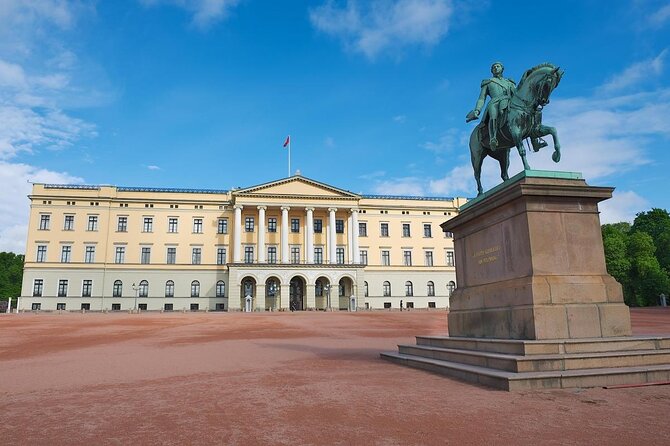
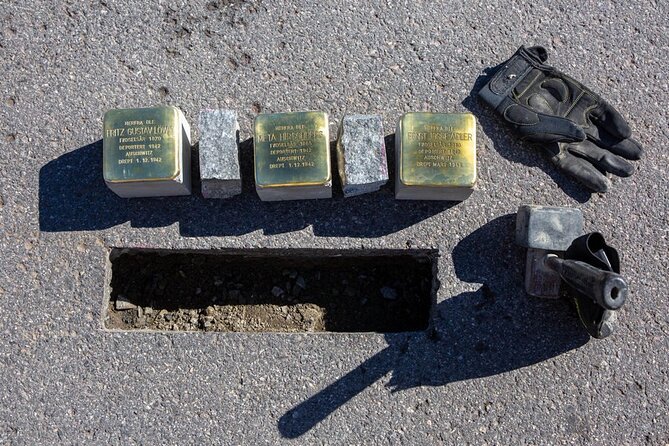
The Royal Palace stop takes about ten minutes and covers several places around the Royal Garden connected with Jewish life during the German occupation from 1940 to 1945.
This portion gives the tour its most serious historical weight. You are not only hearing about policies and dates. You are standing in central Oslo and considering how occupation affected Jewish residents in the capital.
The tour’s strength here is its restraint. One of the strongest descriptions of Rami’s guiding style calls it understated and carefully organized. That tone suits the subject. You should expect difficult material, but not theatrical treatment.
Because this is an outdoor walk, the weather matters. The experience requires good weather, and poor conditions can lead to a new date or a full refund. Bring clothing suitable for Oslo’s conditions, especially since much of the experience takes place outside.
The synagogue offers a meaningful final stop
The final planned stop is Oslo Synagogue, reached after a short section about a Jewish street in Oslo. The synagogue is described as the first built in Norway, and the visit lasts about 20 minutes when possible.
For many people, this will be the emotional center of the tour. The earlier stops explain how Jewish residents lived in Oslo and how their lives were affected by the occupation. The synagogue brings the story into the present, showing that Jewish life in Norway continues.
You need to keep expectations clear: a visit inside is not always possible. That may depend on circumstances outside the tour’s control, so do not book this solely on the assumption that you will enter the building.
When access is available, Janine may lead this part of the experience. She is described as especially well prepared on the synagogue and its meaning. A synagogue visit can also require a different kind of attention from a street stop, so listen closely to any instructions given on site.
Rami’s style suits curious, engaged groups
Rami Kafarov is the main guide associated with this experience, and the tour’s strongest feature is his ability to connect Jewish history with Norwegian history. He speaks English and is described as responsive to questions, personable, organized, and capable of adjusting the route or emphasis to match your interests.
That flexibility is valuable for a private tour. You can ask for more WWII context, more information about Jewish families, more attention to political history, or a closer look at commerce along Karl Johans Gate.
The tour is also described as multilingual and supported by Rami’s own photo work. Those details suggest a guide who treats the material as both scholarship and personal public history, rather than as a set speech delivered the same way to every group.
A sense of humor is mentioned as part of his style. That can help during a serious walk, provided you want a guide who uses warmth as well as solemnity. If you prefer a silent, memorial-focused experience, this private format may feel more conversational than expected.
Is $256.18 good value for a private group?
The price is $256.18 for the entire group of up to five people, not per person. Split five ways, that is about $51.24 each. For two people, the cost is about $128.09 per person, so the value improves sharply when you bring family or friends.
You are paying for a private, English-language experience of about two hours, with a route covering seven stops and a guide who can tailor the conversation. There are no separate admission charges listed for the stops, so the main value is the guide’s time and interpretation rather than paid entry.
I think the price makes the most sense for a small group with a real interest in Jewish history, WWII, Norwegian politics, or family research. If you are simply looking for a general introduction to Oslo, a standard city walk may cover more sights for less money.
The tour is also booked, on average, 107 days ahead. That is useful planning information, especially if you have fixed dates in Oslo. Confirmation is sent within 48 hours of booking, subject to availability, so you should not treat a booking request as instantly guaranteed.
Practical details before you book
The walk is offered in English and uses a mobile ticket. It begins at The Tiger at Jernbanetorget and ends at a different location, near the final part of the route. Since the experience covers central streets and lasts about two hours, you should be ready to walk at a moderate level.
The tour is a private activity, so only your group takes part. That gives you more control over questions and pace, but the guide may spend longer on subjects that interest your party. Tell the guide what you hope to learn at the beginning.
Service animals are allowed, and the route is near public transportation. The published operating information covers January 17, 2023 through December 8, 2026, with Monday hours listed from 8:00 in the morning to 8:00 in the evening. Confirm the available date and start time before making firm plans.
Free cancellation is available if you cancel at least 24 hours before the local start time. Changes or cancellations within 24 hours are not accepted for a refund. If bad weather causes the tour to be canceled, you are offered another date or a full refund.
Who should take this Oslo walk?
I would recommend it to anyone with a personal or academic interest in Jewish life, Norwegian WWII history, religious heritage, or the way a city remembers its past. It also suits first-time visitors who want a historical framework for central Oslo rather than another list of major sights.
Families may appreciate the private format, especially if different people want different levels of detail. It can also work well for a small group tracing Jewish roots, though the supplied information does not promise genealogical research or access to specific family records.
I would think twice if your mobility is limited, since a moderate level of physical fitness is required. I would also reconsider if entering the synagogue is the only reason you want to book, since that part is not always possible.
Should you book the Jewish Heritage Tour in Oslo?
Book it if you want to understand Jewish life in Oslo through real streets, political institutions, shops, wartime locations, and a living synagogue community. The strongest reasons are the private group format, Rami’s adaptable storytelling, the long section along Karl Johans Gate, and the chance to connect past and present through photographs and place.
Do not book it as a quick general sightseeing tour. The subject is serious, the pace allows time for discussion, and the synagogue visit cannot be promised. For the right group, though, this is a thoughtful and unusually focused way to see Oslo.
FAQ
Where does the Jewish Heritage Tour in Oslo begin?
The tour begins at The Tiger sculpture at Jernbanetorget, 0154 Oslo, Norway.
How long does the tour last?
The experience lasts approximately two hours.
How many people can join the private tour?
The price covers one private group of up to five people.
Is the tour offered in English?
Yes. The tour is offered in English.
Can I visit Oslo Synagogue during the tour?
A synagogue visit is included when possible, but it is not always possible to enter.
What happens if bad weather cancels the tour?
You will be offered a different date or a full refund if the tour is canceled because of poor weather.
Just added around Oslo
- Oslo Winter Highlights Bike Tour★ 5.0 · 36 reviews
- 4 hours Best View of the Oslofjord Winter Edition★ 4.0 · 15 reviews
- The Viking Planet Museum – Mini Group (4 adults)★ 4.0 · 16 reviews
- Unknown war. Oslo and Norway during 1940-45★ 5.0 · 74 reviews
- The Ultimate Norwegian Skiing Experience★ 5.0 · 16 reviews
- The Ultimate Study of the Human Form at Vigeland’s Sculpture Park with a Local★ 4.0 · 14 reviews
- The Oslo Beer Adventure★ 4.5 · 11 reviews
- The Essential Oslo Private Walking Tour★ 5.0 · 79 reviews
Historical Tours, compared.

Reindeer Camp and Sami Cultural Tour with Lunch
Read our review →

Sightseeing Cruise of Bergen’s Historic Landmarks
Read our review →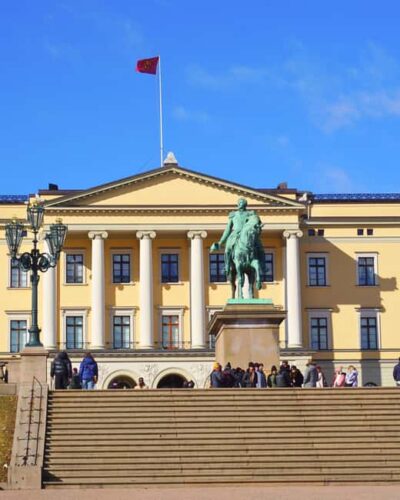


Browse the lists this tour appears in